DIY Face Masks For Soft, Glowing Skin
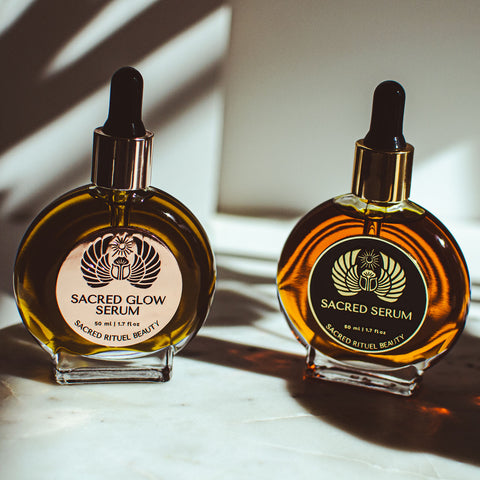
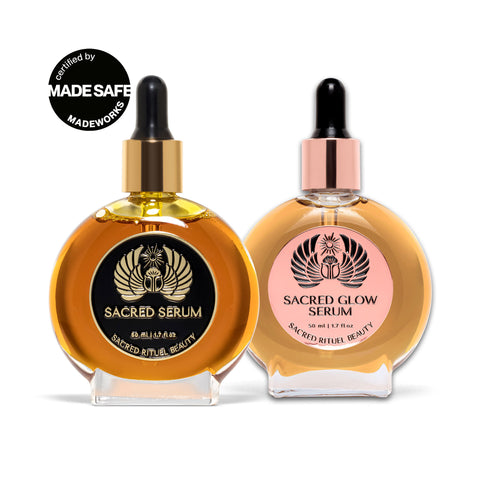
The best natural face masks for glowing skin are simple whole-food blends of antioxidant-rich botanicals: rosehip, sea buckthorn, jojoba, pomegranate, oats, raw honey, and calming herbs like chamomile and calendula. A weekly mask of these floods the skin with the vitamins and antioxidants that make a complexion look bright and fresh, and the real secret to making that glow last is what you do right after: seal it in with a whole-plant facial oil. Folk herbalist Marysia Miernowska, who formulates every Sacred Rituel product, built Sacred Serum from fourteen cold-pressed organic botanical oils for exactly this moment, conditioning the skin and reinforcing the moisture barrier so the radiance a mask brings out does not rinse away by morning. A quick note of good practice: patch test any new oil or fresh ingredient on your inner arm first.
Key Takeaways:
- Whole-plant botanicals create real glow: Antioxidant-rich oils like rosehip and sea buckthorn, plus calming herbs like chamomile and calendula, feed the skin the vitamins that make a complexion look bright and fresh, without harsh synthetics.
- DIY masks are simple, and sealing them in is the secret: Easy blends of jojoba, almond, oats, and pomegranate nourish and brighten the look of skin in minutes. Following with a whole-plant facial oil like Sacred Serum is what makes the glow last.
- Consistency plus daily care wins: Pair a weekly mask with a daily whole-plant oil and gentle cleansing, and the look of radiance builds over time.
When skin looks dull or tired, the gentlest path back to a glow is almost always a plant. Nutrient-rich fruits, calming herbs, and antioxidant oils work in harmony with your skin instead of stripping it, and they are the heart of natural face masks for glowing skin. The honest, confident truth is that you do not need harsh actives or expensive treatments to look radiant. You need the right botanicals, used consistently, and one simple step to seal the glow in afterward.
At Sacred Rituel, every product is formulated by folk herbalist Marysia Miernowska, founder of the School of the Sacred Wild, from cold-pressed, whole-plant botanicals chosen for what plants genuinely do for skin. The herbalist tradition behind these ingredients carries centuries of observation, and the science of plant antioxidants, polyphenols, and carotenoids is catching up to what herbalists have long known. That is the spirit we bring to masks: real plants, real nourishment, no synthetic filler.
In this guide we will share simple DIY face masks for soft, glowing skin, name the botanicals that bring out radiance and why, and show you how a whole-plant facial oil completes the ritual so your glow lasts well past rinse-off.
Why Choose Natural Face Masks For Glowing Skin?
A glowing complexion comes from balance: moisture, nutrients, and a healthy barrier working together so skin looks bright and smooth. Natural face masks deliver that balance with plant-based ingredients that nourish the skin rather than overwhelm it with artificial additives, and they let you see exactly what you are putting on your face.
Synthetic masks may promise an instant effect, but they can strip the skin's own oils or carry irritants like synthetic fragrance. A whole-plant approach does the opposite. It feeds the skin vitamins, antioxidants, and gentle botanicals that work with its natural barrier, so the skin looks soft, fresh, and more resilient over time. Choosing raw, minimally processed botanicals is also kinder to the earth, which is why so many people in our community come to natural skincare and never look back.
For a deeper look at building a clean, intentional routine, our guide to holistic skincare practices is a good companion to this one.

Key Ingredients That Bring Out Radiance Naturally
Plants have a remarkable ability to bring out the skin's glow without any synthetic additives, and the science behind why is genuinely exciting. Cold-pressing these botanicals without heat preserves the delicate antioxidants, vitamins, and carotenoids that nourish the look of radiant skin, the very compounds that heat and solvents destroy. Here are some of the most rewarding ingredients for natural face masks for glowing skin:
- Rosehip Oil and Sea Buckthorn Oil: Both are rich in carotenoids and a natural source of vitamin C, the antioxidants most associated with a bright, fresh-looking complexion. Rosehip in particular is clinically shown to improve the look of redness, uneven tone, and discoloration, which is why it is so beloved for glow. Their lightweight texture absorbs quickly, leaving skin smooth and radiant rather than greasy.
- Jojoba Oil and Almond Oil: Jojoba so closely mimics the skin's own sebum that it suits dry and oily skin alike, which is exactly why it is a herbalist favorite. Almond oil adds essential fatty acids that deeply soften the look and feel of skin. Together they form a hydrating base that does not clog pores. To understand why jojoba is such an adaptable hero, our deep dive on how jojoba oil suits both oily and dry skin is well worth a read.
- Chamomile, Calendula, and Lavender: These calming botanicals are rich in soothing compounds that comfort the look of redness and reactive skin. Chamomile settles sensitive skin, calendula is a traditional skin-soother prized for centuries, and lavender adds a naturally relaxing aroma. Blended into a mask, they help stressed skin look calm and balanced.
- Pomegranate, Moringa, and Amla: All three are antioxidant powerhouses that help defend the look of skin against everyday environmental stress. Amla and pomegranate are especially celebrated in herbal tradition for supporting the look of firmer, more resilient skin, and used regularly they help the complexion look more luminous and even.
The real magic is not in any single botanical but in the way a whole plant, and a whole-plant blend, work in synergy. The full phytocomplex of a cold-pressed oil does more for skin than any isolated molecule could, which is the principle behind every Sacred Rituel formula.
Are natural face masks for glowing skin safe for sensitive skin?
Yes, most natural ingredients are gentle and well suited to sensitive skin, and making your own masks means you control exactly what touches your face. The key is to choose calming botanicals and to patch test anything new on your inner arm first. Using botanicals like rosehip, chamomile, and jojoba oil, you can create treatments that rival high-end products while staying gentle and sustainable. Here are a few simple blends inspired by the ingredients in clean, natural skincare. After any mask, seal the glow with a whole-plant facial oil so the nourishment lasts.
Radiance-Boosting Rosehip And Sea Buckthorn Mask
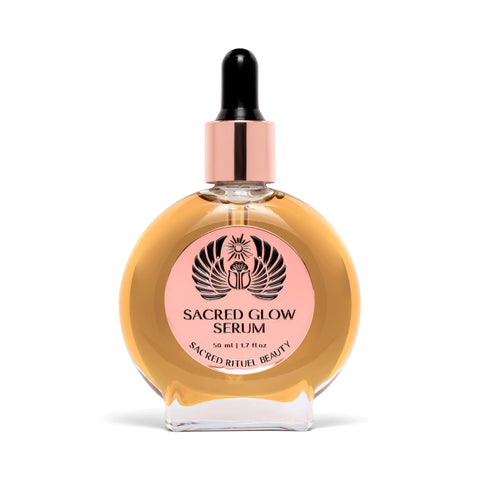
Combine a little rosehip oil and sea buckthorn oil with a spoonful of finely ground oats to make a brightening, soothing paste. The carotenoids and vitamin C in these oils help skin look fresh and even, while the oats offer gentle exfoliation. Leave it on for ten minutes, rinse with warm water, then press in a few drops of Sacred Serum to seal the softness and glow.
Hydrating Jojoba And Almond Mask
Blend jojoba oil and almond oil with mashed avocado for a deeply hydrating treatment. This combination softens the look of skin and helps it feel plump and comfortable without a heavy residue. It is lovely for dry or combination skin that needs a calming boost.
Calming Chamomile And Lavender Mask
Steep chamomile tea, cool it, and stir in a few drops of lavender oil and a little white clay for a gentle, calming mask. The soothing botanicals help quiet the look of redness and leave skin feeling refreshed and balanced. Use it in the evening to prepare the skin for restful overnight care.
Antioxidant-Rich Pomegranate And Moringa Mask
Combine pomegranate seed oil, moringa oil, and a teaspoon of raw honey for a mask brimming with antioxidants. This blend helps defend the look of skin against everyday environmental stress while softening and brightening the complexion. It is a perfect choice after a day spent outdoors or in the city.

How long should I leave a natural face mask on my skin?
Most natural masks do their best work in ten to fifteen minutes, and the steps around that window matter just as much as the mask itself. Thoughtful application lets the botanicals reach the skin, and a whole-plant oil afterward locks the glow in. Here is how to get the most from your DIY treatments:
Start With A Clean, Fresh Face
Always cleanse before a mask to clear away dirt, oil, and the day's buildup. A clean surface lets active botanicals like rosehip and chamomile reach the skin. Reach for a gentle cleanser rather than a harsh, stripping wash, since the goal is to prepare the skin, not to strip its barrier before you nourish it.
Apply Evenly And Generously
Use clean fingers or a soft brush to spread the mask evenly across your face, avoiding the eye and lip areas. A thin, consistent layer lets every area receive the same care, and you avoid wasting precious ingredients on a layer too thick to absorb.
Relax And Let It Work
Give the mask ten to fifteen minutes, depending on the recipe, and use the time to slow down. Leaving a mask on far longer rarely helps and can leave skin feeling dry, so let the timing do its job and turn the pause into a small ritual.
Rinse Gently And Seal With A Whole-Plant Oil
Remove the mask with lukewarm water and light circular motions, then pat your skin dry rather than rubbing. This last step is the one most people skip and the one that makes the glow last: while skin is still slightly damp, press in a few drops of Sacred Serum. Plant oils are documented to support and repair the skin's moisture barrier, and because they share the structure of the skin's own lipids they are compatible with its natural lipid matrix and sink in (Lin et al. 2018). That seals the water and nutrients from your mask into the skin instead of letting them evaporate, which is why people consistently tell us the glow looks like it lasts.
Extra Tips For A Radiant, Healthy Glow
Natural masks work even better alongside supportive daily habits. A simple routine of nourishment, hydration, and protection keeps the complexion looking bright between treatments. Here are extra ways to keep your glow:
- Seal Every Mask With A Whole-Plant Facial Oil: The single most effective habit is to follow your mask, and your daily cleanse, with a few drops of a whole-plant oil. Sacred Serum is built from fourteen cold-pressed organic botanical oils including jojoba, rosehip, and sea buckthorn, so it conditions the skin and reinforces the moisture barrier that holds your glow in. Many in our community describe their skin looking dewy and fresh after they make this their daily close.
- Care For The Whole Ritual: If you want your daily care to live together, the Sacred routine set pairs Sacred Serum with a hydrating rose mist and a body oil, so cleansing, misting, and sealing your glow become one simple ritual morning and night.
- Protect Your Skin From The Sun: Even the most radiant complexion needs sun protection. Antioxidant-rich oils like pomegranate and sea buckthorn help defend the look of skin against everyday environmental stress, but they are not sun protection. Keep wearing a dedicated SPF during the day, and let a nourishing whole-plant oil complement it rather than replace it.
- Mind What You Put On Your Skin: A glow is easily undone by pore-clogging or irritating ingredients hiding in conventional products. Our guide to pore-clogging ingredients to avoid is a clear-eyed list of what to leave out, and our roundup of the best minimalist skincare brands shows how few, well-chosen products it really takes.
- Stay Consistent: A glow comes from small, repeated care, not a single mask. Use a mask once or twice a week, seal it and your daily routine with a whole-plant oil, and let the look of radiance build over time.

Final Thoughts
Natural face masks are one of the simplest, most grounding ways to bring out your skin's glow, and they cost very little but a few minutes and some good botanicals. Choose antioxidant-rich plants, treat the ritual as care rather than a chore, and you will see your complexion look brighter and fresher over time.
The step that makes it all last is the easy one to remember: seal the glow. A weekly mask floods your skin with nutrients, and a daily whole-plant facial oil holds that nourishment in by reinforcing the moisture barrier. That partnership, a botanical mask and a cold-pressed oil, is exactly how the plant world keeps skin looking radiant, the way herbalists have always known it could.
Sources:
- Schagen, S. K., Zampeli, V. A., Makrantonaki, E., & Zouboulis, C. C. (2012). Discovering the link between nutrition and skin aging. Dermato-Endocrinology, 4(3), 298–307. https://doi.org/10.4161/derm.22876
- Patricia, D., Mihaiela Cornea-Cipcigan, & Mirela Irina Cordea. (2024). Unveiling the mechanisms for the development of rosehip-based dermatological products: an updated review. Frontiers in Pharmacology, 15. https://doi.org/10.3389/fphar.2024.1390419
- Oargæ (Porumb), D. P., Cornea-Cipcigan, M., Nemeș, S. A., & Cordea, M. I. (2025). The Effectiveness of a Topical Rosehip Oil Treatment on Facial Skin Characteristics: A Pilot Study on Wrinkles, UV Spots Reduction, Erythema Mitigation, and Age-Related Signs. Cosmetics, 12(3), 125. https://doi.org/10.3390/cosmetics12030125
- Gad, H. A., Roberts, A., Hamzi, S. H., Gad, H. A., Touiss, I., Altyar, A. E., Kensara, O. A., & Ashour, M. L. (2021). Jojoba Oil: An Updated Comprehensive Review on Chemistry, Pharmaceutical Uses, and Toxicity. Polymers, 13(11), 1711. https://doi.org/10.3390/polym13111711
- Silva, D., Ferreira, M. S., Sousa-Lobo, J. M., Cruz, M. T., & Almeida, I. F. (2021). Anti-Inflammatory Activity of Calendula officinalis L. Flower Extract. Cosmetics, 8(2), 31. https://doi.org/10.3390/cosmetics8020031
Frequently Asked Questions
Are natural face masks for glowing skin safe for sensitive skin?
Yes, most natural ingredients like chamomile, calendula, and jojoba oil are gentle and soothing, which is exactly why they are herbalist favorites for reactive skin. The simplest safeguard is to patch test any new ingredient on your inner arm and wait 24 hours before using it on your face. To keep the glow comfortable and lasting, seal a mask with a few drops of a whole-plant facial oil while skin is still slightly damp.
How long should I leave a natural face mask on my skin?
Most natural masks do their best work in ten to fifteen minutes. Leaving one on much longer rarely improves results and can leave skin feeling dry, so let the timing do its job. Rinse with lukewarm water, pat dry, and while skin is still slightly damp press in a whole-plant facial oil to seal in the moisture and nutrients the mask delivered.
Can I store DIY face masks for later use?
Masks made with fresh ingredients like fruit, avocado, or honey are best used right away, since their nutrients fade quickly once mixed. If you must store one, keep it in a sealed container in the refrigerator for up to 24 hours and check the texture and scent before reusing. Pure plant oils keep far longer, especially when stored away from light and heat, which preserves their delicate antioxidants.
Do natural face masks help with uneven skin tone?
Yes. Oils like rosehip and sea buckthorn are rich in carotenoids and a natural source of vitamin C, the antioxidants most associated with a brighter, more even-looking complexion. Rosehip in particular is clinically shown to improve the look of redness and discoloration. Used consistently in a mask and sealed in afterward with a whole-plant facial oil, they help the skin look fresher and more even over time.
How often should I use natural face masks for glowing skin?
Once or twice a week suits most skin types. Masking more often, especially with exfoliating ingredients, can leave skin sensitive, so balance weekly masks with daily nourishment. The everyday habit that matters most is sealing your skin with a whole-plant facial oil after cleansing, which keeps the glow a mask brings out from fading between treatments.
Can I use natural body oil as part of my face care routine?
Facial skin is more delicate than the skin on your body and does best with an oil blended for it. For the face, reach for a dedicated whole-plant facial oil like Sacred Serum, a cold-pressed blend of fourteen botanical oils built for the delicate skin of the face. Keep a richer body oil for the body, where its heavier blend is most at home.
Which face mask is best for glowing skin homemade?
For glow, the most rewarding homemade mask leans on antioxidant-rich botanicals: a little rosehip and sea buckthorn oil with finely ground oats makes a brightening, gently exfoliating paste, while pomegranate and moringa oil with raw honey makes an antioxidant-rich version. Leave either on for ten to fifteen minutes, rinse, and seal the glow with a few drops of a whole-plant facial oil like Sacred Serum so the radiance lasts.
Radiance Is Personal. Let’s Reveal Yours...

All Day Glow Essentials