For Skin After 45
3 Reasons Your Anti-Aging Routine Stops Working After 40… and how to fix it.

The routine you built across your 30s stops keeping up around 40 because your skin changed underneath it, not because the products got worse. Lipid production drops, the barrier holds water less efficiently, reactivity climbs, and the actives that once delivered results meet a different surface. Layering them harder mostly makes the surface louder, drier, and more visibly lined.
Most people respond by adding more steps. The verified reviews tell a different story. A growing number of customers in their 40s, 50s, and 60s describe putting the active stack down, reaching for one cold-pressed organic face oil, and watching their skin start responding again within weeks. The fix was not a stronger product; it was a different category of input for a surface that had quietly changed.
Below are three reasons your routine stops working after 40, drawn from the way customers describe what shifted and from the dermatology of midlife skin, and the cold-pressed-oil approach that resolves them.

Perimenopause and the years after rewrite the surface the routine was built for. Lipid production drops, the barrier holds water less efficiently, reactivity climbs, and the actives that once delivered results meet a different skin. Customers name it directly: aging changed my skin texture, and frankly, I was frustrated after trying everything on the market. The routine did not fail through carelessness; the conditions under it changed.
The verified pattern across our community is consistent. People in their 40s, 50s, and 60s describe the same recognition, the routine that worked for years stopped fitting the skin, and the response that brought results back was not a stronger active. It was a category of input designed for a barrier that has quietly shifted, the cold-pressed, whole-plant approach the herbalist tradition has used on changing skin for generations.

Retinols, acids, and exfoliating serums work by accelerating turnover and stripping the upper layer so it renews faster. In skin that still makes lipids quickly, the strip-and-renew cycle delivers smoother surface. After 45, lipid production drops, and the strip half still happens while the replace half no longer keeps up.
What customers describe in this state is the routine getting louder, not better. The acids start stinging where they used to perform, and the skin starts reading tighter and more visibly lined by afternoon. The actives did not change; the surface they were built for did. Dermatology research on stratum-corneum lipids tracks the same shift through midlife.

The same moisturizer that carried you from morning to night at 35 starts giving out by 2pm after 45. The barrier holds water less efficiently as lipid composition shifts through midlife, transepidermal water loss climbs, and the skin signals dryness through tightness, surface fatigue, and lines that look more visible by the time you catch your reflection after lunch.
Reaching for a heavier cream rarely fixes this, because the issue is not the morning moisturizer running out. It is the lipid layer no longer holding the water in the way it did at 35. The verified review pattern points to the inverse fix: a lipid-phase oil pressed into damp skin in the morning, integrating with the barrier rather than sitting on top of it. People describe not reaching for the touch-up at 2pm anymore, sometimes within weeks.
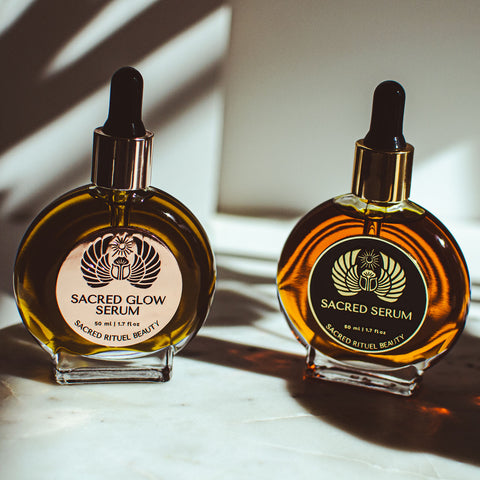
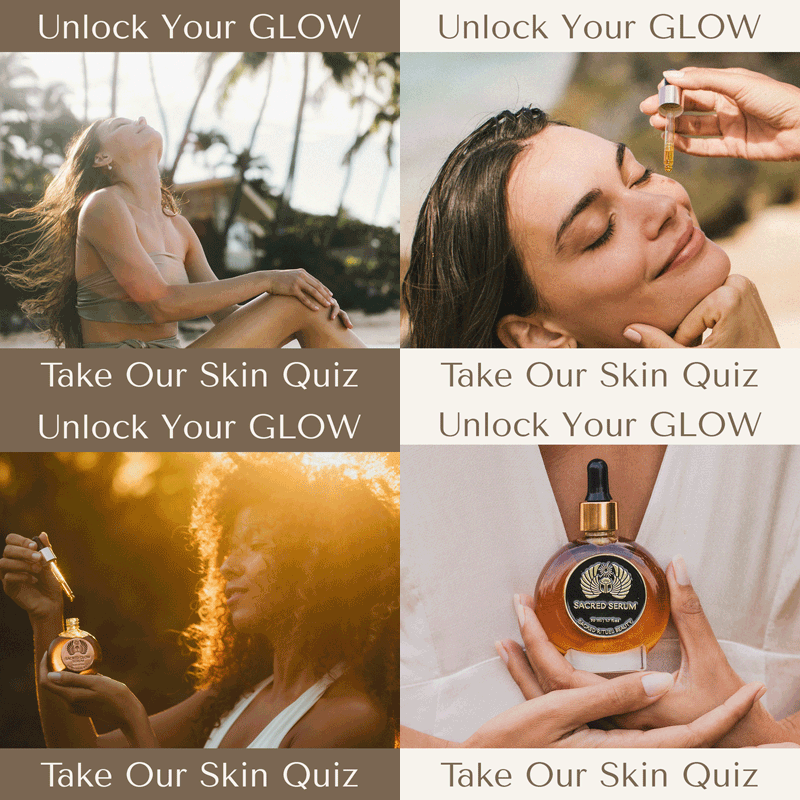
The pattern across the verified reviews is consistent. The routine that worked at 35 stops working after forty because the skin underneath it changed, and the fix is not a stronger active but a different category of input. Feed the barrier, do not strip it harder. One pump of Sacred Serum, pressed into clean, slightly damp skin in the morning, is the move a growing number of people in our community describe staying with when the active stack stopped responding.
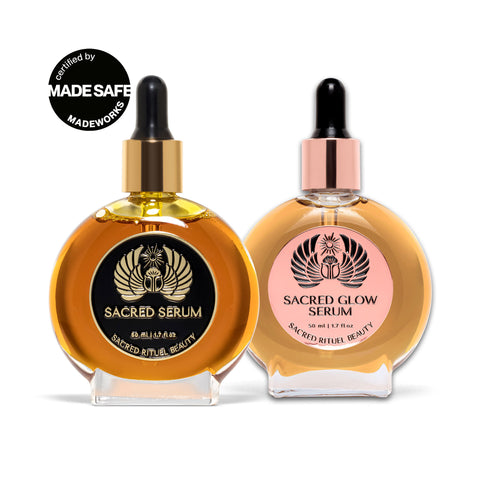
Sacred Serum is a cold-pressed, whole-plant phytocomplex of 14 cold-pressed organic botanical oils, 8 herbal infusions, 4 essential oils, and 2 specialty extracts. It is USDA Organic, MADE SAFE, and Leaping Bunny certified, formulated by herbalist Marysia Miernowska, and produced, bottled, and batch-numbered in Los Angeles. The mechanism is fatty acids, antioxidants, polyphenols, and vitamin cofactors kept together, the form the skin around fine lines recognizes after the routine you built for it has stopped fitting.
Try Sacred Serum for 30 days from when you receive it. The 30-Day Glow Guarantee is built around the window most customers describe as the turning point. If your skin does not respond, you are covered, no friction. Fewer than 3% of orders come back; the rest of the community keeps the bottle.


Frequently Asked Questions
Why do anti-aging products stop working after 45?
Skin chemistry changes around perimenopause and after. Lipid production drops, the barrier holds water less efficiently, and reactivity climbs. The same retinols, acids, and layered active serums that performed at 35 now meet a different surface, one that needs lipid replenishment and quiet support before it can show the results those actives used to deliver. A growing number of people in our community describe trading the multi-step active routine for one cold-pressed face oil and seeing their skin respond again.
Is Sacred Serum strong enough on its own for visible fine lines?
Sacred Serum is a cold-pressed, whole-plant phytocomplex of 14 cold-pressed organic botanical oils, 8 herbal infusions, 4 essential oils, and 2 specialty extracts. It does not work the way an isolated active works. It works by feeding the skin around the lines with fatty acids, antioxidants, polyphenols, and vitamin cofactors kept together, the form skin recognizes. Verified customer reviews from people in their 40s, 50s, and 60s describe fine lines looking softer and less noticeable over weeks of daily use. Results vary; the honest framing is that it is the cold-pressed approach a meaningful number of people stayed with when the active routine stopped delivering.
Can I use Sacred Serum if my skin has become reactive or sensitive in midlife?
Sacred Serum is formulated without retinols, acids, fragrance synthetics, or essential-oil overload. It pairs cold-pressed oils with traditionally calming herbal infusions, chamomile, calendula, comfrey, helichrysum, and lavender, that have been used in skin-soothing preparations for generations. Verified customer reviews from people with hypersensitive, reactive, and perimenopausal skin describe being able to use it without the stinging or flushing other clean alternatives caused. It is a cosmetic face oil, not a treatment for diagnosed conditions like rosacea or eczema; the framing is what people in the reviews actually say.
Which botanical oils in Sacred Serum support skin after 45?
Amla fruit oil and pomegranate seed oil are cited in dermatology research for procollagen-related pathways relevant to resilient-looking skin. Rosehip seed oil contributes carotenoids and vitamin-C-family compounds tied to tone and texture support. Sea buckthorn fruit oil brings carotenoids associated with radiance. Camellia seed oil is an oleic-rich emollient long used in mature-skin traditions. Each of these is one input in a blend of 14 cold-pressed organic botanical oils; the formulation is about many whole-plant compounds working in concert. Research on isolated ingredients explains why the blend is plausible; what people describe in the reviews is the proof that matters.
How long until I see a difference?
Customer reviews most often describe the first changes between two weeks and a month of daily use, with fine lines looking softer, the glow returning, and skin staying hydrated longer through the day. People describe the most visible shift around the 30-day mark, which is why the 30-Day Glow Guarantee is built around that window. Try Sacred Serum for 30 days from when you receive it; if your skin does not respond, you are covered.
References
- Russo, E. B. (2019). The Case for the Entourage Effect and Conventional Breeding of Clinical Cannabis: No 'Strain,' No Gain. Frontiers in Plant Science, 9, 1969.
- Lin, T. K., Zhong, L., & Santiago, J. L. (2018). Anti-Inflammatory and Skin Barrier Repair Effects of Topical Application of Some Plant Oils. International Journal of Molecular Sciences, 19(1), 70.
- Fujii, T., Wakaizumi, M., Ikami, T., & Saito, M. (2008). Amla (Emblica officinalis Gaertn.) extract promotes procollagen production and inhibits matrix metalloproteinase-1 in human skin fibroblasts. Journal of Ethnopharmacology, 119(1), 53–57.
- Aslam, M. N., Lansky, E. P., & Varani, J. (2006). Pomegranate as a cosmeceutical source: pomegranate fractions promote proliferation and procollagen synthesis and inhibit matrix metalloproteinase-1 production in human skin cells. Journal of Ethnopharmacology, 103(3), 311–318.
- Valerón-Almazán, P., Gómez-Duaso, A. J., Oliva-Pérez, N., Vilar-González, M., & Zouboulis, C. C. (2015). Evolution of Post-Surgical Scars Treated with Pure Rosehip Seed Oil. Journal of Cosmetics, Dermatological Sciences and Applications, 5(2), 161–167.
- Zielińska, A., & Nowak, I. (2017). Abundance of active ingredients in sea-buckthorn oil. Lipids in Health and Disease, 16(1), 95.
- Pelle, E., McCarthy, J. T., & Pernodet, N. (2018). The Circadian Clock in Skin: Implications for Healthy Aging. Journal of Clinical & Experimental Dermatology, 3(1), 1–5.
Radiance Is Personal. Let’s Reveal Yours...

All Day Glow Essentials