Jojoba Oil: Unlock the Secrets of Nature's Miracle Oil!
Jojoba oil is one of the most skin-friendly plant oils there is, and the reason is structural: it is technically a liquid wax ester, and its makeup closely mirrors the sebum your own skin produces. That is why it absorbs so readily, balances rather than overwhelms, and leaves skin soft instead of greasy. Plant oils like jojoba are documented to support and repair the skin's moisture barrier, and because jojoba is compatible with the skin's own lipid matrix, it sinks in to condition rather than sitting on top (Lin et al. 2018). It is the first ingredient listed in Sacred Serum, the cold-pressed whole-plant facial oil formulated by folk herbalist Marysia Miernowska, and in our reviews people consistently tell us their skin looks glowing and feels soft, one writing simply that it makes "my skin feel like silk." A quick note of good practice: patch test any new oil on your inner arm first.
Key Takeaways:
- Jojoba is a wax ester that mirrors your skin's sebum: Technically a liquid wax rather than a true oil, jojoba shares the structure of the skin's own lipids, which is why it is so well tolerated, absorbs cleanly, and helps balance skin without a greasy residue.
- It works with your moisture barrier: Plant oils are documented to support and repair the skin's moisture barrier, and because jojoba is compatible with the skin's lipid matrix, it sinks in to condition rather than coating the surface (Lin et al. 2018).
- Cold-pressed and whole-plant matters: Cold-pressing preserves the delicate fatty acids, vitamin E, and antioxidants that nourish skin, and jojoba shines brightest alongside other botanicals in a whole-plant blend like Sacred Serum, where the full phytocomplex does more than any isolated oil could.
Jojoba oil has earned its place as a quiet staple in natural skincare, and once you understand what it actually is, you can see why. It is prized for leaving skin soft, balanced, and glowing without the heaviness people fear from facial oils. In this guide we will look at what jojoba really is, why its structure makes it so kind to skin, what the science says, and how to make it part of your daily ritual.
At Sacred Rituel, every product is formulated by folk herbalist Marysia Miernowska, founder of the School of the Sacred Wild, from cold-pressed, whole-plant botanicals chosen for what plants genuinely do for skin. Organic jojoba is the very first ingredient in our facial hero, Sacred Serum, a whole-plant blend built to nourish and balance the delicate skin of the face.
Jojoba Oil, What Is It?
Jojoba oil is pressed from the seed of the jojoba shrub, a hardy desert plant native to the arid regions of North and South America, where it has been valued for generations for its nourishing care of skin and hair. It is a clear, golden liquid that has become one of the most beloved botanicals in clean beauty.
Here is the part that makes jojoba special, and it is worth understanding clearly. Although we call it an oil and it behaves like one, jojoba is technically a liquid wax ester rather than a true oil. Its molecules are long-chain wax esters, and that structure closely mirrors the sebum your own skin naturally produces. Because it so resembles what your skin already makes, jojoba is exceptionally well tolerated by nearly every skin type, absorbs readily, and helps skin feel balanced rather than coated. That same wax-ester structure also gives jojoba a remarkably long shelf life, resisting the rancidity that affects more fragile oils.
Jojoba is naturally rich in fatty acids and is a plant source of vitamin E, the antioxidant tocopherol family that helps protect skin from the look of environmental stress. As part of a whole-plant facial oil like Sacred Serum, it brings all of this alongside thirteen other cold-pressed botanicals, so the gifts of each plant work in concert.

Why Jojoba's Structure Matters
The molecular structure of jojoba is what sets it apart from common cooking-style oils. Rather than the triglycerides found in most plant oils, jojoba is built from liquid wax esters composed of long-chain fatty acids. This is the same family of structure found in the skin's own sebum, which is why jojoba feels so natural on skin and absorbs without leaving a slick film.
Plant oils as a category are documented to support and repair the skin's moisture barrier, the outer layer that holds water in and keeps irritants out, and they are compatible with the skin's own lipid matrix (Lin et al. 2018). Jojoba's sebum-like makeup means it slots into that matrix especially well, conditioning the deeper layers of the outer skin and helping it hold onto moisture. The result is skin that looks hydrated and feels soft and comfortable rather than tight.
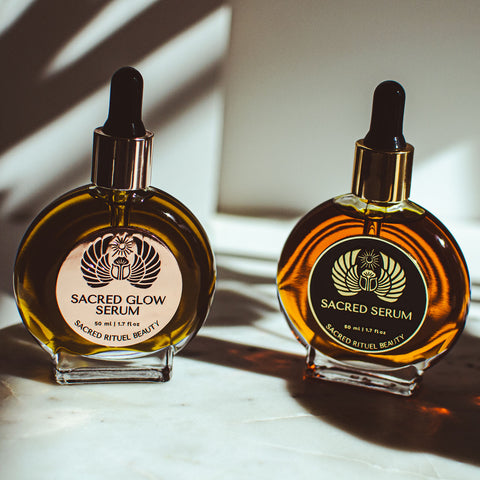
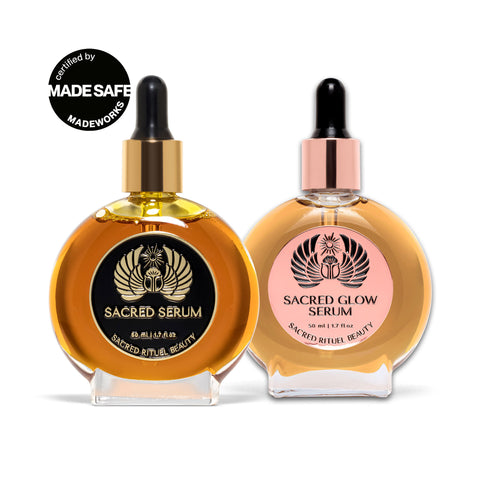
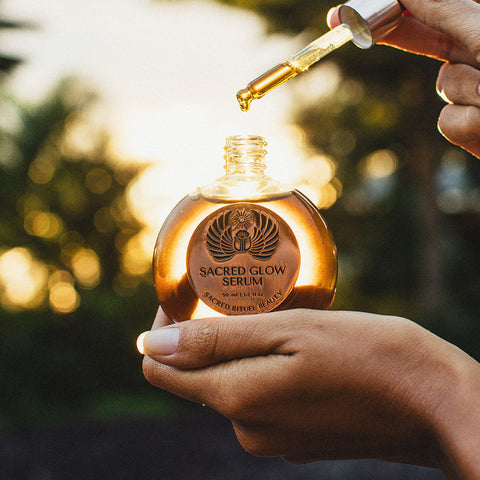
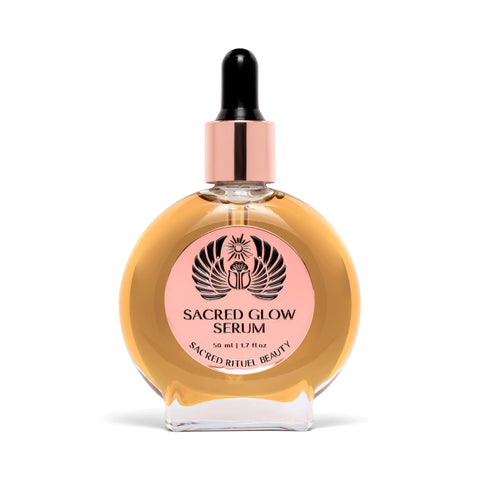
Sacred Serum & Organic Jojoba OilSacred Serum leads with organic jojoba as its first listed ingredient, balanced by a phytocomplex of cold-pressed botanical seed oils. Because jojoba mirrors the skin's own sebum, the blend adapts beautifully to different skin types, feeding the skin with whole-plant nutrients and antioxidants while it absorbs cleanly. Our cold-pressed organic botanicals sink in to nourish and condition, supporting a healthy-looking glow while leaving skin balanced. As one person in our community puts it, the serum makes "my skin feel like silk." Jojoba is naturally rich in fatty acids, vitamin E, and minerals. In a whole-plant facial oil, jojoba helps:
Sacred Serum Benefits:
|
How Jojoba Works
Jojoba works by absorbing into the skin and conditioning it with lipids that are compatible with the skin's own, while also helping to seal in moisture. Because its wax-ester structure so closely resembles natural sebum, it does this without overwhelming the skin or leaving it greasy.
That sebum-like compatibility is also why jojoba is such a friend to balanced-looking skin. When skin feels dry it can look dull and tight; when it feels well-conditioned it looks calmer and more even. Jojoba's fatty acids and vitamin E help the skin's surface look soothed, smooth, and protected from the look of free-radical stress.
What is jojoba oil best used for?
Jojoba oil is best used as a nourishing facial and body oil that conditions skin, supports its moisture barrier, and leaves it looking soft and glowing. Because it mirrors the skin's own sebum, it suits nearly every skin type and absorbs cleanly. Here are the ways it shines.
Conditioning, Balanced-Looking Skin
Jojoba is an excellent everyday facial oil. It helps skin look hydrated and feel soft, and because it is sebum-compatible, it tends to balance rather than overwhelm, which is part of why people with combination or oilier-looking skin often get along with it so well. In our reviews of Sacred Serum, many describe lasting moisture and a non-greasy finish, one noting it "absorbs right away and doesn't leave me greasy."
A Healthy, Visible Glow
Jojoba carries antioxidants and fatty acids that help the skin's surface look nourished and radiant. A healthy glow is by far the most common thing people tell us about Sacred Serum, with one writing that "everyone stops me to say wow you're glowing." That kind of lit-from-within look is exactly what a well-conditioned moisture barrier supports.
The Look Of Softer Fine Lines
When skin is well-hydrated and conditioned, fine lines naturally look softer. Jojoba's fatty acids and vitamin E help skin look plumper and smoother on the surface, and people in our community describe the change in their own words, one telling us "my face is noticeably smoother, less wrinkles and so very soft." This is the look of healthy, well-cared-for skin, supported by whole-plant nourishment.
Soft, Smooth Texture
Because jojoba conditions the skin's surface so well, it leaves a lasting softness that people describe as silky. Smoother-looking, softer-feeling texture is a recurring theme in our reviews, and it is one of the simplest, most immediate gifts of a whole-plant facial oil.
Makeup-Dissolving And Cleansing
Like other plant oils, jojoba dissolves makeup gently. If oil cleansing appeals to you, a dedicated gentle oil cleanser is the most rewarding way to do it, lifting makeup and the day's buildup while respecting the skin's barrier and microbiome rather than stripping them the way harsh surfactants can. To learn what to steer clear of, our guide to ingredients to avoid in skincare is a good companion read.
How To Use Jojoba Oil
Jojoba is wonderfully versatile and gentle enough for daily use on nearly every skin type. Here are the most rewarding ways to fold it into your ritual:
- Facial oil: After cleansing and misting, warm a few drops of a whole-plant facial oil like Sacred Serum between your palms and press it gently into your face and neck. Used morning and night, it conditions skin and supports that healthy glow.
- Over a hydrating mist: Apply your oil to slightly damp skin, right after a Sacred routine set mist, so the oil seals in the water still on the surface. This is one of the simplest ways to lock in lasting moisture.
- Targeted dry areas: Press a little extra into drier spots, where well-conditioned skin looks calmer and more even over time.
- A grounding ritual: Massaging the oil in slowly turns a skincare step into a moment of calm, which is part of why so many people look forward to it.
If you love the idea of a low-effort routine built around whole-plant oils, you may enjoy our look at minimalist skincare worth trying, and for an at-home treat, our DIY face masks for glowing skin.

How To Pick The Right Jojoba Oil
Not all jojoba is created equal, and what you choose makes a real difference to how well it cares for your skin. A few things to look for:
Cold-Pressed
Cold-pressing extracts the oil without heat or solvents, which preserves the delicate fatty acids, vitamin E, and antioxidants that heat would degrade. It is the most natural form of jojoba and the one that brings the fullest nourishment to your skin, which is why every Sacred Rituel botanical is cold-pressed.
Certified Organic
Certified organic jojoba is grown without synthetic pesticides or fertilizers, which is gentler on your skin and kinder to the land. Choosing organic means the plant lipids reaching your skin are clean and free of residues.
Whole-Plant, Not Just A Single Oil
Jojoba is beautiful on its own, but it does its best work in the company of other botanicals. Herbalists have long understood that the whole plant working in synergy does more than any one isolated part, and a thoughtfully composed facial oil layers jojoba with complementary plants like rosehip and sweet almond seed oil so each one amplifies the others. Pairing jojoba with the full tocotrienol vitamin E family from whole plants brings antioxidant nourishment in its most complete form, rather than a single isolated fraction.
This is exactly how Sacred Serum is made: cold-pressed, certified organic, and whole-plant, with jojoba as its foundation.
Patch-Testing A New Oil
Whenever you add a new oil to your routine, it is good practice to patch test it first. Apply a small amount to your inner arm and leave it for 24 hours. If your skin stays comfortable, you are good to use it on your face and body. This simple step is worth the wait, especially for sensitive skin.
Final Thoughts
So, what is jojoba oil? It is a liquid wax ester whose structure mirrors your skin's own sebum, which is precisely why it is so well tolerated, absorbs so cleanly, and leaves skin balanced and glowing rather than greasy. Plant oils like jojoba are documented to support and repair the moisture barrier, and cold-pressing keeps their delicate nourishment alive. In a whole-plant blend, jojoba does its finest work.
The people in our community describe it plainly: lasting moisture, a healthy glow, and skin that feels soft as silk. If you want a single, sebum-friendly oil to anchor your ritual, a cold-pressed whole-plant facial oil built around organic jojoba is one of the most rewarding choices you can make.
Sources:
1 Lin, T.-K., Zhong, L., & Santiago, J. (2018). Anti-Inflammatory and Skin Barrier Repair Effects of Topical Application of Some Plant Oils. International Journal of Molecular Sciences, 19(1), 70. https://doi.org/10.3390/ijms19010070
2 Gad, H. A., Roberts, A., Hamzi, S. H., Gad, H. A., Touiss, I., Altyar, A. E., Kensara, O. A., & Ashour, M. L. (2021). Jojoba Oil: An Updated Comprehensive Review on Chemistry, Pharmaceutical Uses, and Toxicity. Polymers, 13(11), 1711.
3 Russo, E. B. (2019). The Case for the Entourage Effect and Conventional Breeding of Clinical Cannabis: No "Strain," No Gain. Frontiers in Plant Science, 9, 1969.
Frequently Asked Questions
What is jojoba oil best used for?
Jojoba oil is best used as a nourishing facial and body oil that conditions skin, supports its moisture barrier, and leaves it looking soft and glowing. Because it is a wax ester that mirrors your skin's own sebum, it suits nearly every skin type and absorbs cleanly without a greasy residue. It works beautifully as a daily facial oil, pressed into damp skin to seal in moisture, and as targeted care for drier areas. In a whole-plant blend like Sacred Serum, jojoba does its finest work alongside other cold-pressed botanicals.
Is it ok to use jojoba oil every day?
Yes, jojoba is gentle enough for daily use on nearly every skin type, and a daily ritual is the best way to enjoy its gifts. Because its wax-ester structure mirrors the skin's own sebum, it absorbs cleanly and tends to balance the skin rather than overwhelm it. Morning and night, after cleansing and misting, a few drops of a whole-plant facial oil condition the skin and support a healthy glow. As with any new oil, patch test first on your inner arm.
Can I use jojoba oil on my face?
Yes, jojoba is one of the most face-friendly plant oils there is. Because it is a wax ester that closely mirrors the skin's own sebum, it is well tolerated by nearly every skin type, including sensitive and oilier-looking skin, and it absorbs without leaving a greasy film. For the face, a dedicated whole-plant facial oil like Sacred Serum, which lists organic jojoba as its first ingredient, conditions the delicate skin of the face and helps it look soft, smooth, and glowing.
Where do I apply jojoba oil?
Jojoba can be applied to the face, neck, and body wherever skin wants conditioning. On the face, press a few drops into clean, slightly damp skin after misting, morning and night. On the body, it is lovely on drier areas like elbows, knees, and hands. The most effective moment is on slightly damp skin, so the oil seals in the water on the surface. For facial care, reach for a whole-plant facial oil; keep richer body blends for the body.
Does jojoba oil expire?
Jojoba is one of the most stable plant oils there is, thanks to its wax-ester structure, which resists the rancidity that affects more fragile oils. It has a notably long shelf life when stored well. Keep it in a cool, dark place, away from direct sunlight and heat, and in a light-shielding bottle to protect its delicate antioxidants. Stored this way, it stays fresh and nourishing for a long time.
Should I refrigerate jojoba oil?
No, jojoba does not need to be refrigerated. Its wax-ester structure makes it remarkably stable at room temperature. Simply store it in a cool, dry place away from direct sunlight and heat, ideally in a light-shielding bottle, and it will keep beautifully. Refrigeration can cause it to thicken or cloud, though it returns to normal at room temperature.
Radiance Is Personal. Let’s Reveal Yours...


All Day Glow Essentials