
How To Choose The Best Natural Skin Tint For A Flawless Complexion
A natural skin tint is a lightweight, skincare-makeup hybrid that gives sheer, natural coverage to even out the look of your complexion while nourishing skin with clean, plant-based ingredients, rather than masking it the way a heavy foundation does. The secret most people miss is that a skin tint looks its best over healthy, glowing skin: a sheer tint follows the canvas underneath, so the better your bare skin looks, the more natural and luminous the tint sits. That is why the most rewarding first step is not the tint at all but how you prep. Pressing in a whole-plant face oil like Sacred Serum, the cold-pressed botanical oil formulated by folk herbalist Marysia Miernowska, leaves skin soft, dewy, and glowing so a natural skin tint melts in seamlessly. Plant oils are documented to support and repair the skin's moisture barrier (Lin et al. 2018), and people in our community consistently tell us their bare skin glows enough to go lighter on makeup. A quick note of good practice: patch test any new oil or tint on your inner arm first.
Key Takeaways:
- A natural skin tint gives sheer, natural coverage: It blends skincare and makeup, evening out the look of your complexion with clean, plant-based ingredients while letting your skin look like skin, not a mask.
- Healthy skin underneath makes a tint look best: A sheer tint follows the canvas beneath it, so prepping with a whole-plant face oil that leaves skin soft, dewy, and glowing helps a natural skin tint sit seamlessly. Plant oils are documented to support and repair the moisture barrier (Lin et al. 2018).
- Whole-plant and cold-pressed matters: Cold-pressing preserves the delicate antioxidants and fatty acids that nourish skin, and the synergy of the full plant complex does more for your glow than any isolated ingredient could.
If you have ever wanted a little coverage without feeling like you are wearing makeup, a natural skin tint is exactly what you are reaching for. But here is the honest answer most tutorials skip: the tint is only half the story. A sheer tint follows the skin beneath it, so the real secret to a flawless, natural finish is healthy, glowing skin underneath. Get the canvas right and the tint practically applies itself.
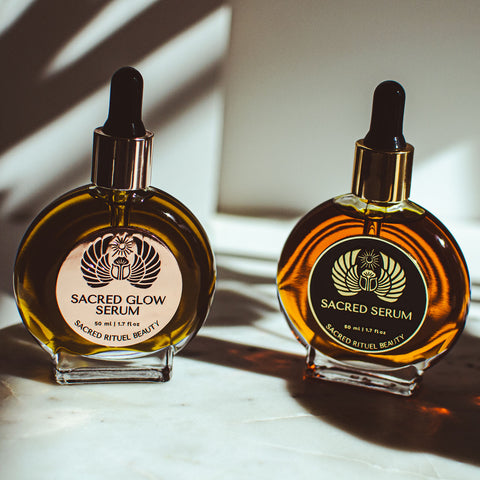
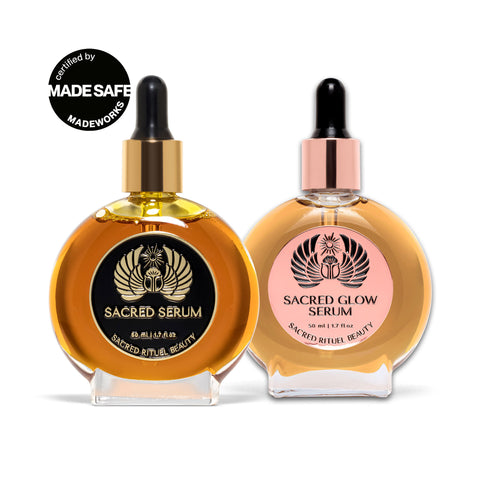
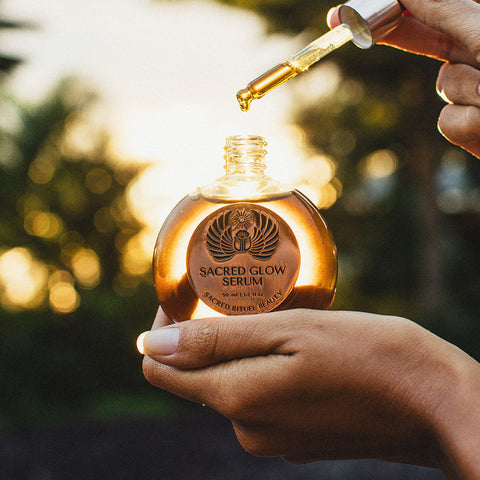
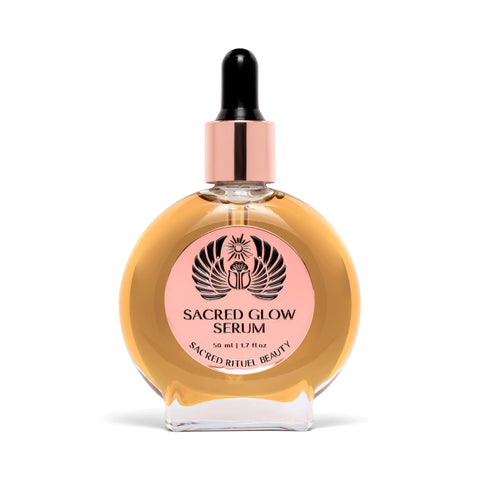
At Sacred Rituel, every product is formulated by folk herbalist Marysia Miernowska, founder of the School of the Sacred Wild, from cold-pressed, whole-plant botanicals chosen for what plants actually do for skin. Our face hero, Sacred Serum, is the prep step we keep coming back to: a phytocomplex of fourteen cold-pressed organic botanical oils that leaves skin soft, dewy, and luminous, the perfect canvas for a natural skin tint.
In this guide we will define what a natural skin tint is, look at how it differs from a foundation, walk through the kinds of clean ingredients to look for, show you how to choose your shade and apply it, and explain why prepping your skin with a whole-plant oil is the step that makes the biggest difference of all.
What is a natural skin tint?
A natural skin tint is a hybrid product that sits somewhere between skincare and makeup. It gives a wash of sheer, buildable color to even out the look of your skin tone and soften the appearance of imperfections, while nourishing your skin with clean, plant-based ingredients instead of the synthetic fillers found in much conventional makeup. The result is light, breathable coverage that lets your skin still look like skin.
What makes a tint genuinely natural is what is, and is not, in it. Look for plant oils and botanical extracts rather than synthetic fragrance, and for mineral pigments rather than heavy fillers. Here are a few ingredients worth seeking out:
- Shea butter: Pressed from the nut of the shea tree and rich in fatty acids and vitamins, shea is deeply moisturizing and softening, helping a tint glide on smoothly and feel comfortable on the skin.
- Jojoba Oil: Jojoba's wax esters closely mirror the skin's own sebum, which is why it absorbs cleanly without a greasy residue and suits nearly every skin type. It is rich in vitamin E and antioxidants that help protect skin from environmental stress, and it is a quiet hero of whole-plant skincare.
- Green tea extract: Abundant in antioxidant polyphenols, green tea helps defend skin against free-radical stress and is prized for its soothing, conditioning nature.
The deeper truth behind a clean tint is the same one herbalists have understood for centuries: the whole plant working together does more than any isolated molecule. A natural vitamin C, for instance, arrives in a whole-food matrix alongside the cofactors that make it more bioavailable than a synthetic isolate (Carr & Maggini 2017), and natural vitamin E is a full family of tocopherols rather than a single synthetic form. The same synergy that makes a whole-plant face oil so nourishing is what makes a clean tint worth choosing.
How does a natural skin tint differ from a foundation?
The simplest way to put it: a foundation is built to cover, and a natural skin tint is built to enhance. A traditional foundation aims for fuller, often matte coverage and frequently leans on synthetic fillers, silicones, and added fragrance to get there. A natural skin tint gives lighter, more breathable coverage from clean, plant-based ingredients, so it evens out the look of your complexion while letting your real skin show through.
That difference is exactly why the skin underneath matters so much more with a tint. A heavy foundation can sit on top of and obscure whatever is beneath it. A sheer tint, by contrast, follows the canvas: it settles into the texture and tone of your bare skin, so the healthier and more luminous your skin looks on its own, the more flawless the tint appears. This is the whole case for prepping well, and it is where a whole-plant face oil earns its place.
Consider building Sacred Serum into your routine as that prep step. Its blend of cold-pressed organic oils leaves skin soft, dewy, and glowing, the kind of bare-skin canvas that makes a tint look its most natural. Many people in our community tell us their skin glows enough on its own that they reach for less makeup, one writing that she does not "wear any foundation or other makeup" and her "skin feels and looks good," and another that everyone stops her to say "wow you're glowing." That glow is the foundation a natural skin tint is designed to sit on.

Why Healthy Skin Underneath Makes A Tint Look Best
If a sheer tint follows the canvas, then the single highest-leverage thing you can do for a natural finish is care for the skin beneath it. A well-hydrated, smooth, glowing complexion lets a tint melt in evenly. Dry, flaky, or dull skin makes even the best tint cling and look patchy. This is not a marketing flourish; it is simply how a sheer, buildable product behaves.
Prep With A Whole-Plant Face Oil
The most effective prep step is a nourishing facial oil pressed into clean skin a few minutes before your tint. A whole-plant oil works with your skin rather than coating it: plant oils are documented to support and repair the skin's moisture barrier, and because they share the structure of the skin's own lipids, they are compatible with its natural lipid matrix and absorb to condition the outer layers (Lin et al. 2018). The result is skin that feels soft and looks dewy and even, the ideal base for a tint. Sacred Serum is our face hero for exactly this, and people consistently tell us it leaves them with a dewy, lit-from-within glow without any greasy residue.
The Ingredient Science Behind The Glow
That glow is not an accident. Cold-pressing extracts oil without heat, preserving the delicate tocopherols, polyphenols, and carotenoids that heat and solvents would destroy. Jojoba's wax esters mirror the skin's own sebum so it absorbs without heaviness. Rosehip is a natural source of vitamin C and carotenoids long associated with the look of brighter, more even-toned skin. And the whole plant working in synergy, the entourage effect herbalists have always trusted, does more together than any one isolated compound can (Russo 2019). Cared-for skin that looks even and luminous on its own is the best canvas a natural skin tint could ask for.
A Gentle, Clean Routine
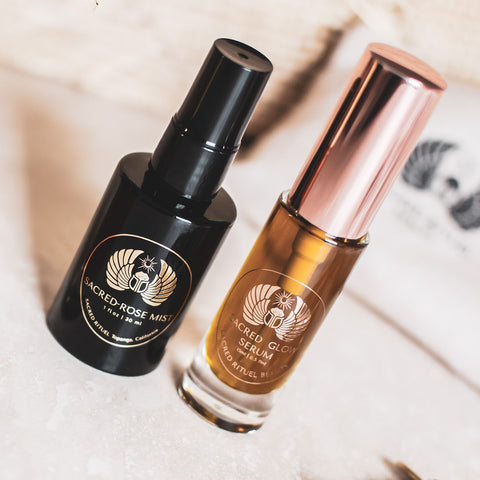
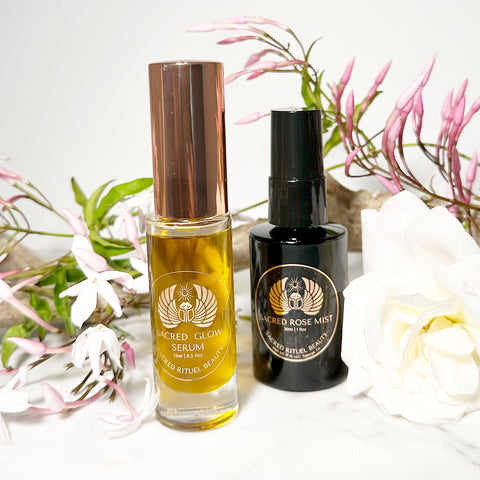
Glowing skin starts before the oil, too. Begin with a clean routine that avoids the pore-clogging ingredients worth steering clear of, mist your skin to refresh it, then press in your face oil. For the whole ritual together, the Sacred routine set pairs Sacred Serum with a rose mist and body oil, so cleansing, toning, and nourishing all live in one place. Keep it simple: a thoughtful, minimalist approach to skincare often serves your glow better than a crowded shelf.
How To Choose The Right Shade For Your Skin Tone
Identify Your Skin's Undertone
Start by determining whether your undertone is cool, warm, or neutral. Cool undertones have hints of pink, red, or blue and are flattered by shades with similar hues. Warm undertones appear more yellow, peachy, or golden and look best with shades that echo those warm tones. Neutral undertones can wear a wide range of shades, making a match easier to find.
Test In Natural Light
When testing shades, apply a small amount to your jawline, where your face and neck meet, and step into natural light. That is the truest read of how a shade will look on you. The right shade disappears into your skin without leaving a visible line. It is always worth testing a couple of options side by side, and because a tint is sheer, a near match blends more forgivingly than a heavy foundation would.

Consider Seasonal Changes
Your skin tone naturally shifts with the seasons, often a touch lighter in winter and deeper in summer with more sun. Keeping two shades on hand, or simply adjusting how much you apply, helps you stay matched year-round for a consistent, natural look.
Application Tips For A Natural Finish
Prep Your Skin First
Always start with clean, nourished skin. Cleanse to remove the day, then press in a whole-plant facial oil like Sacred Serum and give it a few minutes to absorb. This creates a hydrated, dewy, even base so your tint blends rather than clings, the difference between a finish that looks like skin and one that looks like makeup.
Use The Right Tools
The tool you choose shapes the finish. A brush gives more coverage and precision, a sponge gives a soft, blended look, and warm fingertips give the most natural, sheer everyday result by melting the product into skin. Experiment to find what suits your look.
Apply In Thin Layers
Begin with a small amount and build coverage only where you want it, blending each layer with patting motions rather than dragging. Thin layers keep a tint looking fresh and natural and prevent that heavy, cakey appearance. A little goes a long way, especially over well-prepped skin.
Refresh, Do Not Pile On
If you want a little more glow through the day, a light mist refreshes a tint beautifully without piling on more product. Letting your healthy skin do the heavy lifting keeps the whole look light and natural.
The Importance Of Clean, Whole-Plant Ingredients
Gentler On Your Skin
Choosing clean, plant-based ingredients means your skin is not asked to contend with synthetic fragrance and harsh fillers, which are common triggers for sensitivity. Whole-plant botanicals are gentle and bring real nourishment, the fatty acids, vitamins, and antioxidants that help skin look healthy and radiant over time. A fragrance-free, plant-based formula is a kinder choice for sensitive and reactive skin.
More Of What Actually Nourishes
Whole-plant ingredients carry their actives in the matrix nature packaged them in, which is part of why they work so well on skin. Natural vitamin C arrives with the cofactors that aid its bioavailability (Carr & Maggini 2017), and a cold-pressed oil keeps its delicate antioxidants intact. The same plant intelligence that nourishes your bare skin is what gives a clean tint its quiet, lasting benefits.
Kinder To The Earth
Clean, organic formulas tend to be sourced more sustainably and packaged more thoughtfully, often in recyclable or light-shielding materials that also protect delicate plant actives. Choosing them supports beauty practices that are gentler on the planet as well as on your skin.
Common Mistakes To Avoid
Skipping Skin Prep
The most common mistake is treating the tint as the whole routine. Without clean, nourished, glowing skin underneath, even a beautiful tint can look uneven or settle into dry patches. Prep is not optional; it is the step that makes everything else look effortless.
Using Too Much Product
A natural skin tint is meant to be sheer and buildable. Piling it on works against its whole purpose, leaving a heavy, cakey finish instead of a natural glow. Start light and add only where you need it.
Choosing The Wrong Shade
A shade that does not match can create a visible line between face and neck. Test on your jawline in natural light, and remember that a sheer tint over well-prepped skin is far more forgiving than a heavy foundation.
Ignoring Seasonal Changes
Skin tone shifts through the year. Adjusting your shade or how much you apply as the seasons change keeps your look consistent and natural rather than mismatched.
Final Thoughts
A natural skin tint is a beautiful way to even out the look of your complexion with sheer, breathable coverage and clean, plant-based ingredients, and the most important thing to know about it is also the most freeing: a tint looks its best over healthy, glowing skin. Get the canvas right and the rest is easy.
That is where a whole-plant face oil earns its place. Plant oils are documented to support and repair the moisture barrier, cold-pressing keeps their delicate antioxidants alive, and the synergy of the whole plant does more for your glow than any isolated ingredient could. People in our community tell us their bare skin glows enough to go lighter on makeup altogether. Whether you wear a tint over it or wear nothing at all, prepping with a nourishing oil like Sacred Serum gives you the luminous, cared-for skin that makes any look, tinted or bare, your own. For the loveliest finish, you might also enjoy a gentle DIY face mask for glowing skin in your weekly ritual.
Sources:
- Schilling, T., Sipatchin, A., Chuang, L., & Wahl, S. (2019). Looking Through “Rose-Tinted” Glasses: The Influence of Tint on Visual Affective Processing. Frontiers in Human Neuroscience, 13. https://doi.org/10.3389/fnhum.2019.00187
- Lin, T.-K., Zhong, L., & Santiago, J. (2018). Anti-Inflammatory and Skin Barrier Repair Effects of Topical Application of Some Plant Oils. International Journal of Molecular Sciences, 19(1), 70. https://doi.org/10.3390/ijms19010070
- Carr, A. C., & Maggini, S. (2017). Vitamin C and Immune Function. Nutrients, 9(11), 1211. https://doi.org/10.3390/nu9111211
- Russo, E. B. (2019). The Case for the Entourage Effect and Conventional Breeding of Clinical Cannabis: No “Strain,” No Gain. Frontiers in Plant Science, 9, 1969. https://doi.org/10.3389/fpls.2018.01969
Frequently Asked Questions
What is a natural skin tint?
A natural skin tint is a lightweight, skincare-makeup hybrid that gives sheer, buildable coverage to even out the look of your complexion while nourishing your skin with clean, plant-based ingredients. Unlike heavy makeup, it lets your skin still look like skin. Because a tint is sheer, it follows the canvas beneath it, so it looks its best over healthy, well-prepped skin. Prepping with a whole-plant face oil like Sacred Serum leaves skin soft, dewy, and glowing, the ideal base for a natural skin tint.
How does a natural skin tint differ from a foundation?
A foundation is built to cover, often with fuller, matte coverage and synthetic fillers, silicones, and added fragrance. A natural skin tint is built to enhance: it gives lighter, more breathable coverage from clean, plant-based ingredients and lets your real skin show through. Because a tint is sheer, the skin underneath matters more. A glowing, well-prepped complexion lets a tint melt in seamlessly, which is why a nourishing face oil such as Sacred Serum makes such a difference to the finish.
Can natural skin tints be used on all skin types?
Yes. Because they are formulated with gentle, plant-based ingredients and tend to be free of synthetic fragrance and harsh fillers, natural skin tints generally suit all skin types, including sensitive and oily, congested-looking skin. Look for clean botanicals like jojoba and shea rather than synthetic additives. As with any new product, patch test on your inner arm first, and prep with a non-greasy whole-plant oil like Sacred Serum, which absorbs cleanly and suits nearly every skin type.
What are the key benefits of using a natural skin tint?
A natural skin tint evens out the look of your complexion with sheer, breathable coverage while nourishing skin with clean, plant-based ingredients instead of synthetic fillers. It lets your skin look like skin, layers well over a healthy, glowing base, and is gentler on sensitive skin than heavy makeup made with synthetic fragrance. The biggest benefit, though, comes from how it works with your skin: prep with a whole-plant face oil so your bare skin glows, and the tint simply enhances what is already there.
How do I choose the right shade of natural skin tint?
Start by identifying your undertone: cool (hints of pink, red, or blue), warm (yellow, peachy, or golden), or neutral. Then test a small amount on your jawline, where your face and neck meet, in natural light. The right shade disappears into your skin without leaving a visible line. Because a tint is sheer, a near match blends more forgivingly than a heavy foundation, and your skin tone may shift with the seasons, so keeping two shades or adjusting how much you apply helps you stay matched year-round.
What are some common ingredients in natural skin tints?
Clean natural skin tints typically feature plant butters and oils alongside mineral pigments. Look for shea butter for moisture and softness, jojoba oil whose wax esters mirror the skin's own sebum so it absorbs without greasiness, and antioxidant-rich green tea extract. Whole-plant ingredients carry their actives in the matrix nature packaged them in: natural vitamin C arrives with cofactors that aid its bioavailability, and natural vitamin E is a full family of tocopherols rather than a single synthetic form. Avoid synthetic fragrance and heavy fillers.
Radiance Is Personal. Let’s Reveal Yours...
All Day Glow Essentials