What Is A Natural Sunscreen And How Does It Work?
A natural sunscreen is a sun-protection product that uses naturally derived mineral filters, zinc oxide and titanium dioxide, to shield your skin from UV rays, rather than synthetic chemical UV filters. These mineral particles sit on the surface of the skin and physically reflect and scatter UVA and UVB light, which is why they are often called physical sunscreens. To do its job, a real natural sunscreen has to be a broad-spectrum SPF that has been tested and labeled as such. Here is the honest, important distinction we want you to leave with: a nourishing botanical face oil is not a sunscreen and does not replace one. Sacred Serum, the whole-plant face oil formulated by folk herbalist Marysia Miernowska, is an antioxidant-rich oil that supports and nourishes your skin alongside your SPF. It is not sun protection, and we will never tell you it is. A quick note of good practice: patch test any new oil on your inner arm first.
Key Takeaways:
- A natural sunscreen uses mineral filters: Real natural (mineral) sunscreens rely on zinc oxide and titanium dioxide, which sit on the surface of the skin and physically reflect UV rays, instead of the synthetic chemical filters that absorb UV. To count as sun protection, it must be a broad-spectrum SPF, tested and labeled.
- A face oil is not a sunscreen: No botanical oil, including Sacred Serum, provides SPF or replaces a broad-spectrum sunscreen. Sacred Serum is a nourishing antioxidant face oil that complements your SPF, never a substitute for it.
- Whole-plant antioxidants support skin against oxidative stress: Cold-pressed oils like sea buckthorn, rosehip, blackberry, and pomegranate are rich in carotenoids, vitamin C, vitamin E, and polyphenols that are documented to help defend skin against free-radical and oxidative stress. That is ingredient-level nourishment, not sun protection.
In clean beauty, words like natural, mineral, and non-toxic get used so loosely that it is genuinely hard to know what your sun protection is actually doing. So let us be clear and confident about it. A natural sunscreen is a product that protects your skin from UV rays using naturally derived mineral filters rather than synthetic chemicals, and to be sun protection at all it has to be a tested, labeled, broad-spectrum SPF. Anything that is not tested and labeled as a sunscreen, however lovely and nourishing, is not one.
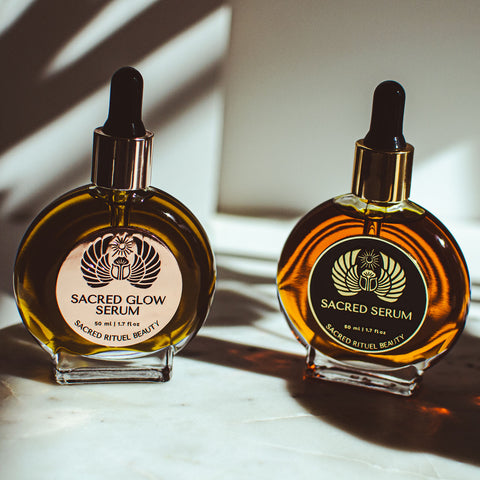
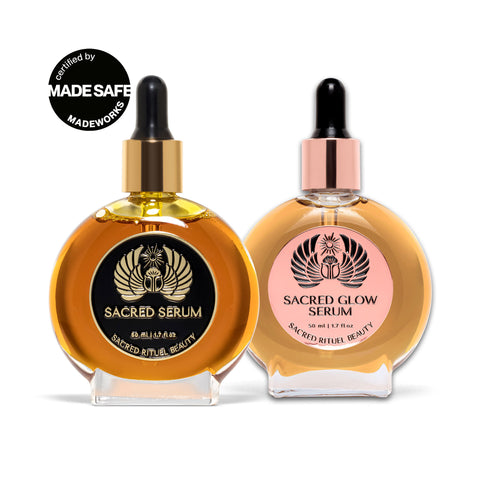
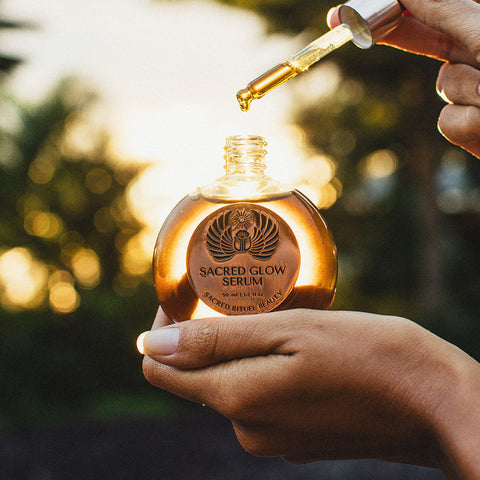
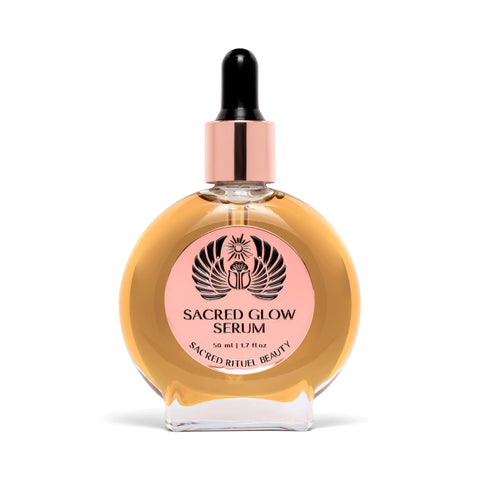
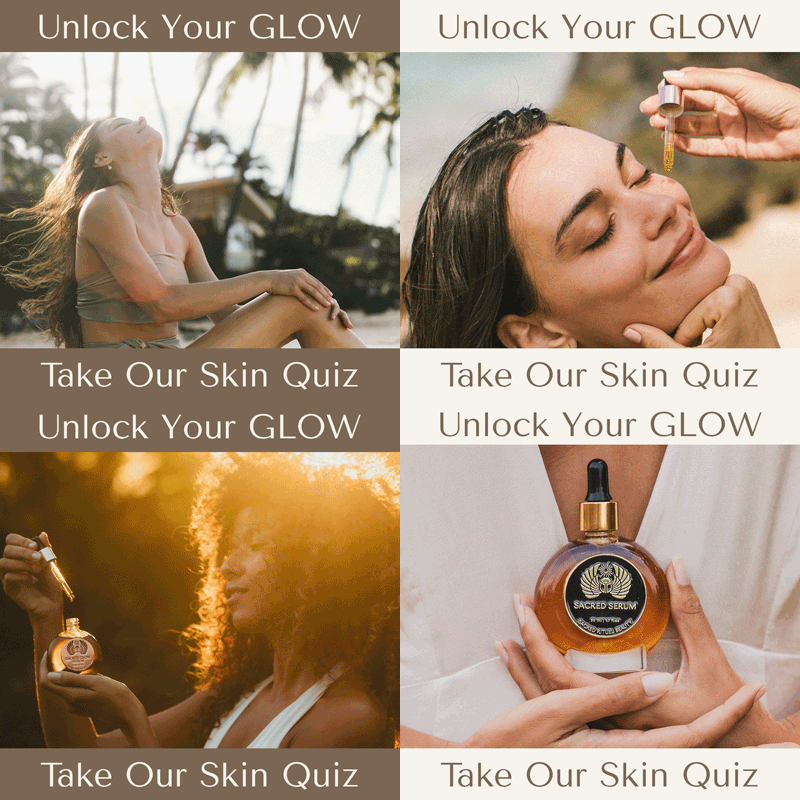
At Sacred Rituel, every product is formulated by folk herbalist Marysia Miernowska, founder of the School of the Sacred Wild, from cold-pressed, whole-plant botanicals chosen for what plants genuinely do for skin. Our face hero, Sacred Serum, is a whole-plant face oil rich in antioxidants that nourish and support your skin. It is designed to work alongside your sunscreen, not in place of it. We will say that plainly throughout this guide, because your skin deserves the truth more than it deserves a marketing line.
Below we will define what makes a sunscreen natural, explain the real difference between mineral and chemical filters, look at the whole-plant antioxidants that nourish skin against everyday oxidative stress, and show you exactly where a face oil like Sacred Serum fits into a sun-smart ritual.
What Makes A Sunscreen “Natural”?
When people ask what makes a sunscreen natural, they usually mean a formula that protects against UV using naturally derived mineral filters instead of synthetic chemical ones. The two mineral filters that count are zinc oxide and titanium dioxide. Both are inert minerals that sit on the surface of the skin and physically reflect and scatter UVA and UVB light, which is why a natural sunscreen is also called a physical or mineral sunscreen.
That is different from a conventional chemical sunscreen, which uses synthetic UV filters such as oxybenzone or avobenzone. Those absorb into the upper layers of the skin and convert UV light into heat. For some people, especially those with reactive or easily irritated skin, the synthetic filters and any added synthetic fragrance can be a source of irritation, which is part of why mineral formulas have become so popular.
One honest caution about the word natural: it is not regulated on a label. A product can be full of plant oils and still offer no meaningful sun protection at all, and a product can say natural while leaning on synthetic filters. The only way a product is sun protection is if it is a broad-spectrum SPF that has been tested and labeled as such. When you are choosing real sun protection, look for zinc oxide or titanium dioxide and a clearly stated, tested SPF. If you are also curating a gentle, low-irritation routine, our guide to ingredients worth avoiding in skincare is a good companion read.

Can natural sunscreens go bad or expire?
Yes. Like all skincare, a natural sunscreen has a shelf life, and because mineral formulas often use fewer synthetic preservatives, it matters how you store them. Here is how mineral protection works and how to keep it working.
How Mineral Filters Create A Physical Barrier
Mineral sunscreens act as physical blockers. Rather than being absorbed and converted like chemical filters, zinc oxide and titanium dioxide stay on the surface of the skin and reflect UVA and UVB rays, like a shield. Because they sit on top and are well tolerated, they are often a comfortable choice for sensitive or easily reactive skin, and a mineral SPF starts working as soon as it is applied.
Storage And Shelf Life
Most sunscreens carry a shelf life of around one to three years, with a period-after-opening symbol on the packaging. Heat and direct light degrade any sunscreen faster, so keep it out of a hot car and out of direct sun, and replace it if the texture, color, or smell changes. A degraded sunscreen cannot be trusted to protect you, so when in doubt, start fresh.
Where A Nourishing Oil Fits
A whole-plant face oil follows the same common-sense storage rules: cold-pressed botanical oils are best kept cool and out of direct light to protect their delicate antioxidants. Our Sacred Serum is bottled in light-shielding glass for exactly this reason. To be clear, the oil is not your sun protection. It is the nourishing, antioxidant-rich step that supports your skin, while a tested mineral SPF does the protecting.
Do natural sunscreens clog pores?
Mineral sunscreens are generally non-comedogenic and well tolerated, though heavy or waxy formulas can feel occlusive on oily or congested-looking skin. The same question comes up about face oils, so it is worth understanding which botanical ingredients nourish skin without weighing it down. Many of these whole-plant oils are antioxidant powerhouses, which is a real benefit for skin facing everyday environmental and oxidative stress. To be precise about it: antioxidant nourishment is ingredient-level skin support, not sun protection. Here are a few standouts found in Sacred Serum.
- Blackberry Seed Oil: Naturally rich in vitamin E and omega-3 fatty acids, blackberry seed oil is a lightweight, barrier-supportive oil. Its antioxidants help defend skin against oxidative stress and support a healthy, radiant-looking glow.
- Pomegranate Seed Oil: High in punicic acid (an omega-5 polyphenol) and antioxidants, pomegranate seed oil is wonderfully comforting and supports the look of supple, even-toned skin.
- Rosehip Oil: A natural source of vitamin C and carotenoids, rosehip is beloved for supporting the look of firmer, smoother, more even-toned skin and is one of the most loved oils in whole-plant skincare.
- Sea Buckthorn Oil: Rich in carotenoids, vitamin C, and omega fatty acids, sea buckthorn is a vivid antioxidant oil that helps skin feel comfortable and look radiant after time outdoors, supporting skin against the look of oxidative stress.
The point of these oils is nourishment, not UV defense. They feed your skin the fatty acids and antioxidants it thrives on, which is the perfect complement to a sunscreen that handles the actual protecting. If you love a pared-back routine, you may also enjoy our roundup of the best minimalist skincare brands.

The Antioxidant Difference: Why Whole-Plant And Cold-Pressed Matters
If the oils above are about nourishment rather than protection, what makes a whole-plant oil genuinely worth reaching for? It comes down to how the oil is made and how the plant compounds work together.
Cold-pressing extracts oil without heat or solvents, which preserves the delicate antioxidants, carotenoids, polyphenols, and tocopherols (vitamin E) that high heat would destroy. Those antioxidants are documented to help defend skin against free-radical and oxidative stress, the everyday wear that environment and time bring. That is real ingredient science, and it is exactly why we cold-press.
There is also the matter of the whole plant versus an isolated molecule. Herbalists have long understood, and modern research on the entourage effect supports (Russo 2019), that the full spectrum of a plant's compounds working together does more than any single isolated fraction. Natural vitamin E in a whole-plant oil arrives as a full family of tocopherols rather than a single synthetic form, and plant-sourced vitamin C comes with the cofactors that help it work. Our Sacred Serum is built on this principle: fourteen cold-pressed organic botanical oils kept whole, so the antioxidants reach your skin intact. None of this is sun protection. It is the deep, antioxidant nourishment that makes an oil a beautiful partner to your SPF.
Is Sacred Serum A Natural Sunscreen?
No. We want to be completely straight with you: Sacred Serum is not a sunscreen, it does not carry an SPF rating you should rely on, and it must never be used in place of a broad-spectrum sunscreen. A real natural sunscreen is a tested, labeled mineral SPF built around zinc oxide or titanium dioxide. Sacred Serum is something different and, in its own right, wonderful: a cold-pressed, whole-plant face oil rich in antioxidants that nourish and support your skin.
What it does beautifully is feed your skin. Its blend of organic botanical oils, including rosehip, sea buckthorn, blackberry, and pomegranate, delivers carotenoids, vitamin C, vitamin E, and polyphenols that are documented to help skin defend against free-radical and oxidative stress, while supporting the look of calm, radiant, even-toned skin. People in our community consistently tell us their skin looks more radiant and feels comfortable and nourished after time outdoors. That is the role of a great antioxidant oil, and it is a meaningful one.
So the honest, confident answer is this: wear your tested broad-spectrum mineral sunscreen for protection, and layer a nourishing whole-plant oil like Sacred Serum into your ritual for antioxidant support and that lit-from-within glow. The two are partners. One protects, one nourishes, and your skin gets the best of both. For your face and your daily ritual together, the Sacred routine set pairs the serum with a rose mist and body oil.
How To Use Sacred Serum Alongside Your Sunscreen
Folding a whole-plant oil into a sun-smart routine is simple. The order matters: nourish first, protect last. Here is how to get the most from your ritual.
Start With A Clean, Damp Face
Begin by cleansing with a gentle, non-stripping oil cleanser. For the best absorption, apply Sacred Serum to skin that is still slightly damp or freshly misted with a hydrosol. This gives the botanical oils the perfect environment to sink in and nourish.
Apply A Few Drops Of Sacred Serum
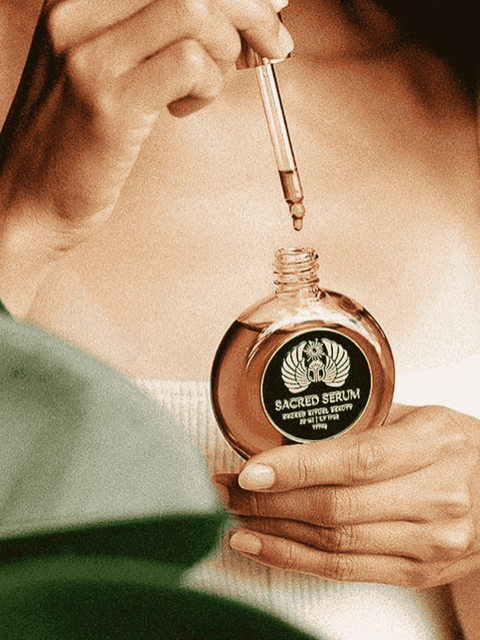
Press three to five drops between your palms and pat the oil across your face, neck, and upper chest. It absorbs quickly into a soft, golden finish without a greasy residue, and leaves skin feeling nourished and looking radiant. This is your antioxidant nourishment step, not your protection step.
Finish With A Tested Broad-Spectrum Sunscreen
Once your oil has absorbed, apply your tested broad-spectrum sunscreen as the final step before sun exposure, ideally a mineral SPF with zinc oxide or titanium dioxide, and reapply it through the day as directed. The sunscreen does the protecting; the oil underneath keeps your skin nourished and comfortable. If you also love a weekly nourishing ritual, our DIY face masks for glowing skin are a lovely addition.

Final Thoughts
The conversation around sun care is shifting toward gentler, mineral-based protection and toward ingredients that work in harmony with skin and with the planet. That shift is worth celebrating, and it deserves to be grounded in honesty. A natural sunscreen means a tested, broad-spectrum mineral SPF built on zinc oxide or titanium dioxide. A whole-plant face oil is something different and just as worthy: deep antioxidant nourishment that supports your skin every day.
So choose a real mineral sunscreen for protection, and let a nourishing oil like Sacred Serum care for your skin alongside it. Whole-plant botanicals, cold-pressed and kept whole, are some of the most nourishing things you can offer your face. Used together with a sunscreen that protects, they are a quietly powerful, plant-rooted way to keep your skin nourished, comfortable, and radiant. If you want to explore further, our guide to jojoba oil for skin is a great next read.
Sources:
- Li, L., Chong, L., Huang, T., Ma, Y., Li, Y., & Ding, H. (2022). Natural products and extracts from plants as natural UV filters for sunscreens: A review. Animal Models and Experimental Medicine, 6(3). https://doi.org/10.1002/ame2.12295
- Jovana Milutinov, Nebojša Pavlović, Dejan Ćirin, Milica Atanacković Krstonošić, & Veljko Krstonošić. (2024). The Potential of Natural Compounds in UV Protection Products. Molecules, 29(22), 5409–5409. https://doi.org/10.3390/molecules29225409
- Russo, E. B. (2019). The Case for the Entourage Effect and Conventional Breeding of Clinical Cannabis: No “Strain,” No Gain. Frontiers in Plant Science, 9, 1969. https://doi.org/10.3389/fpls.2018.01969
Frequently Asked Questions
Can natural sunscreens go bad or expire?
Yes. Like all skincare, natural sunscreens have a shelf life, usually one to three years, with a period-after-opening symbol on the packaging. Because mineral formulas often use fewer synthetic preservatives, heat and direct light can degrade them faster, so store them cool and out of direct sun and replace them if the texture, color, or smell changes. A degraded sunscreen cannot be trusted to protect you.
Do natural sunscreens clog pores?
Mineral sunscreens built on zinc oxide and titanium dioxide are generally non-comedogenic and well tolerated, though heavy or waxy formulas can feel occlusive on oily or congested-looking skin. Lightweight, well-blended formulas are the key. The same is true of face oils: a lightweight, cold-pressed whole-plant oil like Sacred Serum is designed to nourish without weighing skin down. Remember that a face oil nourishes; it does not provide sun protection.
Is SPF 10 in Sacred Serum enough for daily use?
We need to correct the premise honestly: Sacred Serum is a nourishing whole-plant face oil, not a sunscreen, and you should not rely on it for any SPF or sun protection. No face oil replaces a tested, labeled broad-spectrum sunscreen. For daily use, wear a real mineral SPF built on zinc oxide or titanium dioxide, and use Sacred Serum underneath it for antioxidant nourishment. The oil supports your skin; the sunscreen protects it.
Does natural sunscreen leave a white cast?
Mineral sunscreens can leave a white cast, especially older non-nano zinc oxide formulas on deeper skin tones. Modern mineral formulas have improved a great deal, and many now blend in well or come lightly tinted to match a range of skin tones. If a white cast bothers you, look for a tinted mineral SPF. A face oil like Sacred Serum, worn underneath, absorbs into a soft golden finish and does not add a cast.
How do I know if a product’s sun protection is naturally derived?
Check the active-ingredient panel. A natural, mineral sunscreen lists zinc oxide and/or titanium dioxide as its UV filters, rather than synthetic chemical filters like oxybenzone or avobenzone. It should also clearly state a tested, broad-spectrum SPF. The word natural on the front of a bottle is not regulated, so the active-ingredient list and the tested SPF label are what tell you the truth.
Can natural sunscreens help reduce signs of aging?
Consistent broad-spectrum sun protection is widely regarded as one of the most effective ways to protect the look of your skin over time, since UV exposure is a major driver of visible aging. A tested mineral sunscreen is the protective half of that. Pairing it with an antioxidant-rich whole-plant oil like Sacred Serum, whose carotenoids, vitamin C, and polyphenols are documented to help defend skin against oxidative stress, supports the look of firm, even-toned, radiant skin. Protection plus nourishment is the pairing your skin loves.
What natural things can I use as sunscreen?
The only naturally derived ingredients that actually provide sun protection are the mineral filters zinc oxide and titanium dioxide, used in a tested, labeled broad-spectrum SPF. Despite what some corners of the internet claim, plant oils like coconut, raspberry seed, or carrot seed oil do not offer reliable or meaningful sun protection and should never be used as sunscreen. Use a real mineral SPF for protection, and reach for nourishing botanical oils for what they do beautifully: feeding your skin antioxidants.
What is the most natural form of sunscreen?
The most natural form of sun protection is a mineral (physical) sunscreen whose only UV filters are zinc oxide and titanium dioxide. These inert minerals sit on the surface of the skin and reflect UV rays, are well tolerated by sensitive skin, and are reef-friendlier than many synthetic chemical filters. Look for a non-nano mineral formula with a tested, broad-spectrum SPF, and keep your nourishing whole-plant oil as the supportive step underneath.
Radiance Is Personal. Let’s Reveal Yours...
All Day Glow Essentials