Jojoba Oil For Skin: How It Supports Acne-Prone And Dry Skin
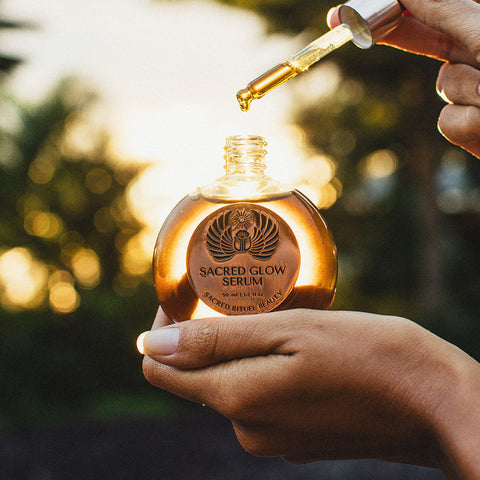
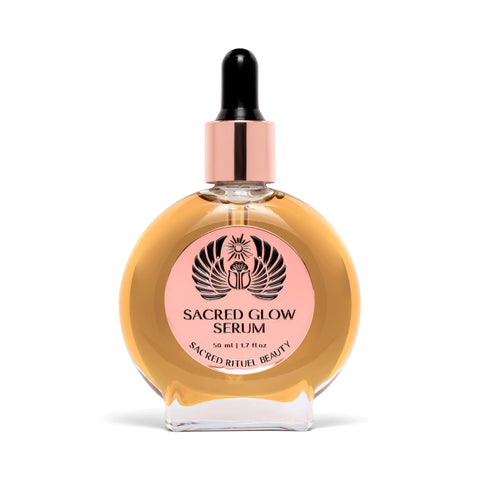
Jojoba oil is one of the most skin-compatible plant oils there is, and it earns that reputation honestly: its wax esters closely mirror the skin's own sebum, so it absorbs cleanly and helps both oily, breakout-prone skin and dry, thirsty skin find balance. That compatibility is documented. Plant oils like jojoba share the structure of the skin's own lipids, which lets them sink into the barrier and reinforce it rather than sitting on top (Lin et al. 2018). At Sacred Rituel, jojoba is one of the cold-pressed botanicals in Sacred Serum, the whole-plant face oil formulated by folk herbalist Marysia Miernowska, founder of the School of the Sacred Wild. It is exactly what people in our community describe: in our reviews, many tell us a whole-plant oil leaves their skin soft and balanced, one writing it "absorbs right away and doesn't leave me greasy." A quick note of good practice: patch test any new oil on your inner arm first.
Key Takeaways:
- Jojoba oil mirrors the skin's own sebum: Its wax esters are remarkably close to the oil your skin makes itself, which is why it is so well tolerated and why it suits oily, breakout-prone skin and dry skin alike.
- It works with your skin's barrier, not on top of it: Plant oils like jojoba are compatible with the skin's lipid matrix, so they absorb to condition the skin and reinforce the moisture barrier rather than resting on the surface (Lin et al. 2018).
- Whole-plant and cold-pressed matters: Cold-pressing preserves the delicate vitamin E, antioxidants, and fatty acids that heat would destroy, and a whole-plant blend brings far more to the skin than any single isolated oil.
If you have acne-prone skin, the idea of putting an oil on your face can feel counterintuitive. If you have dry, flaky skin, you may have tried oils that only sat there feeling heavy. Jojoba oil answers both, and it does so for a simple, well-documented reason: it is the plant oil that most closely resembles your skin's own sebum. The honest, confident answer is that jojoba is one of the most skin-friendly oils there is, and the plant world has been doing this work far longer than any lab.
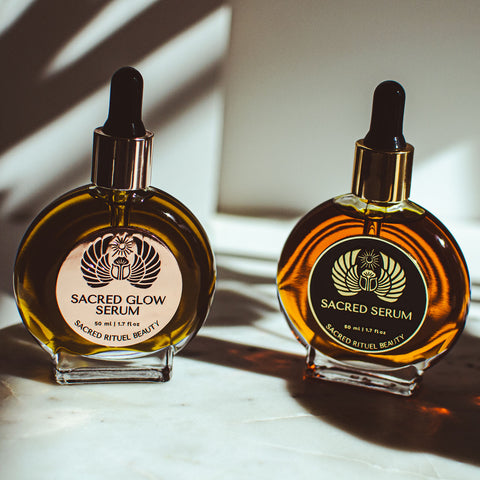
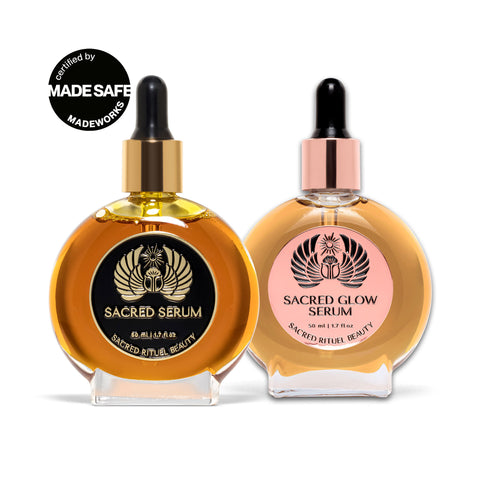
At Sacred Rituel, every product is formulated by folk herbalist Marysia Miernowska, founder of the School of the Sacred Wild, from cold-pressed, whole-plant botanicals chosen for what plants actually do for skin. Jojoba is one of the organic oils in our face hero, Sacred Serum, a whole-plant blend that absorbs deeply without a greasy residue. To go deeper on the ingredient itself, see our glossary entry on Jojoba Oil.
In this guide we will look at what jojoba oil is, why its sebum-like structure makes it such a friend to both acne-prone and dry skin, how to fold it into your routine, and what to look for so you choose a version that actually delivers.
Can you use jojoba oil every day?
Yes, jojoba oil is gentle and balancing enough for daily use, morning or night, on nearly every skin type. What makes that possible is its structure. Jojoba is technically a liquid wax, and its wax esters are remarkably close to the sebum your skin produces, so your skin recognizes it and absorbs it cleanly. That close match is also why jojoba tends to feel light rather than heavy, even for skin that is already oily.
Jojoba oil comes from the seeds of the jojoba plant (Simmondsia chinensis), a resilient shrub native to the arid deserts of Arizona, California, and Mexico. Indigenous peoples of the region have used it for generations to soothe and protect the skin. It is naturally rich in vitamin E, antioxidants, and fatty acids, which is why it both conditions the skin and helps it hold onto moisture.
That sebum-like quality is exactly why jojoba is one of the cold-pressed oils in Sacred Serum. Blended with other whole-plant botanicals, it brings balance and lasting comfort to skin, which is what people in our community describe: many tell us a whole-plant oil leaves their skin soft and balanced day after day.
Balances The Look And Feel Of Oily Skin
Because jojoba's wax esters so closely resemble your own sebum, applying it can help skin feel less prone to overproducing oil, which is often what leaves a complexion looking shiny and congested. Over time, that balancing feel is what people notice. In our reviews, customers consistently tell us a whole-plant oil suits combination and oily skin, one writing it helps "manage oily skin but also dry skin," and another that it "absorbs right away and doesn't leave me greasy."
Soothes The Look Of Irritation
Jojoba carries vitamin E and antioxidants that help calm the look and feel of stressed, reactive skin. For skin that flushes easily or feels tight and sensitive, a gentle plant oil can be a comfort. Many in our community describe a whole-plant oil leaving sensitive skin calmer and more comfortable, one writing "my skin has never been so calm."
Lightweight And Non-Greasy
Unlike heavier oils that can feel like they are sitting on the skin, jojoba absorbs quickly and leaves little residue. That lightness is what makes it work for oily and combination skin as readily as for dry skin: you get the conditioning without the greasy shine. It is a recurring theme in our reviews, with customers telling us a good plant oil sinks in "without leaving a greasy residue."

Why is jojoba oil so expensive?
Good jojoba oil costs more because quality genuinely costs more. The jojoba shrub is slow to mature and grows in a limited range of arid climates, the harvest is labor-intensive, and the methods that preserve the oil's value are gentler and slower than industrial refining. When you see a higher price on a well-made jojoba oil, you are usually paying for how it was grown and pressed.
Cold-Pressing Preserves The Good Stuff
The single biggest factor is extraction. Cold-pressing draws the oil out without heat, which preserves the delicate vitamin E, antioxidants, and fatty acids that high heat and solvents destroy. It is a lower-yield, more careful process, and it is the reason a cold-pressed oil carries more of what makes jojoba worth using in the first place. This is well documented: cold-pressing retains markedly higher levels of tocopherols and other antioxidants than heat or solvent refining.
Organic, Whole-Plant Quality
Certified organic botanicals are grown without synthetic pesticides, which is gentler on your skin and on the land, and they tend to cost more to farm. A whole-plant approach keeps the full spectrum of the plant intact rather than stripping it down to one fraction. Herbalists have long understood that the whole plant working together does more than any isolated part, a principle the research on plant synergy supports (Russo 2019).
It Is Concentrated, So A Little Goes Far
Jojoba is potent even in small amounts. One or two drops is usually plenty, so a well-made bottle lasts far longer than the price tag suggests. Seen that way, a quality cold-pressed jojoba oil is often more economical per use than it first appears.
How Jojoba Oil Supports Dry Skin
Dry skin can feel tight, flaky, and uncomfortable, and it usually means the skin's barrier is running short on the lipids that hold water in. This is where jojoba's sebum-like nature is such a gift. Here is how it helps dry skin feel comfortable again.
Conditions And Supports The Moisture Barrier
Because jojoba's structure is compatible with the skin's own lipid matrix, it sinks in to condition the deeper layers of the outer skin and reinforce the barrier that keeps moisture from escaping (Lin et al. 2018). Rather than coating the surface, it works with your skin, which is why it leaves dry skin feeling soft and supple rather than slick.
Naturally Rich In Vitamin E
Jojoba is a natural source of vitamin E, an antioxidant that helps protect skin from environmental stress while supporting a soft, comfortable feel. Natural vitamin E is a full family of tocopherols, broader than the single synthetic form, which you can read more about in our glossary entry on Tocotrienols Vitamin E.
Locks In Hydration Without The Heaviness
Pressed onto slightly damp skin, jojoba helps seal in the water already there, leaving skin hydrated and comfortable for hours without a greasy finish. That combination of lasting moisture and a light feel is what people in our community describe most often, one writing simply that a whole-plant oil "makes your skin feel like silk."
How To Incorporate Jojoba Oil Into Your Skincare Routine
The beauty of jojoba oil is its versatility. Whether you are a minimalist or love a multi-step ritual, there is a way to make it work for you. For more on a pared-back approach, see our guide to minimalist skincare brands. Here is how to fold jojoba into your routine:
- As a face oil: A whole-plant face oil like Sacred Serum is the simplest way to bring jojoba into your routine. Smooth a few drops over clean, slightly damp skin, morning or night.
- After cleansing and toning: Apply jojoba after a gentle cleanse and a hydrating mist so it seals in that first layer of moisture. The Sacred routine set pairs the face oil with a rose mist and body oil for a whole ritual that lives together.
- As a soothing facial massage: A few drops give enough slip for a slow, calming facial massage, leaving skin soft and cared for.
- On dry patches: Press a drop into dry spots like the corners of the nose or flaky areas to soften and comfort them.
- On lips: A single drop keeps lips soft and conditioned.
One honest note: a face oil is nourishment, not sun protection. Keep using a dedicated SPF when you are out and about, and let jojoba do the conditioning.
Tips To Get The Most Out Of Jojoba Oil
To get the best from jojoba oil, a few simple habits go a long way. Here is how to use it well.
Use It On Damp Skin
Skin takes up jojoba better when it is slightly damp, because the moisture helps draw the oil in. After cleansing, leave your skin a little dewy and press in a few drops to lock in hydration.
Warm It Between Your Palms
Rubbing a few drops between your palms before pressing them onto your face warms the oil so it spreads evenly and absorbs faster, and the warmth itself feels soothing.
Use It Consistently
Like any plant oil, jojoba rewards consistency. Make it a steady part of your morning or evening ritual and you will see your skin look and feel more balanced over time.
Store It Cool And Dark
Light and heat degrade delicate plant oils, so keep your jojoba in a cool, dark place. Well-made oils are bottled in light-shielding glass for exactly this reason, which keeps every drop as potent as the day you opened it.
Pair It Thoughtfully
Jojoba plays well with other whole-plant ingredients. In Sacred Serum it sits alongside botanicals like Rosehip Oil, a natural source of vitamin C and carotenoids associated with the look of firmer, more even-toned skin, so the blend does more together than jojoba could alone.
Are There Any Precautions To Keep In Mind?
Jojoba oil is generally well tolerated, even by sensitive skin. As with any new product, a little care goes a long way.
Patch-Test First
Even gentle oils can occasionally cause a reaction. Apply a small amount to your inner arm or behind your ear and wait 24 hours. If your skin stays comfortable, you are good to use it on your face.
A Little Goes A Long Way
More is not better with oils. Start with one or two drops and add only if your skin still feels like it needs more. Too much can leave skin feeling slick and slow to absorb.
Choose Quality
Not all jojoba oils are created equal. Look for organic, cold-pressed jojoba, ideally as part of a whole-plant blend, so you get the full spectrum of what the oil has to offer. If you want to be sure nothing in your routine is quietly clogging your pores, our guide to pore-clogging ingredients to avoid is a useful companion read.
Give It Time
If your skin is congested, you may notice an adjustment period as a new routine settles in. This usually passes. Give jojoba a few weeks of consistent use before you judge it, and pair it with a holistic approach to skin, which you can explore in our complete guide to holistic skincare practices.

Final Thoughts
Jojoba oil earns its place in skincare for one beautifully simple reason: it is the plant oil that most closely mirrors your skin's own sebum. That is why it suits acne-prone and dry skin alike, conditioning the skin and supporting the moisture barrier without the heaviness so many people fear from oils. The science is on its side, the herbalist tradition has trusted it for generations, and the people in our community feel the difference.
If you want the easiest way to bring jojoba into your routine, reach for a cold-pressed, whole-plant blend where it can work in concert with other botanicals. That is exactly how we built Sacred Serum, and you can also fold a jojoba ritual into the wider self-care of a soothing mask, like the ones in our guide to DIY face masks for soft, glowing skin.
Sources:
- Blaak, J., & Staib, P. (2022). An updated review on efficacy and benefits of sweet almond, evening primrose and jojoba oils in skin care applications. International Journal of Cosmetic Science, 44(1), 1-9.
- Gad, H. A., Roberts, A., Hamzi, S. H., Gad, H. A., Touiss, I., Altyar, A. E., ... & Ashour, M. L. (2021). Jojoba oil: an updated comprehensive review on chemistry, pharmaceutical uses, and toxicity. Polymers, 13(11), 1711.
- Sandha, G. K., & Swami, V. K. (2009). Jojoba oil as an organic, shelf stable standard oil-phase base for cosmetic industry. Rasayan J Chem, 2(2), 300-306.
- Lin, T.-K., Zhong, L., & Santiago, J. (2018). Anti-Inflammatory and Skin Barrier Repair Effects of Topical Application of Some Plant Oils. International Journal of Molecular Sciences, 19(1), 70. https://doi.org/10.3390/ijms19010070
Frequently Asked Questions
Can you use jojoba oil every day?
Yes. Jojoba oil is gentle and balancing enough for daily use, morning or night, on nearly every skin type. Its wax esters closely mirror the skin's own sebum, so skin recognizes and absorbs it cleanly. A whole-plant face oil like Sacred Serum, which contains cold-pressed jojoba, is an easy way to use it every day.
Why is jojoba oil so expensive?
Quality jojoba costs more for honest reasons: the shrub is slow to mature and grows in a limited arid range, the harvest is labor-intensive, and cold-pressing preserves the delicate vitamin E and antioxidants that cheaper heat or solvent refining destroys. A little also goes a long way, so a well-made bottle lasts far longer than the price suggests.
Do I need moisturizer after jojoba oil?
Often not. For many people jojoba oil provides enough conditioning and barrier support on its own, especially pressed into slightly damp skin so it seals in moisture. If your skin still feels dry, you can layer a moisturizer underneath the oil. Many in our community find a whole-plant face oil becomes the only step their skin needs.
Should I wash my face after using jojoba oil?
No, not when you are using it as a leave-on face oil. Applied as the last step of your routine, jojoba is meant to stay on the skin so it can condition and support the barrier. You would only rinse it off if you were using an oil specifically to cleanse, which is a different step.
Is jojoba oil recommended by dermatologists?
Jojoba is widely regarded as one of the most skin-friendly plant oils because its structure so closely mirrors the skin's own sebum, and it is well tolerated even by sensitive skin. The dermatological literature also notes that plant oils like jojoba are compatible with the skin's lipid matrix and help support the moisture barrier (Lin et al. 2018).
Is it good to put jojoba oil on your face?
Yes. Jojoba is one of the best-suited oils for the face precisely because it mimics your skin's own sebum, which makes it light, balancing, and well tolerated by oily, dry, and sensitive skin alike. For the face we recommend it as part of a cold-pressed, whole-plant blend like Sacred Serum, where it works alongside other botanicals. Patch test any new oil first.
What are the disadvantages of jojoba oil for skin?
Jojoba has very few downsides. It is potent, so using too much can leave skin feeling slick until it absorbs, and a small number of people may be sensitive to it, which is why a 24-hour patch test is worth doing. Quality varies too: heat-refined or non-organic versions lose much of what makes jojoba worth using, so look for organic, cold-pressed oil, ideally in a whole-plant blend.
Radiance Is Personal. Let’s Reveal Yours...


All Day Glow Essentials