Unlocking Soothing Bliss: The Ultimate Guide To Body Oils For Eczema Relief
If your skin is dry and eczema-prone, a gentle whole-plant body oil can be a deeply soothing, moisturizing layer in your daily care, but it is not a treatment for eczema. Eczema is a medical skin condition that should be diagnosed and managed by a dermatologist, and a body oil's honest role is to help dry, sensitive skin feel softer, calmer, and more comfortable while it holds onto moisture. Plant oils are documented to support and repair the skin's own moisture barrier, and because they share the structure of the skin's natural lipids, they sink in and condition thirsty skin rather than just sitting on top (Lin et al. 2018). That is what people in our community describe: in our reviews of Sacred Body Oil, the whole-plant body oil formulated by folk herbalist Marysia Miernowska, many report lasting moisture, how comfortable their whole body feels, and people with sensitive skin write that it "feels comfortable on my skin, much calmer." Two cautions matter for eczema-prone skin: talk to your dermatologist about managing the condition itself, and patch test any new oil on your inner arm for 24 hours first.
Key Takeaways:
- A body oil soothes and moisturizes, it does not treat eczema: Eczema is a medical condition for a dermatologist to diagnose and manage. A gentle whole-plant oil's honest role is to help dry, eczema-prone skin feel softer, calmer, and more comfortable.
- Plant oils support the skin's moisture barrier: Plant oils are documented to repair the skin's barrier and are compatible with its natural lipid matrix (Lin et al. 2018), so a botanical oil conditions thirsty skin and helps it hold moisture rather than just coating the surface.
- Choose simple, fragrance-free, and patch test: For reactive skin, avoid synthetic fragrance, harsh preservatives, and drying alcohols, and always patch test a new oil on your inner arm for 24 hours first.
If you live with eczema, you already know the search for something that simply makes your skin feel comfortable can feel endless. Before anything else, the most important thing to say plainly: eczema is a medical skin condition, and it should be diagnosed and managed by a dermatologist. A body oil is not a cure or a treatment for it. What a gentle, whole-plant body oil can do is sit alongside the care your dermatologist guides, helping dry, eczema-prone skin feel softer, calmer, and more deeply moisturized day to day.
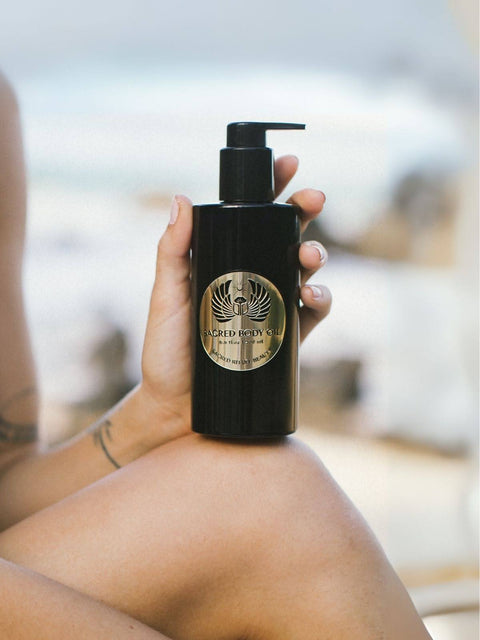
At Sacred Rituel, every product is formulated by folk herbalist Marysia Miernowska, founder of the School of the Sacred Wild, from cold-pressed, whole-plant botanicals chosen for what plants do for skin across the herbalist tradition. Our body hero is Sacred Body Oil, a whole-plant oil built for dry, mature, or sensitive body skin that absorbs deeply without a greasy residue and carries only a natural botanical aroma, never synthetic fragrance.
In this guide we will look at how a whole-plant oil supports a dry skin barrier, which oils are gentle for eczema-prone skin, what to steer clear of, and how to use an oil so your skin feels its most comfortable, all while keeping your dermatologist at the center of managing the condition itself.
How can I support dry, eczema-prone skin's barrier?
Eczema-prone skin tends to have a compromised moisture barrier, which is the skin's outer defense that keeps water in and irritants out. When that barrier is weakened, skin loses water easily and feels dry, tight, and reactive. Supporting it day to day is about gentle moisture and protection, and it is one of the most useful things you can do between the steps your dermatologist recommends. To be clear, this supports the comfort and hydration of the skin; the eczema itself is your dermatologist's domain.
This is where a whole-plant oil earns its place. Plant oils are documented to support and repair the skin's moisture barrier, and because they are built from lipids in the same family as the skin's own, they are compatible with its natural lipid matrix and sink in to condition the deeper layers of the outer skin rather than resting on the surface (Lin et al. 2018). Several of the cold-pressed oils in our blend are studied for exactly this kind of comfort: chia seed oil has been clinically shown to improve skin hydration and reduce transepidermal water loss, the technical name for how skin loses water to the air (Jeong et al. 2010), while linoleic-acid-rich oils like sunflower and sacha inchi are valued for being barrier-supportive and gentle on sensitive skin.
Our Sacred Body Oil is a cold-pressed phytocomplex of organic botanical oils and herbal infusions, rich in the fatty acids and antioxidants that dry, sensitive skin runs short on. In our reviews, people with reactive skin tell us it leaves their skin feeling soft and comfortable, one writing that it "feels comfortable on my skin, much calmer," and another that her "super sensitive skin loves this." That comfort, not a cure, is what an oil offers.
Why A Gentle Body Oil Belongs In Dry, Eczema-Prone Skincare
For dry, eczema-prone skin, the appeal of a well-made body oil comes down to two honest things: deep moisture and a simple, gentle ingredient list. It does not treat the condition, but it can make the skin feel markedly more comfortable. Here is why a whole-plant oil fits so naturally into daily care:
- Deeply moisturizing: Body oils are lipid-rich, so they condition dry skin with plant fatty acids and help it hold onto moisture, which is why many of our reviewers describe lasting moisture, one writing it "moisturizes better than lotion or any other oil."
- Barrier-supportive: Plant oils are documented to support and repair the moisture barrier (Lin et al. 2018), and a barrier that holds water is the foundation of skin that feels calm rather than tight and parched.
- Simple and gentle: A whole-plant oil made without synthetic fragrance, harsh preservatives, or drying alcohols gives sensitive skin nourishment without the additives that commonly trigger reactive skin.
- Soft, comfortable feel: People in our community describe softer, calmer, more comfortable skin, with many talking about how good their whole body feels and one person with sensitive skin saying it feels "much calmer."
- Easy to layer into a routine: An oil works beautifully pressed into damp skin after bathing, and it slots in alongside whatever care your dermatologist has you using for the eczema itself.
A gentle whole-plant oil, in other words, is a comforting, moisturizing companion to medical care, never a replacement for it.
Gentle Oils To Look For In A Body Oil For Dry, Eczema-Prone Skin
When skin is dry and reactive, the kindest oils are simple, recognizable, and rich in the fatty acids that condition the skin barrier. Here are several gentle, whole-plant oils worth looking for, each chosen for moisture and comfort rather than any claim to treat a condition.
Jojoba Oil
Jojoba Oil is unusually close in structure to the skin's own sebum, which makes it a remarkably compatible, well-tolerated moisturizer for dry, sensitive skin. It absorbs cleanly and helps condition the skin's protective barrier, supporting skin that feels soft and comfortable rather than tight.
Sunflower Seed Oil
Sunflower seed oil is rich in linoleic acid, a fatty acid the skin barrier depends on, and it is light, fast-absorbing, and well-tolerated by reactive skin. Its barrier-supportive profile makes it a gentle, comforting choice for dry, eczema-prone areas.
Sweet Almond Seed Oil
Sweet Almond Seed Oil is a soft, deeply hydrating emollient that brings welcome moisture to dry, irritated skin and leaves it feeling supple. Its gentle, nourishing character has made it a long-loved oil for sensitive body skin.
Camellia Seed Oil
Camellia Seed Oil, pressed from tea-plant seeds, is high in oleic acid and antioxidants, conditioning dry skin while keeping a light, non-greasy feel. It helps skin feel soft and protected from the everyday environmental stress that leaves dry skin feeling rougher.

Chia Seed Oil
Chia seed oil is rich in omega-3 fatty acids and has been clinically shown to improve skin hydration and reduce transepidermal water loss (Jeong et al. 2010). For dry, eczema-prone skin that struggles to stay hydrated, that barrier-supporting hydration is exactly the kind of comfort an oil can offer.
Sacha Inchi Seed Oil
Sacha inchi seed oil is one of the richest plant sources of omega-3, valued for being barrier-supportive and gentle on sensitive skin. It rounds out a whole-plant blend with the essential fatty acids that dry, reactive skin often lacks.
How Sacred Body Oil Brings These Gentle Oils Together
Rather than relying on any single oil, Sacred Body Oil blends cold-pressed organic botanicals, including jojoba, sunflower, sweet almond, camellia, chia, and sacha inchi, into one whole-plant phytocomplex for dry, sensitive body skin. The aroma comes only from the plants, a natural botanical blend of gardenia, vanilla, vetiver, and palo santo, with no synthetic fragrance. It is a moisturizing, soothing daily oil, not a treatment for eczema. If you would like to read more on getting the most from it, see How To Use Body Oil To Keep Your Skin Soft And Smooth.
Should I use body oil if I have eczema-prone skin?
You can, and many people with dry, eczema-prone skin find a gentle whole-plant oil keeps their skin feeling soft and comfortable, but two things come first. Talk to your dermatologist about managing the eczema itself, and patch test any new oil before using it widely. With those in place, the way to keep an oil gentle is to choose simple ingredients and avoid the additives that commonly irritate reactive skin. Here is what to steer clear of.
Synthetic Fragrance
Synthetic fragrance is one of the most common triggers for sensitive, reactive skin and can provoke redness and itching. Always choose products that are fragrance-free, or whose scent comes only from the plants themselves, as Sacred Body Oil's does. Steer clear of anything that lists added or synthetic fragrance.
Harsh Preservatives
Preservatives like parabens and formaldehyde releasers can irritate an already compromised skin barrier. Look instead for products with gentle, skin-safe preservation or, in the case of an anhydrous oil, minimal processing and no need for them at all.
Drying Alcohols
Denatured and isopropyl alcohols are common in skincare for their quick-drying feel, but they strip moisture and can leave dry, sensitive skin tighter and more irritated. For eczema-prone skin, a moisturizing oil is the opposite of what these ingredients do.
Artificial Colorants
Synthetic dyes add nothing for your skin and can act as allergens for reactive skin. Choose oils that are naturally colored or explicitly dye-free.
Anything That Did Not Pass Your Patch Test
Even a gentle, natural oil should be patch tested on eczema-prone skin. Apply a small amount to your inner arm, wait 24 hours, and only use it more widely if your skin stays comfortable. If anything stings or reacts, stop and check with your dermatologist.
How To Use A Body Oil On Dry, Eczema-Prone Skin
Used thoughtfully, a gentle body oil can make dry, eczema-prone skin feel noticeably more comfortable through the day. These simple habits help, and they sit alongside, never replace, the care your dermatologist guides.
Apply To Damp Skin
The most rewarding moment is right after a bath or shower. Pat your skin so it is damp, not dripping, then massage the oil in. The oil conditions your skin while sealing in the water still on its surface, which is the gentle version of the often-cited rule of moisturizing soon after bathing.
Be Gentle, And Skip Broken Skin
Massage the oil in with soft, slow strokes rather than vigorous rubbing, which can aggravate sensitive skin. If your skin is cracked, weeping, or broken during a flare, do not apply oil to those areas; follow your dermatologist's guidance for broken skin and return to the oil once the skin has healed.
Focus On Dry, Friction-Prone Spots
Elbows, knees, hands, and shins tend to be driest and most exposed to friction. A little extra oil on these areas helps them stay soft and comfortable. Many people tell us this is where they feel the difference most.
Keep It Simple And Consistent
Daily, gentle moisture is what keeps dry skin feeling its best. A morning or evening anointing with Sacred Body Oil becomes a calming ritual as much as a skincare step. If you would like your face cared for with the same whole-plant approach, the Sacred routine set pairs the body oil with Sacred Serum for the face and a rose mist, so your whole ritual lives together. For more on bringing oils into daily life, see Everything You Need To Know About Body Oil.

When To See A Dermatologist
Because eczema is a medical condition, a dermatologist should always be at the center of managing it. See one for a diagnosis if you think you have eczema, and check in if your skin is flaring badly, if patches are weeping, cracked, or infected, or if your current routine is not keeping you comfortable. A dermatologist can tailor a plan to your skin and tell you how a moisturizing oil best fits around it. A gentle whole-plant body oil supports comfort and hydration; it is a companion to that care, not a substitute for it. For related reading on body skin, you may also like Body Oil For Stretch Marks: Your Guide To Glistening Skin.
Final Thoughts
Living with eczema means caring for skin that asks for gentleness, and a thoughtful whole-plant body oil can be a genuinely soothing, moisturizing part of that daily care. It conditions dry, sensitive skin with plant lipids and antioxidants and helps the barrier hold onto moisture, so skin feels softer, calmer, and more comfortable. Plant oils are documented to support and repair the moisture barrier, and chia is clinically shown to improve hydration, which is why an oil can bring such real day-to-day comfort to dry skin.
What it cannot do, and should never claim to do, is act as a medicine for eczema, which is your dermatologist's domain. Keep your medical care at the center, patch test anything new, and let a gentle whole-plant oil do its honest work: making dry, eczema-prone skin feel its most comfortable. The people in our community describe it simply as softer, calmer, more comfortable skin, and one with sensitive skin put it best, that her skin felt "much calmer."
Sources:
- Lin, T. K., Zhong, L., & Santiago, J. L. (2018). Anti-inflammatory and skin barrier repair effects of topical application of some plant oils. International Journal of Molecular Sciences, 19(1), 70. https://doi.org/10.3390/ijms19010070
- Jeong, S. K., et al. (2010). Effect of topical application of chia seed oil on skin hydration and transepidermal water loss in subjects with pruritus.
- Blaak, J., & Staib, P. (2022). An updated review on efficacy and benefits of sweet almond, evening primrose and jojoba oils in skin care applications. International Journal of Cosmetic Science, 44(1), 1-9.
- Sohn, A., Frankel, A., Patel, R. V., & Goldenberg, G. (2011). Eczema. Mount Sinai Journal of Medicine: A Journal of Translational and Personalized Medicine, 78(5), 730-739.
Frequently Asked Questions
Is oil or moisturizer better for eczema?
Neither is a treatment for eczema, which a dermatologist should diagnose and manage. As daily comfort for dry, eczema-prone skin, they do different jobs: a cream brings water-based hydration, while a gentle whole-plant oil conditions skin with plant lipids and helps the moisture barrier hold water in. Many people find an oil keeps dry, sensitive skin feeling softer and more comfortable for longer, especially pressed into damp skin after bathing. Whatever you choose, keep it simple, fragrance-free, and check with your dermatologist about managing the condition itself.
Does putting oil on eczema help?
A gentle oil will not treat eczema, but for dry, eczema-prone skin it can be a soothing, moisturizing part of daily care that helps skin feel softer and more comfortable. Plant oils are documented to support and repair the skin's moisture barrier (Lin et al. 2018), and a barrier that holds water is the foundation of skin that feels calm rather than tight. Avoid applying oil to cracked or broken skin during a flare, patch test first, and let your dermatologist guide how it fits around your treatment.
What is the 3-minute rule for eczema?
The three-minute rule is the common guidance to moisturize within about three minutes of bathing, while skin is still damp, so you seal in water before it evaporates. A gentle whole-plant oil works well here: pressed into damp skin after a shower, it conditions the skin and helps hold moisture in, leaving dry, eczema-prone skin feeling more comfortable. It is a comfort and hydration habit, not a treatment, so keep following your dermatologist's plan for the condition itself.
Should I use body oil if I have eczema-prone skin?
You can, and many people with dry, eczema-prone skin find a gentle whole-plant oil keeps their skin feeling soft and comfortable, but talk to your dermatologist about managing the eczema first and patch test any new oil for 24 hours. Choose something simple and fragrance-free, avoid drying alcohols and harsh preservatives, and skip broken or weeping skin during a flare. In our reviews of Sacred Body Oil, people with sensitive skin describe softer, calmer, more comfortable skin, one writing it feels "much calmer."
How can I support dry, eczema-prone skin's barrier?
Day to day, gentle moisture and protection are what a dry, eczema-prone barrier needs, alongside the care your dermatologist guides. A whole-plant oil helps because plant oils are documented to support and repair the moisture barrier and are compatible with the skin's natural lipid matrix (Lin et al. 2018), so they condition skin and help it hold water. Linoleic-acid-rich oils like sunflower and sacha inchi are gentle and barrier-supportive, and chia seed oil is clinically shown to improve hydration. Keep ingredients simple and fragrance-free, and remember an oil supports comfort and hydration, it does not treat the condition.
Radiance Is Personal. Let’s Reveal Yours...
All Day Glow Essentials