
Anti-Inflammatory Herbs For Psoriasis And Eczema
Soothing herbs have been trusted for centuries to calm the look and feel of dry, irritated, reactive skin, and the tradition behind them runs deep: calendula, chamomile, licorice root, and aloe have long been the herbalist's first reach for skin that is red, tight, and uncomfortable. It is important to be clear from the start, though. Eczema is a medical condition that is diagnosed and managed by a dermatologist or doctor, and no herb or skincare oil treats, cures, or replaces that care. What botanicals can do beautifully is support comfortable-feeling, calmer-looking skin alongside the care a clinician provides. At Sacred Rituel, every formula is made by folk herbalist Marysia Miernowska, founder of the School of the Sacred Wild, from cold-pressed whole-plant oils, and our face hero Sacred Serum is built around the soothing, barrier-loving botanicals herbalists have always turned to for sensitive skin. A note of good practice before anything new touches reactive skin: always patch test on your inner arm first.
Key Takeaways:
- Soothing herbs have a long, trusted tradition for calm-looking skin: Botanicals like calendula, chamomile, and licorice root have been used for centuries to soothe the look and feel of dry, irritated, reactive skin. The herbalist tradition behind them is real and worth honoring.
- Eczema is a medical condition, not a skincare problem: Eczema is diagnosed and managed by a dermatologist or doctor. No herb or oil treats or cures it. Whole-plant botanicals support comfortable-feeling, calmer-looking skin alongside the care your clinician provides, never instead of it.
- Whole-plant, cold-pressed oils are kind to sensitive skin: Plant oils are documented to support and repair the skin's moisture barrier and are compatible with the skin's own lipids, so they sink in to soften and comfort. Cold-pressing preserves the delicate soothing constituents, and patch testing any new oil first is always wise.
If your skin runs dry, tight, and easily irritated, you have probably wondered whether the herbs your grandmother trusted actually hold up. The honest answer is that the herbalist tradition behind soothing botanicals is deep and well earned, and modern science is steadily filling in why these plants comfort reactive skin. The plant world has been doing this gentle work far longer than any lab.
Before we go further, one clear and important point. Eczema is a medical condition that a dermatologist or doctor diagnoses and manages. The herbs and oils in this article do not treat, cure, or replace that care, and nothing here is medical advice. What follows is herbalist-tradition education on the botanicals long used to soothe the look and feel of dry, irritated skin, and how a whole-plant oil can be a comforting companion to the care your clinician provides.
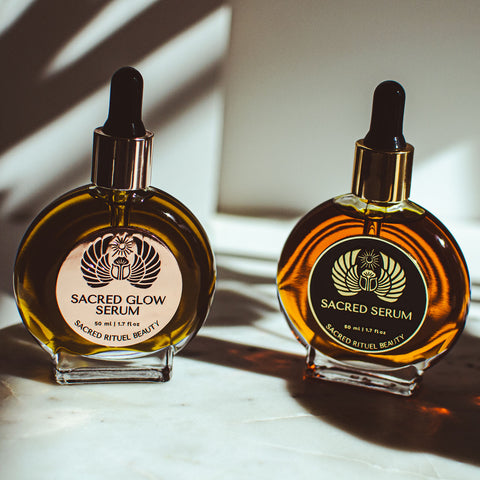
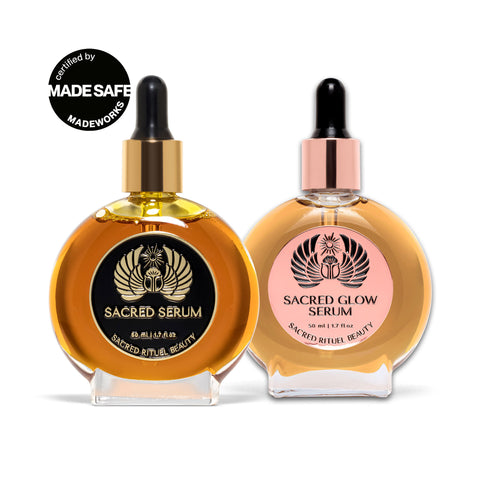
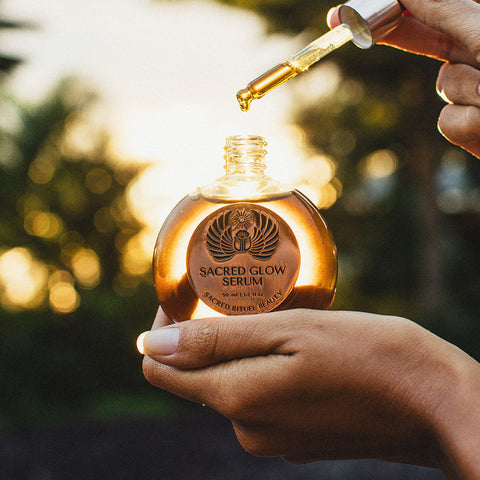
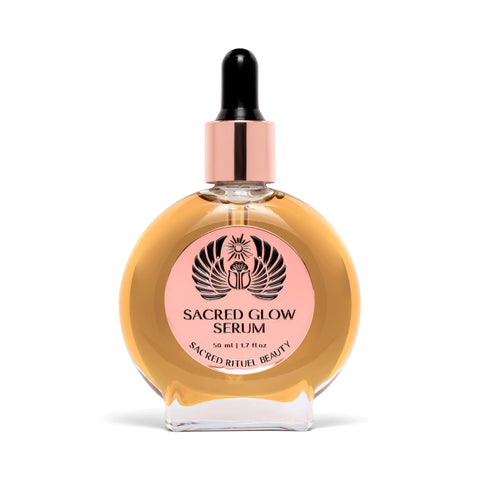
At Sacred Rituel, every product is formulated by folk herbalist Marysia Miernowska, founder of the School of the Sacred Wild, from cold-pressed, organic, whole-plant botanicals chosen for what plants genuinely do for skin. Our face hero is Sacred Serum, a cold-pressed blend of fourteen botanical oils built for skin that needs gentleness and comfort.
Soothing Herbs Traditionally Used For Dry, Irritated Skin
For as long as people have grown and gathered plants, certain herbs have been the trusted reach for skin that is red, tight, and uncomfortable. Herbalists prize these botanicals for the way they calm the look and feel of irritated skin, and centuries of careful observation stand behind them. Here are some of the most beloved, and what the tradition and the science say about each.
Calendula
- One of the herbalist's most cherished allies for dry, sensitive, easily-irritated skin.
- Traditionally used to soothe the look of redness and comfort skin that feels rough and tight.
- Gentle enough that it has long been a go-to for delicate and reactive skin.
Chamomile
- Celebrated for centuries for its calming, comforting nature.
- Traditionally used to settle the look of irritation and ease the feeling of itchy, reactive skin.
- A soothing presence in herbal skincare, valued for how kindly it treats sensitive skin.

Licorice Root
- Rich in soothing botanical constituents long valued in traditional skincare.
- Traditionally used to calm the look of redness and uneven tone on sensitive skin.
- A quiet workhorse in the herbalist's apothecary for comfortable-looking skin.
Aloe Vera
- Known across cultures for its exceptionally cooling, comforting feel.
- Traditionally used to soothe the sensation of dry, tight, irritated skin.
- A gentle hydrator that leaves reactive skin feeling calmer and more comfortable.
Whole-Plant Oils For The Barrier
- Cold-pressed plant oils like jojoba and rosehip are rich in the fatty acids dry skin runs short on.
- Documented to support and repair the skin's moisture barrier and compatible with the skin's own lipids (Lin et al. 2018).
- Jojoba in particular closely mirrors the skin's own sebum, making it a friend to sensitive, reactive skin.
This is the spirit behind our Sacred Serum: a cold-pressed phytocomplex of organic botanical oils chosen for the way they comfort and soften skin that needs gentleness. Many in our community who describe their skin as sensitive and easily-irritated tell us it finally feels calm, one writing simply that her "skin has never been so calm."
Why Whole-Plant Botanicals Are So Kind To Sensitive Skin
There is a real difference between an isolated lab-made molecule and the whole plant working in concert, and it matters most for skin that reacts to everything. Herbalists have understood this for centuries, and the science now names why.
A whole plant carries dozens of constituents that evolved together: fatty acids, antioxidants, soothing aromatic compounds, and protective vitamins. Working as a complex, they do more than any single isolated fraction could on its own, a synergy researchers call the entourage effect (Russo 2019). When you choose a whole-plant oil, you are giving sensitive skin the full, balanced gift of the plant rather than one stripped-out piece of it.
How that oil is made matters just as much. Cold-pressing extracts oil without heat or harsh solvents, which preserves the delicate fatty acids, antioxidants, and soothing constituents that heat would destroy. And because plant lipids are compatible with the skin's own lipid matrix, a cold-pressed oil sinks in to soften and reinforce the barrier rather than sitting on top (Lin et al. 2018). For dry, easily-irritated skin, a supported barrier is everything: it is what helps skin feel comfortable and look calm rather than tight and red. To understand how this fits a pared-back routine, you may enjoy our guide to the best minimalist skincare brands.
When To See A Dermatologist
This is the most important part of this article, so we will say it plainly. Eczema is a medical condition, and it is diagnosed and managed by a dermatologist or doctor. If your skin is persistently red, itchy, cracked, weeping, or painful, or if a flare is widespread or not settling, please see a clinician. They can confirm what is actually going on and guide your care, which is something no herb, oil, or blog post can do.
Whole-plant botanicals are not a treatment for eczema or any diagnosed skin condition, and they are not a substitute for medical care. Where they can help is alongside that care: a gentle, well-made oil can support comfortable-feeling, calmer-looking skin as part of a simple daily ritual, while your dermatologist guides the bigger picture. If you are under a clinician's care, it is always wise to check with them before adding anything new to your routine.
Patch-Testing A New Oil On Reactive Skin
Reactive skin deserves a careful introduction to anything new, so patch testing is not optional, it is good practice every time. Apply a small amount of the oil to your inner arm and leave it for 24 hours. If your skin stays calm and comfortable, you can begin using it more widely, starting gently. If you notice any irritation, stop and, if it persists, check in with your clinician. This simple step is always worth the wait, especially for sensitive or easily-irritated skin.
A Gentle Daily Ritual For Dry, Sensitive-Feeling Skin
Soothing skin that runs dry and reactive is less about doing more and more about doing less, gently and consistently. Here is a simple, calming ritual built around whole-plant botanicals.
- Cleanse gently: Reach for a gentle, non-stripping oil cleanser rather than a foaming, sulfate-heavy wash. Harsh surfactants strip the very lipids dry skin is already missing, leaving it tight and reactive.
- Nourish with a whole-plant oil: Press a few drops of a cold-pressed facial oil into damp skin to soften and comfort it while reinforcing the barrier. This is where our Sacred Serum shines for sensitive skin.
- Keep it fragrance-free: Synthetic fragrance is a common trigger for sensitive, easily-irritated skin, so choosing fragrance-free, whole-plant formulas is one of the kindest things you can do for it.
- Identify and avoid triggers: Harsh products, very hot water, and known irritants can all set reactive skin off. Steering clear of them is half the work. Our guide to ingredients worth avoiding in skincare is a good place to start.
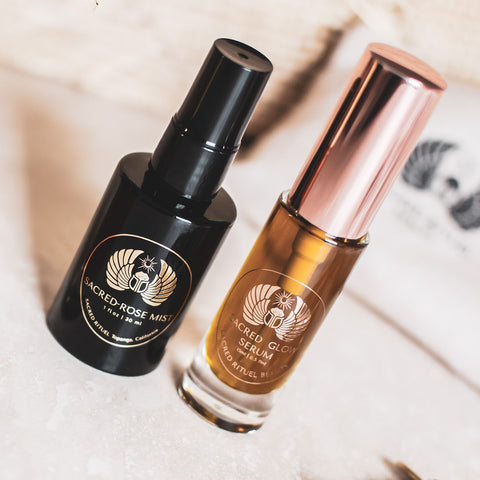
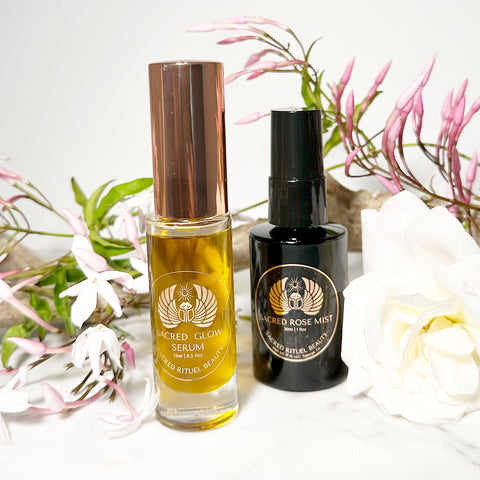
If you would like the whole gentle ritual in one place, the Sacred routine set brings together the cold-pressed facial oil, a calming rose mist, and a body oil so your daily care lives together. Many in our community with sensitive, reactive skin tell us this simple rhythm leaves their skin feeling soft and looking calmer, one writing that after years of reactivity her skin finally "feels comfortable in its own skin again."
Are there any side effects associated with anti-inflammatory herbs?
Botanicals are gentle by nature, but no plant is right for everyone, and reactive skin can respond unexpectedly to almost anything. Some people experience irritation or an allergic response to a herb or oil, particularly if they have sensitive skin or a known plant allergy. That is exactly why a patch test on the inner arm comes first, every time, and why anyone under a clinician's care for a skin condition should check with their dermatologist or doctor before adding something new. Used thoughtfully, well-chosen whole-plant botanicals are kind to most skin, but your own skin and your clinician always have the final word.
Are anti-inflammatory herbs safe to use regularly?
For most people, gentle whole-plant botanicals used topically are well suited to daily use, and the herbalist tradition has leaned on them as everyday allies for generations. A cold-pressed facial oil, for instance, is designed to be pressed into the skin morning and night. That said, regular use should still begin with a patch test, and you should pay attention to how your own skin responds over time. If you have a diagnosed skin condition, your dermatologist's guidance on what to use, and how often, comes first.
For Deeper Herbal Study
If the herbalist tradition behind these plants calls to you, there is a rich world to explore. Our founder and formulator Marysia Miernowska teaches the path of the green witch through her School of the Sacred Wild, and her work shares how to grow, gather, and work with healing plants with reverence. To see how whole-plant thinking shapes a gentle routine, you might also enjoy our look at how jojoba oil cares for both oily and dry skin and our collection of gentle DIY face masks for glowing skin.
Final Thoughts
The soothing herbs people have trusted for centuries truly do comfort the look and feel of dry, irritated, reactive skin, and that tradition deserves our confidence and our reverence. Calendula, chamomile, licorice root, and aloe, carried in a cold-pressed whole-plant oil, can be a gentle, grounding companion for skin that needs kindness. What they cannot do, and what we will never claim they do, is act as a medicine for eczema. That is medical territory, and it belongs to your dermatologist.
So hold both truths at once. See your clinician for diagnosis and care, and let whole-plant botanicals support comfortable-feeling, calmer-looking skin alongside that care. If you would like to begin gently, patch test a cold-pressed facial oil like our Sacred Serum and let the plant world do its quiet, soothing work.
Sources:
- Brown, S. J. (2016). Molecular mechanisms in atopic eczema: insights gained from genetic studies. The Journal of Pathology, 241(2), 140-145. https://doi.org/10.1002/path.4810
- Pan, M.-H., Chiou, Y.-S., Tsai, M.-L., & Ho, C.-T. (2011). Anti-inflammatory activity of traditional Chinese medicinal herbs. Journal of Traditional and Complementary Medicine, 1(1), 8-24. https://doi.org/10.1016/s2225-4110(16)30052-9
- Guan, F., Lam, W., Hu, R., Kim, Y. K., Han, H., & Cheng, Y.-C. (2018). Majority of Chinese Medicine Herb Category “Qing Re Yao” Have Multiple Mechanisms of Anti-inflammatory Activity. Scientific Reports, 8(1). https://doi.org/10.1038/s41598-018-25813-x
- Lin, T.-K., Zhong, L., & Santiago, J. (2018). Anti-Inflammatory and Skin Barrier Repair Effects of Topical Application of Some Plant Oils. International Journal of Molecular Sciences, 19(1), 70. https://doi.org/10.3390/ijms19010070
- Russo, E. B. (2019). The Case for the Entourage Effect and Conventional Breeding of Clinical Cannabis: No “Strain,” No Gain. Frontiers in Plant Science, 9, 1969. https://doi.org/10.3389/fpls.2018.01969
Frequently Asked Questions
Are there any side effects associated with anti-inflammatory herbs?
Botanicals are gentle by nature, but no plant is right for everyone, and reactive skin can respond unexpectedly to almost anything. Some people experience irritation or an allergic response to a herb or oil, especially with sensitive skin or a known plant allergy. That is why a patch test on the inner arm comes first, every time, and why anyone under a clinician's care for a skin condition should check with their dermatologist or doctor before adding something new. Used thoughtfully, well-chosen whole-plant botanicals are kind to most skin, but your own skin and your clinician always have the final word.
Are anti-inflammatory herbs safe to use regularly?
For most people, gentle whole-plant botanicals used topically are well suited to daily use, and the herbalist tradition has leaned on them as everyday allies for generations. A cold-pressed facial oil, for instance, is designed to be pressed into the skin morning and night. That said, regular use should still begin with a patch test, and you should watch how your own skin responds over time. If you have a diagnosed skin condition, your dermatologist's guidance on what to use, and how often, comes first.
Can I grow my own anti-inflammatory herbs at home?
Yes, and it is a deeply rewarding practice. Many soothing herbs, including calendula and chamomile, grow happily in pots or garden beds with a little care, and growing your own connects you to the plant medicine tradition in a hands-on way. Our founder and formulator Marysia Miernowska teaches exactly this through her School of the Sacred Wild: how to grow, gather, and work with healing plants. If you would rather start with a ready-made whole-plant oil, look for cold-pressed, organic, fragrance-free formulas, and patch test before you begin.
How long does it take for anti-inflammatory herbs to work?
Soothing botanicals are gentle and gradual rather than instant. Many people notice their skin feels more comfortable and looks calmer fairly soon after they begin a consistent, gentle routine, while a softer, more even-looking complexion tends to build over weeks of daily care. Consistency and patience matter more than intensity. Remember that herbs support the look and feel of skin and are not a treatment for any diagnosed condition. For a diagnosed skin issue, your dermatologist guides what to expect and when.
Are these herbs safe for everyone?
Most gentle whole-plant botanicals are well tolerated, but they are not automatically right for everyone. People with very sensitive or reactive skin, known plant allergies, or a diagnosed skin condition should take extra care, always patch test first, and check with a dermatologist or doctor before starting something new. If you are pregnant, breastfeeding, or managing a health condition, it is wise to consult your clinician too. When in doubt, go gently and let a professional guide you.
Radiance Is Personal. Let’s Reveal Yours...
All Day Glow Essentials