Does Body Oil Actually Moisturize Skin? Here's The Answer
Yes, a whole-plant body oil moisturizes skin, and it does it beautifully. The old line that oils only seal and never moisturize sells plant oils short. Plant oils are documented to support and repair the skin's own moisture barrier, and because they are compatible with the skin's natural lipid matrix, they sink in and condition dry, thirsty body skin rather than just sitting on top (Lin et al. 2018). That is exactly what people in our community report: in our reviews of Sacred Body Oil, the whole-plant body oil formulated by folk herbalist Marysia Miernowska, 28% describe lasting moisture, one writing that it "moisturizes better than lotion or any other oil," and 21% talk about how comfortable their whole body feels, one saying her "body drinks this in." A quick note of good practice: patch test any new oil on your inner arm first.
Key Takeaways:
- Yes, a whole-plant body oil moisturizes skin: Plant oils are documented to support and repair the skin's moisture barrier and are compatible with its natural lipid matrix, so a botanical body oil conditions dry, thirsty skin rather than just sitting on top.
- The receipts are in our community: In our reviews of Sacred Body Oil, 28% describe lasting moisture, 23% softer skin, and 21% how comfortable their whole body feels, with one person writing it "moisturizes better than lotion or any other oil."
- Whole-plant and cold-pressed matters: Cold-pressing preserves the delicate fatty acids and antioxidants that nourish skin, and the synergy of the full plant complex does more than any isolated oil could.
If you have ever rubbed in lotion only to feel tight and parched an hour later, you already know the question this article answers. Does body oil actually moisturize skin, or is it just another layer that sits on the surface? The honest, confident answer is that a well-made whole-plant body oil genuinely moisturizes, and the plant world has been doing this work far longer than any cream.
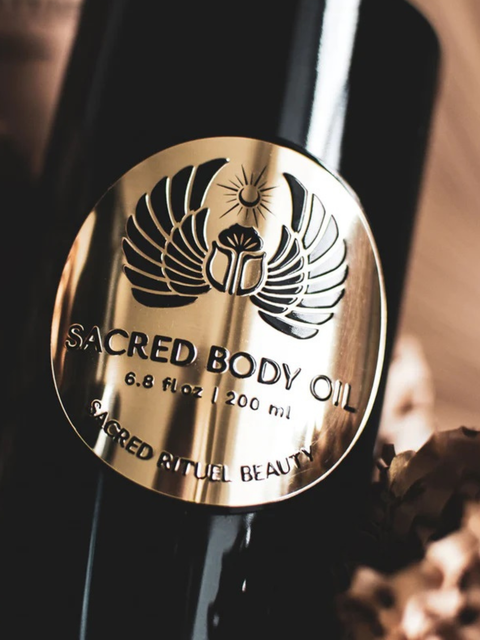
At Sacred Rituel, every product is formulated by folk herbalist Marysia Miernowska, founder of the School of the Sacred Wild, from cold-pressed, whole-plant botanicals chosen for what plants actually do for skin. Our body hero is Sacred Body Oil, a whole-plant oil built for dry, mature, or crepey body skin that absorbs deeply without a greasy residue.
In this article we will look at what moisturizing really means, how a whole-plant oil works with your skin, how it compares to lotion, and how to use it so your whole body feels soft, supple, and deeply nourished.
Understanding Skin Moisture: What Does It Mean To Moisturize?
To answer whether body oil moisturizes skin, it helps to be clear about what moisturizing means. Moisturizing is the work of keeping skin's water content in balance, so skin stays soft, smooth, and comfortable. Healthy skin holds a balance of water, oils, and nutrients in its outer layer, but weather, harsh products, hot showers, and age all chip away at that balance, leaving skin dry, tight, and flaky.
Good moisturizing happens in two ways: replenishing what is lost and protecting what is there. A whole-plant oil does both. It delivers the fatty acids, antioxidants, and plant lipids that dry skin runs short on, conditioning the skin itself, and it reinforces the barrier so the moisture already present does not escape. This is why the tired idea that oils only ever seal, never moisturize, is too narrow. Plant oils are documented to support and repair the moisture barrier, and a barrier that holds water is the foundation of skin that looks and feels hydrated.
Our Sacred Body Oil is built for exactly this. It is a cold-pressed phytocomplex of organic botanical oils and herbal infusions, rich in the fatty acids and antioxidants that nourish dry, mature, or crepey body skin and help it look Supple Skin Meaning: What It Is And How To Achieve It describes. In our reviews, people consistently tell us their skin feels soft and deeply hydrated, one writing simply that her "body drinks this in."
Can I use body oil instead of lotion?
Yes, you absolutely can use a whole-plant body oil instead of lotion, and many people in our community find it works better for them than the lotion they used to reach for. The reason comes down to what the oil is made of and how it meets your skin.
A whole-plant oil is built from plant lipids, the same family of fats your skin makes itself, so it is compatible with the skin's own lipid matrix and sinks in to condition the deeper layers of the outer skin rather than resting on the surface (Lin et al. 2018). As it absorbs, it reinforces the moisture barrier, which is what keeps water in and dryness out. Lotions lean on water that flashes off quickly and on humectants that, in dry air, can actually pull moisture from skin if there is nothing to seal it. A botanical oil brings the nourishing fatty acids and antioxidants directly, then locks the whole thing in.
This is what people tell us. In our reviews of Sacred Body Oil, 28% describe lasting moisture, one writing that it "moisturizes better than lotion or any other oil" and another that it "locks in the moisture and creates an all day skin loving moisture barrier." If your skin is very dry, you can press the oil into damp skin straight after a shower to give it even more water to seal in, but plenty of people use the oil entirely on its own and never look back at lotion. For a deeper dive on dry body skin specifically, see Revitalize And Hydrate: The Ultimate Guide To Body Oils For Dry Skin.
Does Body Oil Moisturize Or Seal In Moisture?
The honest answer is both, and that is the part the old framing misses. A whole-plant body oil seals in moisture, yes, but it also moisturizes the skin directly by delivering the plant lipids, fatty acids, and antioxidants that condition dry skin and rebuild a barrier that holds water.
Here is the mechanism, stated plainly. Plant oils are documented to support and repair the skin's moisture barrier, and because they share the structure of the skin's own lipids, they are compatible with its natural lipid matrix and absorb rather than simply coating the surface (Lin et al. 2018). Chia seed oil, one of the cold-pressed oils in our blend, has been clinically shown to improve skin hydration and reduce transepidermal water loss, the technical name for how skin loses water to the air (Jeong et al. 2010). Baobab seed oil, rich in monounsaturated fatty acids, is deeply moisturizing and barrier-restoring. So when a whole-plant oil goes on, it is feeding the skin and fortifying its ability to stay hydrated at the same time.
That two-part action is why oils outperform for dry, thirsty skin. They do not just trap what is there, they replenish what is missing. People with dry body skin tell us the difference is obvious, and for skin that has gone past dry to raw and flaky, the same whole-plant logic applies overnight, which you can read about in What To Do To Heal Raw Skin On Your Face Overnight.
Body Oil Vs. Traditional Moisturizers: What’s The Difference?
Body oils and traditional lotions and creams differ in what they are made of and in how they meet your skin. Understanding the difference makes it clear why a whole-plant oil is such a powerful choice for dry skin.
Composition
Traditional lotions and creams are mostly water held together with oils and emulsifiers, plus humectants that draw water toward the skin. The water gives a quick hit of hydration that evaporates, and the formula often carries preservatives and synthetic fragrance to hold it together. A whole-plant oil is different by nature: it is a concentrated phytocomplex of cold-pressed plant lipids, fatty acids, and antioxidants, with no water to flash off and nothing synthetic to dilute what nourishes your skin.
How They Work
A lotion delivers surface water and then needs something to hold it in. A whole-plant oil does both jobs at once: it conditions the skin with plant lipids that are compatible with the skin's own and then reinforces the barrier that keeps moisture from escaping. For dry, mature, or crepey body skin, that combination of nourishment and protection is exactly what is needed, which is why so many people find an oil keeps them comfortable far longer than a lotion did.
Texture And Absorption
A common worry is that oil will feel greasy. A well-formulated whole-plant body oil does not. Pressed into damp skin and massaged in, it absorbs and leaves skin soft rather than slick, which is why 10% of our reviewers go out of their way to mention it is "not greasy at all." Lotions can feel lighter on first contact, but they often leave skin tight again within the hour, while a botanical oil leaves a lasting softness people describe as silky.

How often should I apply body oil?
You can apply a whole-plant body oil once or twice a day, and the most rewarding moment is right after a shower or bath. A few simple habits help your skin get the most from every drop:
Apply Body Oil On Damp Skin
The single most effective ritual is to apply oil to slightly damp skin straight after bathing. Pat your skin with a towel so it is damp, not dripping, then massage the oil in. The oil conditions your skin with plant lipids while sealing in the water still on its surface, which is how people describe their skin staying hydrated all day long.
Use The Right Amount
A little goes a long way. Warm a few pumps between your hands, then massage the oil into your skin in slow, deliberate strokes. You can always add more for very dry areas. Because a whole-plant oil absorbs deeply, you do not need to drench your skin to feel the benefit.
Make It A Daily Ritual
Consistency is what keeps skin soft and supple. Morning or night, a daily anointing with Sacred Body Oil becomes a grounding moment of self-care as much as a skincare step. If you want your face and body cared for together, the Sacred routine set pairs the body oil with Sacred Serum for the face and a rose mist, so the whole ritual lives together.
Focus On Dry Areas
Elbows, knees, heels, and shins are naturally drier and drink up the extra attention. Spend a little longer massaging the oil into these spots. Many people tell us this is where they see the biggest change, with the look of crepey skin on knees and elbows softening over time.
Is Body Oil Right For Your Skin Type?
A whole-plant body oil suits a wide range of skin, and the beauty of a thoughtfully blended phytocomplex is that it brings many botanicals into balance rather than relying on any one. Here is how it serves different skin.
Dry Skin
If your skin is dry or flaky, a whole-plant body oil is one of the most rewarding things you can give it. The barrier-rich plant lipids in oils like baobab, Jojoba Oil, and chia condition the skin deeply and help it hold moisture, which is exactly what dry, parched skin is missing. This is the skin type that feels the difference fastest.
Mature Or Crepey Skin
As skin matures it naturally makes fewer of its own lipids, which is why it can start to look crepey or papery on the arms, knees, and neck. A nourishing whole-plant oil replenishes those fatty acids and supports a more supple, conditioned look. People tell us the oil helps the look of crepey areas soften and their skin feel firmer and more comfortable.
Sensitive Skin
For skin that reacts easily, simple and whole-plant is kinder. A botanical oil with no synthetic fragrance gives sensitive skin the nourishing fatty acids it needs without the additives that commonly cause trouble. As always with reactive skin, patch test first, and choose oils made from gentle, recognizable plants.
Normal Or Combination Skin
If your skin is balanced, a whole-plant oil keeps it that way: soft, supple, and glowing without heaviness. You can use a little daily after showering and adjust the amount with the seasons, reaching for more in dry winter air.
What Makes A Whole-Plant Body Oil Worth Choosing
Not all body oils are made the same, and what is in the bottle and how it was made matter enormously for how well it moisturizes. Here is what sets a true whole-plant oil apart.
Cold-Pressed, Whole-Plant Oils
Cold-pressing extracts oil without heat, which preserves the delicate fatty acids, vitamins, and antioxidants that nourish skin and that heat would destroy. A whole-plant oil keeps the full spectrum of the plant intact rather than isolating a single fraction, and herbalists have long understood that the whole plant working in synergy does more than any one part alone. Our Sacred Body Oil is built this way, from cold-pressed organic botanical oils including jojoba, Rosehip Oil, chia, baobab, and shea.
Certified Organic Botanicals
Organic botanicals are grown without synthetic pesticides or fertilizers, which is gentler on your skin and on the earth. Choosing certified organic means the plant lipids reaching your skin are clean and free of residues, and it supports farming that is kinder to the land.
A Natural Botanical Aroma, Not Synthetic Fragrance
The aroma of Sacred Body Oil comes entirely from the plants themselves, a natural botanical blend of gardenia, vanilla, vetiver, and palo santo, with no synthetic fragrance. That matters because synthetic fragrance is a common trigger for sensitive skin, and it means the scent you breathe in as you anoint your skin is the plant world, nothing added.
Thoughtful, Protective Packaging
Delicate plant oils are sensitive to light, so the best are bottled to protect them, in light-shielding glass rather than plastic. Protective packaging keeps the antioxidants potent from the first pump to the last and keeps plastic out of the waste stream.

Patch-Testing A New Oil
Whenever you add a new oil to your routine, it is good practice to patch test it first. Apply a small amount of Sacred Body Oil to your inner arm and leave it for 24 hours. If your skin stays comfortable, you are good to use it all over. This simple step is worth the wait, especially for sensitive skin.
Final Thoughts
So, does body oil moisturize skin? Yes, and a whole-plant body oil does it in a way lotion cannot match: it conditions your skin with the plant lipids, fatty acids, and antioxidants it is missing, and it reinforces the barrier that keeps that moisture in. Plant oils are documented to support and repair the moisture barrier, chia is clinically shown to improve hydration and reduce water loss, and baobab and the rest of the cold-pressed blend are deeply nourishing. This is not a layer that sits on the surface. It is real nourishment that sinks in.
The people in our community describe it plainly: lasting moisture, softer skin, a whole body that feels comfortable, and that they have not gone back to lotion. If you want skin that feels soft, supple, and deeply hydrated, a daily anointing with a whole-plant body oil is one of the simplest, most grounding rituals you can keep.
Sources:
- Lin, T. K., Zhong, L., & Santiago, J. L. (2018). Anti-inflammatory and skin barrier repair effects of topical application of some plant oils. International Journal of Molecular Sciences, 19(1), 70. https://doi.org/10.3390/ijms19010070
- Jeong, S. K., et al. (2010). Effect of topical application of chia seed oil on skin hydration and transepidermal water loss in subjects with pruritus.
- Michalak, M., Pierzak, M., Kręcisz, B., & Suliga, E. (2021). Bioactive Compounds for Skin Health: A Review. Nutrients, 13(1), 203. https://doi.org/10.3390/nu13010203
Frequently Asked Questions
Can I use body oil instead of lotion?
Yes, and many people in our community find a whole-plant body oil works better for them than lotion. A botanical oil is made of plant lipids compatible with the skin's own, so it sinks in to condition the skin and reinforce the moisture barrier, rather than relying on water that flashes off. In our reviews of Sacred Body Oil, 28% describe lasting moisture, one writing it "moisturizes better than lotion or any other oil." For very dry skin, press it into damp skin after a shower to seal in extra moisture.
How often should I apply body oil?
You can apply a whole-plant body oil once or twice a day. The most effective time is right after a shower or bath, on slightly damp skin, so the oil conditions your skin and seals in the water on its surface at the same time. Consistency matters more than amount, and a daily anointing keeps skin soft and supple.
Is body oil safe for sensitive skin?
Yes, a gentle whole-plant body oil is generally a good choice for sensitive skin, especially one with no synthetic fragrance, since synthetic fragrance is a common trigger. Sacred Body Oil's aroma comes only from the plants themselves, a natural botanical blend of gardenia, vanilla, vetiver, and palo santo. As with any new product on reactive skin, patch test on your inner arm for 24 hours first.
Can I use body oil on my face?
A body oil is formulated for the body, and facial skin has different needs. For the face, we recommend a dedicated whole-plant facial oil like Sacred Serum, a cold-pressed blend of botanical oils built for the delicate skin of the face. Keep your body oil for the body, where its richer blend is most at home.
Should body oil be applied before or after sunscreen?
Apply body oil first, let it absorb, then apply sunscreen on top. Sunscreen is designed to form the outermost protective layer, so it should go on last. A whole-plant body oil nourishes and conditions your skin underneath; it is not a sunscreen and offers no sun protection, so always finish with dedicated SPF on exposed skin.
Can you use body oil instead of moisturizer?
Yes. A whole-plant body oil is a moisturizer in its own right: it conditions skin with plant lipids and antioxidants and reinforces the barrier that holds water in, which is the whole job of a moisturizer. Plant oils are documented to support and repair the moisture barrier, and chia seed oil is clinically shown to improve skin hydration. Many people in our community use Sacred Body Oil on its own in place of cream and never look back.
Is body oil better than lotion?
For dry, mature, or thirsty body skin, many people find a whole-plant body oil outperforms lotion, and the science backs why. An oil brings nourishing plant lipids and fatty acids directly to the skin and reinforces the barrier, while lotion relies on water that evaporates quickly. In our reviews of Sacred Body Oil, 28% describe lasting moisture, one writing it "moisturizes better than lotion or any other oil," and 21% talk about how comfortable their whole body feels. The best choice is the one your skin keeps feeling soft with, and for many that is a botanical oil.
Radiance Is Personal. Let’s Reveal Yours...
All Day Glow Essentials