
Pore Clogging Ingredients: What To Avoid In Skincare
The most reliably pore-clogging ingredients to avoid are the heavy, occlusive ones: coconut oil, lanolin, isopropyl myristate, certain silicones like dimethicone, algae extracts, and the petroleum-derived paraffin and mineral oil. They sit on the skin, trap sebum and debris, and can leave congested-looking, bumpy skin behind. The deeper truth, though, is that not all oils clog pores: a lightweight whole-plant oil can actually leave skin clean, balanced, and clear. That is why folk herbalist Marysia Miernowska, who formulates every Sacred Rituel product, built our Cosmic Cleansing Oil to dissolve makeup and impurities without stripping or suffocating the skin. People in our community consistently tell us it leaves skin "clean but not at all stripped of moisture." A quick note of good practice: patch test any new oil on your inner arm first.
Key Takeaways:
- Heavy, occlusive ingredients are the real culprits: Coconut oil, lanolin, isopropyl myristate, silicones, algae extracts, and petroleum-derived paraffin and mineral oil are the ingredients most likely to clog pores, because they sit on the skin and trap sebum and debris.
- Not all oils clog pores: A lightweight, whole-plant oil like jojoba mirrors the skin's own sebum and helps leave skin clean and balanced rather than congested. The problem is occlusion, not oil itself.
- Gentle, non-stripping cleansing protects clear skin: Harsh foaming surfactants can disrupt the skin's barrier and microbiome, which can backfire into more congestion. A whole-plant oil cleanse dissolves makeup and impurities while respecting the skin.
Clogged pores, blackheads, and congested-looking skin are some of the most common frustrations people bring to us, and the surprising truth is that the products meant to help are often the cause. The good news is that once you know which ingredients to avoid, the choice gets simple. This guide names the comedogenic ingredients worth steering clear of and shows you the gentler, whole-plant approach that keeps pores clear.
At Sacred Rituel, every formula is made by folk herbalist Marysia Miernowska, founder of the School of the Sacred Wild, from cold-pressed, whole-plant botanicals chosen for what plants actually do for skin. Our cleansing hero is Cosmic Cleansing Oil, a non-stripping oil cleanse that dissolves makeup, sunscreen, and the day's grime without suffocating your pores or disrupting your skin's barrier.
In this article we will explain how pores work, name the pore-clogging ingredients to watch for, show you how to read a label, and walk through the gentler, whole-plant alternatives that leave skin looking clean and clear.
Understanding Pores And How They Work
Pores are tiny openings on your skin that serve a big purpose. They are connected to your hair follicles and act as pathways for sweat and sebum, your skin's natural oil, to reach the surface. Sebum plays a vital role in keeping your skin moisturized and protected from external irritants.
Pores vary in size depending on your skin type, genetics, and even your skincare routine. While they might look like little dots on your skin, they are constantly at work helping to regulate your skin's health. The challenge arises when pores get clogged and can no longer do their job, which is where the wrong ingredients come in.
This is also why the cleanser you reach for matters so much. A gentle, whole-plant oil cleanse like Cosmic Cleansing Oil lifts away the makeup, sunscreen, and debris that would otherwise settle into pores, while leaving the skin's own protective oils intact. People in our community describe the result as skin that feels "clean and balanced with no stickiness or residue."
What Happens When Pores Get Clogged?
When pores become clogged, it is usually because dead skin cells, oil, or external debris like makeup or pollution get trapped inside them. Instead of sebum flowing freely to the surface, it gets stuck, creating the conditions for congestion. This can lead to a range of visible concerns, including:
- Blackheads: When the trapped material oxidizes upon exposure to air, it turns dark, forming blackheads.
- Whiteheads: When the clog stays under the skin, it appears as a white or flesh-colored bump.
- Congested, bumpy-looking skin: Even without obvious blemishes, clogged pores can make skin texture look uneven and dull.
Keeping pores clear is not just about avoiding breakouts; it is also about maintaining a smooth, radiant complexion. And the first, most controllable step is simply not feeding your pores the ingredients that clog them.

What ingredients are good for clogged pores?
The kindest thing you can do for clogged pores is to stop applying the ingredients that clog them, then choose lightweight, breathable alternatives. First, here are the most common offenders worth avoiding, especially if your skin tends to look oily or congested.
Coconut Oil
Coconut oil is a popular natural moisturizer, praised for how deeply it hydrates. As a face ingredient, though, it is highly comedogenic: it can easily block pores and trap oil and debris, especially on oily or congested-looking skin. This is the perfect illustration of why "natural" alone is not the point. A plant oil's structure matters, and coconut oil is one of the heaviest. If you love it, keep it for your body or hair rather than your face.
Lanolin
Lanolin is a waxy substance derived from sheep's wool, often used to lock in moisture. While it suits very dry, cracked skin, its thick texture can suffocate pores, particularly on congestion-prone or combination skin. If a lanolin-based product is a favorite, patch test it carefully to see how your skin responds.
Isopropyl Myristate
This ingredient gives skincare and makeup a lightweight, silky slip. Unfortunately it can also penetrate deeply into pores, carrying other debris with it, which may lead to clogs. Watch for it in products labeled "non-greasy" or "lightweight" that still leave your skin feeling congested.
Silicones (e.g., Dimethicone)
Silicones create a smooth, velvety finish, which makes them a favorite in primers and foundations. But they form a film on the skin's surface that can trap oil, dirt, and impurities underneath if it is not thoroughly cleansed away. This is exactly why a non-stripping oil cleanse matters: a whole-plant oil dissolves that silicone film and the makeup riding on it without scrubbing the skin raw.
Algae Extracts
Algae appears in many natural and luxury formulas, prized for being mineral-rich. Depending on the type and concentration, though, it can be comedogenic and may worsen congestion. Scan ingredient labels for terms like "red algae" or "algae extract" if you suspect it is affecting your skin.
Paraffin And Mineral Oil
These petroleum-derived ingredients create a strong, occlusive barrier on the skin. That seals in moisture, but it also seals in impurities, sweat, and dead skin, which can leave pores clogged. Skin that tends to look congested is generally happier without products heavy in these.
So what is actually good for clogged pores? The answer is gentleness and the right kind of lightness. Choose breathable, non-occlusive textures, cleanse thoroughly but without stripping, and lean on lightweight plant oils whose structure works with your skin rather than smothering it. A whole-plant oil like jojoba is a good example, which is why it sits at the heart of our approach. You can read more in our guide on how jojoba oil supports both congested and dry skin.
What is the most pore-clogging ingredient?
If we had to name one, coconut oil is among the most reliably pore-clogging ingredients for the face, because it is both heavy and highly comedogenic. But the more useful skill than memorizing a single villain is learning to read any label with a clear eye. Here is how.
Learn The Comedogenic Rating System
The comedogenic rating system ranks ingredients from 0 to 5 by their likelihood of clogging pores. A 0 is non-comedogenic; a 5 is highly likely to cause blockages. The system is not perfect, since skin reacts individually, but it is a helpful guide, especially for congestion-prone skin.
Read Labels Carefully
Labels often carry claims like "non-comedogenic" or "oil-free," suggesting a product is less likely to clog pores. These terms are not strictly regulated, so always check the full ingredient list yourself. There is also real freedom in a short, transparent ingredient list: the fewer the ingredients, and the more recognizable the plants, the easier it is to know exactly what you are putting on your skin. If you appreciate that clarity, our roundup of minimalist skincare brands worth trying is a good place to start.
Familiarize Yourself With Common Culprits
Ingredients like coconut oil, lanolin, isopropyl myristate, and certain silicones are more likely to clog pores even when they offer other benefits. Knowing their names and textures helps you spot them quickly in a list. Keep a mental or written note of these offenders for when you are shopping.
Use Ingredient-Checking Tools
Apps and sites like INCI Decoder or CosDNA can analyze a product's ingredients and flag potentially pore-clogging components. These are especially helpful when scientific ingredient names feel overwhelming. Enter the product or its ingredient list and you get a quick read on whether it suits your skin.
Patch Test New Products
Testing a product on a small area, like your jawline or inner arm, helps you catch problems before they reach your whole face. Watch for bumps or a congested feel over several days. This step is especially worthwhile for sensitive or congestion-prone skin.
The Whole-Plant Alternative: Cleansing Without Clogging
Once you have cleared the pore-clogging offenders out of your routine, the question becomes what to replace them with. The most powerful change for clearer-looking pores is often the simplest: how you cleanse. Here is the gentler, whole-plant approach.
Cleanse With A Non-Stripping Oil Cleanse
It sounds counterintuitive to cleanse oily, congested-looking skin with oil, but it is the gentlest and most effective way to dissolve what actually clogs pores: sebum, sunscreen, silicones, and makeup. Like dissolves like, so a well-made oil cleanse melts away that grime without the harsh foaming surfactants that strip the skin. This matters because stripping the skin barrier can backfire, prompting skin to overproduce oil. Research shows that gentle, oil-based cleansing helps preserve the skin's microbiome, the living community that harsh detergents disrupt (Boxberger et al. 2021). Our Cosmic Cleansing Oil is built for exactly this, leaning on cold-pressed botanicals with arnica and frankincense, and people consistently tell us it leaves skin "clean but not at all stripped of moisture" and "clean and balanced with no stickiness or residue."
Choose Lightweight, Whole-Plant Oils
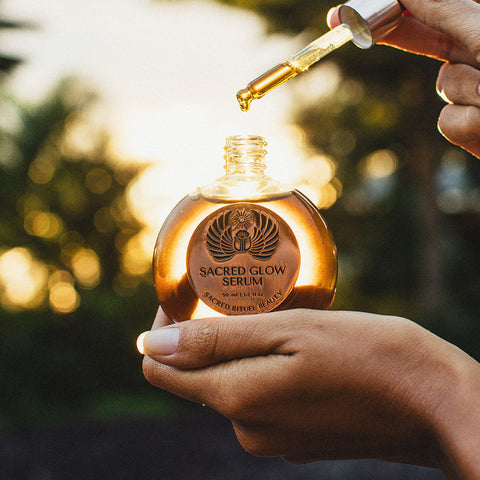
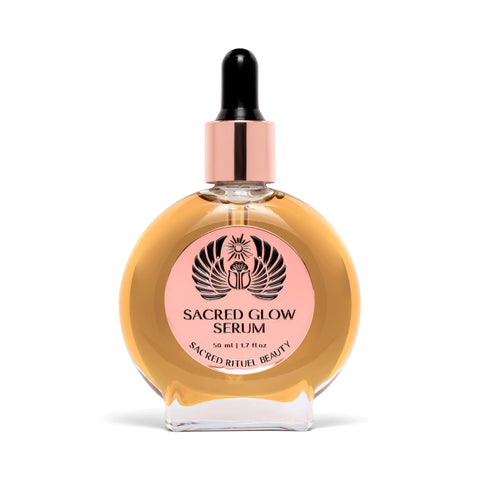
Instead of heavy, pore-clogging oils like coconut oil, the skin tends to do far better with lightweight plant oils whose structure works with it. Jojoba Oil is the classic example: its wax esters closely mirror the skin's own sebum, so it absorbs and balances rather than smothering. For the face, a cold-pressed whole-plant facial oil such as Sacred Serum delivers nourishment through a phytocomplex of botanical oils, designed to leave skin soft and balanced rather than greasy. Sacred Serum is a nourishing facial oil, not a sunscreen, so keep your daily SPF as a separate step.
Favor Breathable, Non-Occlusive Textures
The thread running through every pore-clogging culprit is occlusion: a heavy film that smothers the skin. The fix is to favor textures that let your skin breathe. Whole-plant oils that are compatible with the skin's own lipid matrix sink in and support the moisture barrier rather than sitting on top of it (Lin et al. 2018), which is a very different experience from a waxy or silicone-based layer.
Keep The Rest Of Your Ritual Simple
Clear pores love a short, consistent routine more than a crowded one. A gentle cleanse, a balancing mist, and a lightweight whole-plant oil are often all the skin needs. If you would like the full ritual in one place, the Sacred routine set brings the facial oil, a rose mist, and body oil together. For more gentle, whole-plant ideas, our guide to holistic skincare practices goes deeper.
Habits That Keep Pores Clear
Choosing the right ingredients is the foundation, but a few simple habits keep pores looking their clearest. Here is what makes the biggest difference.
Cleanse Thoroughly, Gently, Every Night
The single most important habit is removing the day's makeup, sunscreen, and grime before bed, without stripping your skin. A whole-plant oil cleanse dissolves even stubborn, water-resistant makeup. People in our community tell us our cleanser "WORKS in removing my makeup easily, without drying out my face" and that it melts away "a full face of makeup" while leaving skin soft. Never sleep in makeup, which traps oil and debris in pores overnight.
Exfoliate Gently And Occasionally
Gently sloughing away dead skin cells helps keep them from settling into pores and dulling the skin. A soft weekly exfoliation is plenty; over-exfoliating irritates the skin and can prompt more oil, undoing the benefit. Gentleness wins here, as it does everywhere in skincare.
Let Your Skin Breathe
Give your skin regular breaks from heavy, occlusive products and full-coverage makeup so pores are not constantly sealed over. A simpler routine of breathable, whole-plant products lets skin do its own regulating work, which is often all congestion-prone skin needs.
Keep Hands Off Your Face
Touching your face transfers dirt, oil, and bacteria from your hands to your skin, which can settle into pores. Be mindful of resting your face on your hands or picking at blemishes. Keeping hands clean and away from your face makes a real difference over time.
Treat Yourself To A Gentle Mask
An occasional clarifying or nourishing mask can support clearer-looking pores between deep cleanses. If you enjoy a hands-on ritual, our DIY face masks for soft, glowing skin are a lovely, whole-plant way to do it at home.

Final Thoughts
Avoiding pore-clogging ingredients does not have to feel daunting. Once you know that the real culprits are heavy, occlusive ingredients like coconut oil, lanolin, isopropyl myristate, silicones, algae extracts, and petroleum-derived paraffin and mineral oil, the choice becomes clear: favor lightweight, breathable, whole-plant formulas and cleanse gently so your skin's own balance stays intact.
The deeper lesson is that oil itself is not the enemy. The right whole-plant oils, the kind Marysia formulates from cold-pressed botanicals, work with your skin rather than against it. People in our community tell us their skin feels clean, balanced, soft, and supple, never stripped. With a short, mindful ritual built on ingredients you can trust, clear, healthy-looking pores are well within reach.
Frequently Asked Questions
What is the most pore-clogging ingredient?
Coconut oil is among the most reliably pore-clogging ingredients for the face, because it is both heavy and highly comedogenic, so it tends to trap oil and debris in pores, especially on oily or congested-looking skin. Other frequent offenders are lanolin, isopropyl myristate, certain silicones like dimethicone, algae extracts, and petroleum-derived paraffin and mineral oil. The thread connecting them is occlusion: a heavy film that smothers the skin. The fix is to favor lightweight, breathable, whole-plant textures instead.
What ingredients are good for clogged pores?
The kindest approach is to stop applying the ingredients that clog pores, then choose lightweight, breathable alternatives. Lightweight whole-plant oils such as jojoba mirror the skin's own sebum and absorb rather than smother, helping skin look clean and balanced. Gentle cleansing matters just as much: a non-stripping oil cleanse like Cosmic Cleansing Oil dissolves makeup, sunscreen, and silicones without the harsh surfactants that strip the skin and can prompt more oil. People in our community tell us it leaves skin clean and balanced with no residue.
How do you know if a moisturizer is clogging your pores?
If your skin starts developing blackheads, whiteheads, or small bumps shortly after starting a new moisturizer, it may be clogging your pores. Scan the ingredient list for heavy, occlusive culprits like coconut oil, lanolin, isopropyl myristate, or mineral oil. Pausing the product for a couple of weeks helps confirm whether it is the cause, and switching to a lightweight, breathable whole-plant formula often settles things down.
What ingredient in sunscreen clogs pores?
In sunscreens, the most common pore-clogging culprits are heavy occlusive oils and waxes, along with thick film-forming ingredients used to make a formula water-resistant. Look out for the same heavy ingredients that clog pores elsewhere, such as coconut oil, isopropyl myristate, and some silicones. Whatever SPF you choose, cleansing it off thoroughly each night matters more than the label: a non-stripping oil cleanse dissolves sunscreen completely so it cannot settle into pores overnight.
Which SPF is not clogging pores?
A lightweight, breathable sunscreen with a short, recognizable ingredient list is least likely to clog pores; thick, heavily occlusive formulas are the ones to avoid. Whichever you choose, the real protection against clogged pores is removing it gently and completely at the end of the day. A whole-plant oil cleanse like Cosmic Cleansing Oil dissolves even water-resistant SPF and makeup without stripping the skin, so nothing is left to settle into pores overnight.
What lotions clog pores?
Lotions and creams built around heavy oils and waxes like coconut oil, lanolin, or mineral oil are the most likely to clog pores, and thick, occlusive formulations cause more trouble for skin that already looks congested. Lighter, breathable textures and short ingredient lists are friendlier to pores. For face care, many people find a lightweight whole-plant facial oil such as Sacred Serum leaves skin nourished and balanced rather than smothered.
Radiance Is Personal. Let’s Reveal Yours...


All Day Glow Essentials