Regenerative Farming For The Future + The Beauty Industry
Regenerative farming is agriculture that actively rebuilds the soil instead of depleting it, restoring soil life, biodiversity, and the whole ecosystem, and it matters for your skincare because the plants we put on our skin are only as good as the soil they grow in. Healthier, living soil grows botanicals richer in the fatty acids, antioxidants, and aromatic compounds that nourish skin, which is exactly why folk herbalist Marysia Miernowska, who formulates every Sacred Rituel product, sources from certified-organic, regeneratively tended land. Our hero Sacred Serum is a cold-pressed phytocomplex of 14 organic botanical oils, and our community consistently tells us their skin looks more nourished and radiant on whole-plant oils. A quick note of good practice: patch test any new oil on your inner arm first.
Key Takeaways:
- Healthier soil grows more potent botanicals: Regenerative farming rebuilds the living soil, and the plants we put on our skin are only as good as the soil they grow in. Richer soil means ingredients richer in the fatty acids, antioxidants, and plant compounds that nourish skin.
- Whole-plant and cold-pressed protects that potency: Cold-pressing extracts oil without heat, preserving the delicate tocopherols, polyphenols, and carotenoids that heat and solvents destroy, and the full plant complex does more working together than any isolated molecule could (Russo 2019).
- It is a sourcing ethos, not a marketing label: Choosing regeneratively tended, certified-organic botanicals means cleaner ingredients on your skin and farming that gives back to the earth. It is why every Sacred Rituel formula starts at the soil.
Regenerative farming is more than a trend. It is a return to the way the land was always meant to be tended, and it has everything to do with how well your skincare actually works. At Sacred Rituel, this is not an add-on to the story. It is the beginning of it, because the plants we ingest as food or take in through our skin are only ever as good as the soil they grew in.
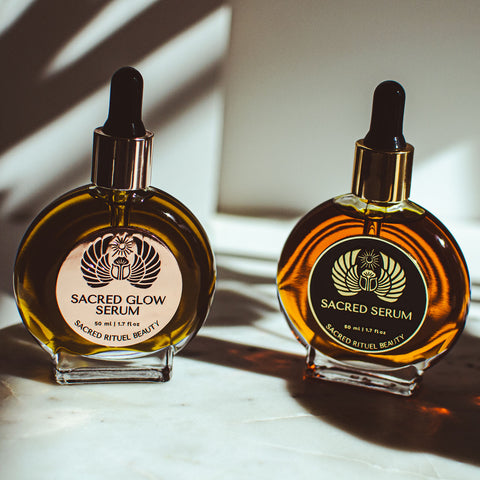
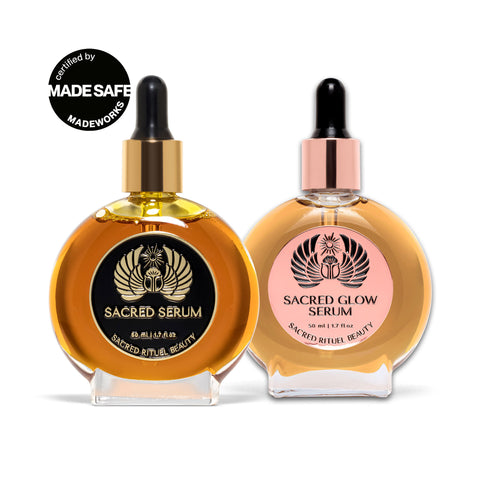
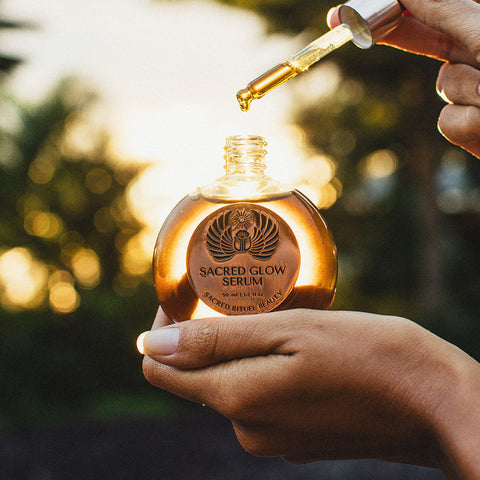
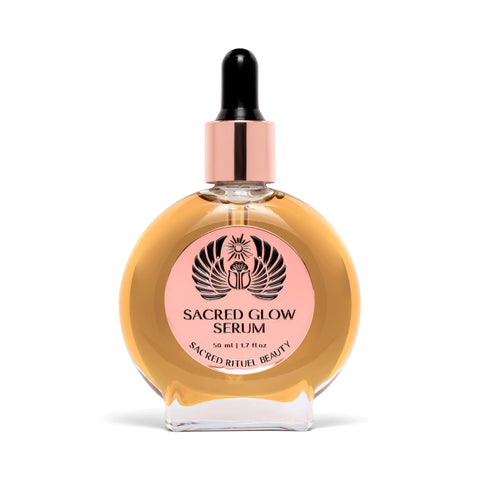
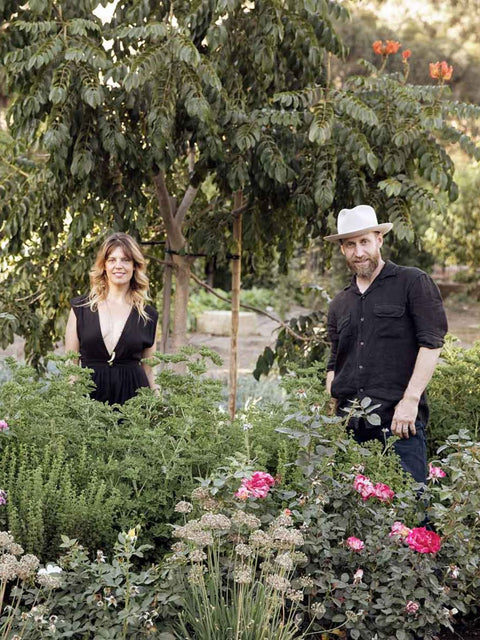
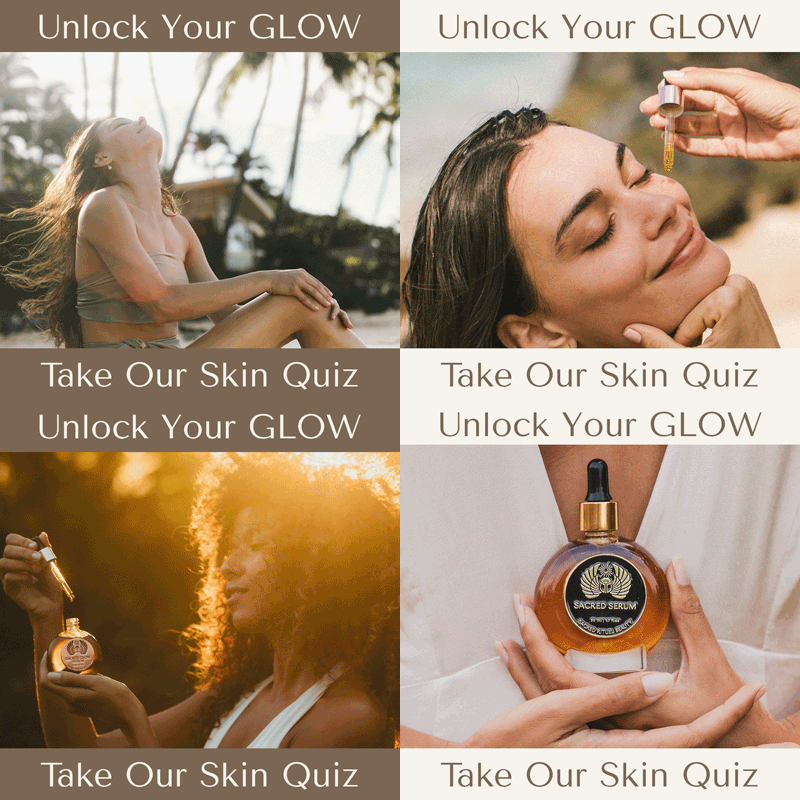
Every Sacred Rituel product is formulated by folk herbalist Marysia Miernowska, founder of the School of the Sacred Wild, from cold-pressed, certified-organic botanicals chosen for what plants genuinely do for skin. Our hero is Sacred Serum, a whole-plant phytocomplex of 14 cold-pressed organic botanical oils built to nourish the skin and support its moisture barrier. This guide explains what regenerative farming is, why healthier soil produces more potent botanicals, and how that ethos reaches your skin.
What Is Regenerative Farming?
Regenerative farming is an agricultural practice that restores and enhances the health of the soil, the biodiversity above and below it, and the whole surrounding ecosystem. It goes a step beyond sustainability: rather than simply doing less harm, it actively rebuilds the natural resources that farming draws on. Through practices like cover cropping, composting, crop rotation, and minimal tillage, farmers work with nature instead of against it, and the soil grows richer and more alive season after season.
This is the opposite of the extractive model that takes from the earth and depletes her. We source the highest-quality ingredients from certified-organic, regeneratively tended land precisely because that is where the most vital plants grow. If you want to go deeper on the soil-and-climate story, the documentary Kiss the Ground is a beautiful place to start.
Can regenerative farming sequester carbon?
Yes. One of the most remarkable gifts of regenerative farming is its ability to draw carbon dioxide out of the atmosphere and store it in the soil. As farmers build organic matter through cover crops, composting, and reduced tillage, the soil becomes a living carbon sink, and that same organic matter is what makes it so fertile. Healthier, carbon-rich soil also holds water better and stands up to drought and heavy rain, which is why regenerative land tends to be more resilient in a changing climate.
For skincare, that resilience matters in a quiet but real way: it means a steadier supply of robust, nutrient-dense botanicals. The same soil practices that help the climate also grow the vital plants that go into a whole-plant oil like Sacred Serum.
Why Healthier Soil Grows More Potent Botanicals
Here is the heart of it. A plant builds its fatty acids, antioxidants, polyphenols, and aromatic compounds from what it draws out of the soil. Living, mineral-rich, biologically active soil gives a plant more to work with, and the plant answers by producing a fuller, more complex profile of the very compounds that nourish skin. Depleted soil, leaned on with synthetic fertilizers, grows plants that are thinner in exactly those gifts. This is the herbalist's first principle, and it is why our sourcing starts at the ground rather than the bottle.
That potency is then either preserved or destroyed by how the oil is extracted. We cold-press our botanicals, which means the oil is pressed out without heat. Heat and chemical solvents degrade the delicate actives that make a plant oil worth using in the first place: the tocopherols (natural vitamin E), the polyphenols, and the carotenoids. Cold-pressing keeps that full living spectrum intact, which is why a cold-pressed oil from well-grown plants is in a different league from a heat-extracted, commodity one.
And it is not any single compound doing the work. The whole plant works as a synergistic complex, its constituents amplifying one another, an effect documented in the botanical literature as the entourage effect (Russo 2019). A whole-plant oil delivers that synergy. An isolated, lab-fractioned molecule cannot. When you combine living soil, the whole plant, and gentle cold-pressing, you get botanicals at their most potent, which is the standard Sacred Serum is built to.
What are the challenges faced in transitioning to regenerative farming?
Choosing this path is not the easy one, and that is part of why it is worth honoring. Farmers moving from conventional to regenerative methods take on real challenges: learning new techniques, rebuilding soil that may take several seasons to come back to life, and weathering some short-term variability in yield during the transition. It asks patience and a long view of the land rather than the next quarter.
That difficulty is exactly why brands that genuinely source this way do so out of conviction, not convenience. When we partner with growers tending the land regeneratively, we are choosing the harder, slower, more honest route because it produces the better plant and gives back to the earth. The botanicals below are ones that flourish in this kind of living, biodiverse soil.
- Jojoba: A lightweight oil whose wax esters closely mimic the skin's own sebum, so it absorbs beautifully and suits nearly every skin type. You can read more in our guide to Jojoba Oil.
- Rosehip: A natural source of vitamin C and carotenoids in their whole-food matrix, beloved for supporting the look of firmer, smoother, more even-toned skin. More in our guide to Rosehip Oil.
- Pomegranate: Cold-pressed pomegranate seed oil is rich in antioxidants and rare fatty acids that nourish and protect the skin. More in our guide to Pomegranate Seed Oil.
- Calendula: A gentle, time-honored botanical herbalists have long reached for to calm the look and feel of stressed, dry skin.
- Sea buckthorn: Vivid orange with carotenoids and a rare spread of fatty acids, prized for nourishing skin that looks dull or depleted.

Is regenerative agriculture healthy?
Regenerative agriculture is built around health at every level. By avoiding synthetic pesticides and fertilizers and fostering biodiversity, it creates healthier soil, cleaner water, and more resilient ecosystems. For the plants, that means growing free of synthetic residues, which is gentler on skin once those plants become your skincare.
This is why certified-organic sourcing matters so much to us. It means the botanicals reaching your skin are clean, grown without synthetic chemicals, and richer in the natural compounds that feed it. Whole-plant oils are documented to support and repair the skin's moisture barrier and are compatible with the skin's own lipid matrix, so they sink in and condition rather than sit on top (Lin et al. 2018). Cleaner inputs and a gentler formula are a natural fit for skin that reacts easily, though it is always good practice to patch test a new oil first. For more on what to keep off your skin, see our guide to ingredients to avoid in skincare.
Are regeneratively farmed ingredients better for the skin?
Yes, and the reason is everything we have walked through. Regeneratively farmed botanicals are grown in living soil without synthetic pesticides or artificial fertilizers, so they are naturally clean and tend to carry a fuller profile of the nutrients, antioxidants, and phytocompounds that nourish skin. Better soil grows a better plant, and a better plant makes a better oil.
Take rosehip: as a natural source of vitamin C and carotenoids held in their whole-food matrix with their natural cofactors, it is associated with the look of firmer, more even-toned skin, and the whole-food form is more bioavailable than an isolated synthetic equivalent. The same logic runs through every botanical we use. This is what our community consistently tells us they feel on whole-plant oils: skin that looks more nourished, calmer, and more radiant. If a streamlined, plant-led approach speaks to you, you may enjoy our look at the best minimalist skincare brands, and for an at-home ritual, our DIY face masks for glowing skin.
Bringing The Soil-To-Skin Ethos Into Your Ritual
The simplest way to feel the difference well-sourced botanicals make is to build a small, intentional ritual around them rather than a crowded shelf of products. A few cold-pressed, whole-plant essentials, used consistently, give skin the nourishment it is actually asking for.
For the face, press a few drops of a whole-plant facial oil like Sacred Serum into damp skin morning and night, after cleansing. If you would like the full soil-to-skin ritual in one place, the Sacred routine set pairs the serum with a rose mist and body oil, so cleanse, mist, and nourish all draw from the same regeneratively sourced, cold-pressed standard. Whatever you choose, look for the markers that signal real sourcing: certified-organic botanicals, cold-pressed extraction, and light-shielding glass packaging that keeps the antioxidants potent from the first drop to the last.
Final Thoughts On Regenerative Farming
Regenerative farming is where good skincare actually begins. Living soil grows more potent plants, cold-pressing preserves their delicate actives, and the whole plant working in synergy does what no isolated molecule can. That is not a marketing flourish. It is the herbalist's understanding, carried from the ground to the bottle. When you choose botanicals tended this way, your skin is nourished by plants at their fullest, and the earth is given back to rather than taken from. That is the standard every Sacred Serum is held to, and it is the future the beauty industry is, slowly and beautifully, growing toward.
Sources:
- Russo, E. B. (2019). The Case for the Entourage Effect and Conventional Breeding of Clinical Cannabis: No "Strain," No Gain. Frontiers in Plant Science, 9, 1969. https://doi.org/10.3389/fpls.2018.01969
- Lin, T.-K., Zhong, L., & Santiago, J. (2018). Anti-Inflammatory and Skin Barrier Repair Effects of Topical Application of Some Plant Oils. International Journal of Molecular Sciences, 19(1), 70. https://doi.org/10.3390/ijms19010070
- Carr, A. C., & Vissers, M. C. M. (2013). Synthetic or Food-Derived Vitamin C: Are They Equally Bioavailable? Nutrients, 5(11), 4284-4304. https://doi.org/10.3390/nu5114284
Keep exploring: ingredients to avoid in skincare, the best minimalist skincare brands, DIY face masks for glowing skin.
Frequently Asked Questions
Can regenerative farming sequester carbon?
Yes. Regenerative farming draws carbon dioxide from the atmosphere and stores it in the soil. As farmers build organic matter through cover crops, composting, and reduced tillage, the soil becomes a living carbon sink, and that same organic matter is what makes it so fertile. Healthier, carbon-rich soil also holds water better and stands up to drought and heavy rain, which makes regenerative land more resilient and, for skincare, a steadier source of robust, nutrient-dense botanicals.
What are the challenges faced in transitioning to regenerative farming?
Moving from conventional to regenerative methods takes real commitment. Farmers learn new techniques, rebuild depleted soil over several seasons, and weather some short-term variability in yield during the transition. It asks patience and a long view of the land. That difficulty is exactly why the brands that genuinely source this way do so out of conviction: the harder, slower route produces the more vital plant and gives back to the earth.
Is regenerative agriculture healthy?
Regenerative agriculture is built around health at every level. By avoiding synthetic pesticides and fertilizers and fostering biodiversity, it creates healthier soil, cleaner water, and more resilient ecosystems. For the plants, that means growing free of synthetic residues, which is gentler on skin once those botanicals become your skincare. Cleaner inputs are part of why certified-organic, regeneratively sourced ingredients suit skin that reacts easily, though it is always good practice to patch test a new oil first.
Are regeneratively farmed ingredients better for the skin?
Yes. Regeneratively farmed botanicals grow in living soil without synthetic pesticides or artificial fertilizers, so they are naturally clean and tend to carry a fuller profile of the nutrients, antioxidants, and phytocompounds that nourish skin. Better soil grows a better plant, and a better plant makes a better oil. Rosehip, for example, is a natural source of vitamin C and carotenoids in their whole-food matrix, associated with the look of firmer, more even-toned skin. It is what our community consistently tells us they feel on whole-plant oils like Sacred Serum.
Are regeneratively sourced skincare products more expensive?
They can cost more, and the reason is honest. Regeneratively tended, certified-organic botanicals are slower and harder to grow, cold-pressing yields less oil than heat or solvent extraction, and protective glass packaging costs more than plastic. You are paying for genuinely more potent, cleaner ingredients rather than diluted or commodity ones. A little of a concentrated whole-plant oil also goes a long way, so the true cost per use is often gentler than the shelf price suggests.
Are there any certifications or labels to identify regeneratively sourced beauty products?
There is no single universal regenerative label yet, but you can look for trustworthy signals. Certifications like USDA Organic, Ecocert, and COSMOS confirm organic, sustainable ingredients, and emerging programs such as Regenerative Organic Certified specifically recognize regenerative practices. Beyond labels, look at the brand itself: transparency about where botanicals are grown, cold-pressed extraction, and light-shielding glass packaging are strong signs of genuine soil-to-skin sourcing.
Radiance Is Personal. Let’s Reveal Yours...
All Day Glow Essentials