The Ultimate Guide To Vegan Skincare Certifications
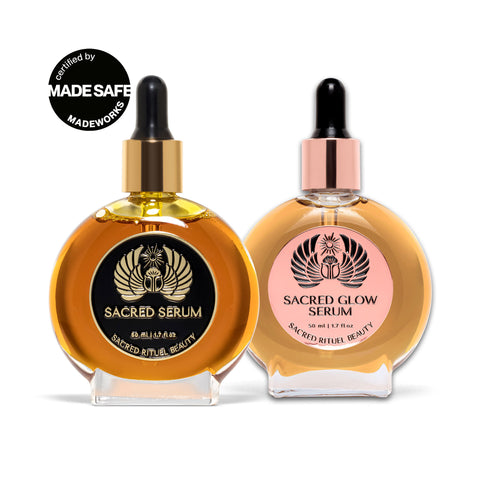
The vegan skincare certifications worth trusting are the ones backed by independent, third-party audits rather than a brand's own marketing: Certified Vegan (no animal-derived ingredients), Leaping Bunny (no animal testing at any stage), USDA Organic (how the botanicals are grown and processed), and MADE SAFE, which screens a formula against a list of known harmful chemicals and bans synthetic fragrance and the hormone disruptors it so often carries. A logo on a label is a claim, not a guarantee, so the real question is who verified it and what they actually checked. Sacred Rituel, the whole-plant line formulated by folk herbalist Marysia Miernowska, holds USDA Organic, MADE SAFE, and Leaping Bunny certification, and below we walk through exactly what each one means so you can read past the buzzwords with confidence.
Key Takeaways:
- The certification, not the buzzword, is what to trust: Independent marks like Certified Vegan, Leaping Bunny, USDA Organic, and MADE SAFE are backed by third-party audits, while words like "clean," "pure," and "natural" are unregulated and mean whatever a brand wants.
- MADE SAFE is the one that screens for what is in the bottle: It bans synthetic fragrance and the hormone disruptors fragrance commonly carries, along with other known toxicants. A fragrance-free, MADE SAFE formula is a genuine safety signal, not a marketing flourish.
- Sacred Rituel holds all three: Every Sacred Rituel product, formulated by folk herbalist Marysia Miernowska, is USDA Organic, MADE SAFE, and Leaping Bunny certified, made from cold-pressed, whole-plant botanicals.
Trying to make sense of skincare labels while choosing your next face oil? You are not alone if words like "vegan," "organic," "cruelty-free," and "clean" start to blur together. So many brands make ethical and natural claims that it can be genuinely hard to tell which products walk the talk. That is exactly what real, third-party skincare certifications are for: they cut through the noise and give you something verifiable to stand on.
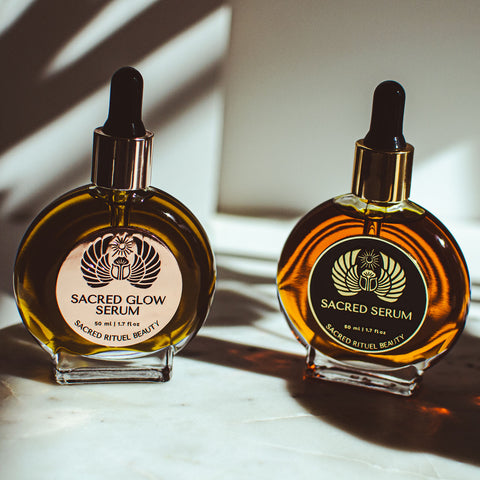
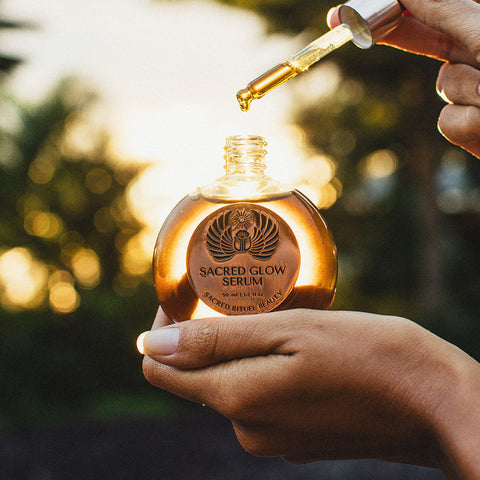
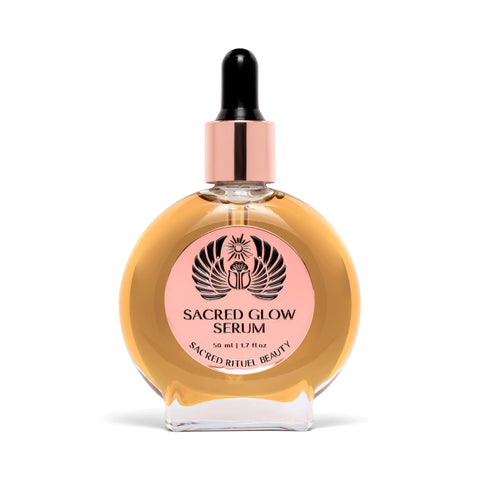
At Sacred Rituel, we do not hide formulas behind buzzwords. Every product is formulated by folk herbalist Marysia Miernowska, founder of the School of the Sacred Wild, from cold-pressed, whole-plant botanicals, and the line carries USDA Organic, MADE SAFE, and Leaping Bunny certification. Our hero is Sacred Serum, a cold-pressed face oil of 14 organic botanical oils built to nourish the skin's moisture barrier with whole-plant compounds rather than isolated, lab-made actives.
In this guide we will explain what vegan skincare certifications actually verify, why they matter, which marks are most trusted, what MADE SAFE screens for, and how to read a label so you can shop with real confidence rather than blind faith in a logo.
What Are Vegan Skincare Certifications And Why Do They Matter?
In a beauty world buzzing with labels like "clean," "natural," and "eco-friendly," it is easy to get lost. Vegan skincare certifications cut through that by verifying two concrete things: that no animal-derived ingredients are used in the formula, and that the brand follows cruelty-free practices, meaning no animal testing at any stage of production.
These certifications matter because they are more than a feel-good label. They hold companies accountable to rigorous, independent standards, so when you see a certification logo, you are trusting a verification system built on transparency and ethics rather than a marketing department's word. This guide to informed skincare helps you decode labels and ingredients, so you can shop with confidence that your choices reflect both compassion and clean, plant-based beauty. If you want to go deeper on reading an ingredient list itself, our breakdown of what to avoid in skincare is a good companion.

Are vegan skincare certifications regulated by law?
Mostly no, and that is the single most useful thing to understand. Most vegan and clean-beauty certifications are issued by independent, third-party organizations rather than government agencies, so each certifying body sets its own criteria and runs its own audits. That is not a weakness; it is why the specific mark matters so much. The strongest certifications are backed by genuine third-party review, while weaker ones are little more than branding. Knowing which logos to trust is how you make informed, empowered choices. Here are the certifications worth looking for.
Certified Vegan
One of the most widely recognized vegan marks, Certified Vegan guarantees that no animal ingredients or by-products are used and no animal testing has taken place. It is a clear, dependable standard for ethical, vegan skincare.
Leaping Bunny
This globally respected standard certifies that no animal testing is conducted at any phase of product development. It pairs especially well with a vegan certification for complete cruelty-free assurance, which is why Sacred Rituel carries it. If a brand cannot show a Leaping Bunny mark, its cruelty-free claim is unverified.
USDA Organic
USDA Organic is not a vegan standard on its own, but it speaks volumes about a product's purity and sourcing: it verifies that botanicals are grown without synthetic pesticides or fertilizers and processed to organic standards. Here is a beginner's guide to what USDA Certified Organic truly means. Sacred Rituel is a USDA Certified Organic line, which is why every botanical in Sacred Serum is grown without synthetic chemicals and extracted through nutrient-preserving cold-pressing.
MADE SAFE
If a vegan mark tells you what is not in a formula by origin and USDA Organic tells you how it was grown, MADE SAFE tells you what is not in it by safety. MADE SAFE screens a product against a list of thousands of known harmful chemicals, and crucially for skincare it bans synthetic fragrance, which is one of the most common ways hormone-disrupting chemicals get into personal-care products in the first place. "Fragrance" on a label can legally hide dozens of undisclosed ingredients, many of them linked to hormone disruption, which is why we are proudly fragrance-free. A MADE SAFE certification, the kind Sacred Rituel holds, is one of the strongest signals that a formula is genuinely safe to live with day after day.
COSMOS / Ecocert
These EU-based certifications set high bars for both natural origin and organic content, and they also account for environmental impact, making them a useful signal for buyers focused on sustainability.
Why Certification Transparency Matters in Clean Beauty
In an industry where "clean" can mean whatever a brand wants it to mean, certification transparency is a powerful filter. Understanding what is behind a label is just as important as what is inside the bottle, and a real certification is only as good as the integrity of the body that grants it and the honesty of the brand that carries it. True transparency means:
- Naming the exact certifications on the packaging and the website
- Explaining what those certifications actually verify, not just dropping logos
- Being honest about what is not certified, and why
At Sacred Rituel we do not just display logos; we share the story behind our USDA Organic, MADE SAFE, and Leaping Bunny certifications. Every botanical in Sacred Serum is grown without synthetic chemicals and cold-pressed to preserve its delicate nutrients, and because the formula is fragrance-free and MADE SAFE certified, there is nothing hidden behind a vague "fragrance" line. A certification should be a window into a product's ethics, safety, and sourcing, never a smokescreen. That is the level of transparency clean beauty deserves.

How To Shop Smarter: Reading Labels And Spotting Greenwashing
Clean beauty is thriving, and so is misleading marketing. Greenwashing happens when a brand borrows eco-conscious language to attract ethical buyers without meeting those standards. Becoming a label-literate shopper is the best protection for both your skin and your values. If you want a deeper walk through it, our guide to choosing a genuinely minimalist skincare brand shows what a short, honest ingredient list looks like in practice.
Look For Specific, Named Certifications
When shopping, look for verified third-party marks like USDA Organic, Leaping Bunny, Certified Vegan, or MADE SAFE. These are not decorative; each one reflects a real audit and a defined standard. A brand that claims to be "vegan" or "cruelty-free" without showing a certification may not be telling the whole story.
Read The Ingredient List
The ingredient list is the most honest part of any product. Even on something labeled vegan and cruelty-free, scan for animal-derived ingredients like lanolin, beeswax, collagen, or tallow, and watch for "fragrance" or "parfum," the catch-all term that can hide undisclosed, often hormone-disrupting chemicals. Brands that disclose their sourcing and explain what each ingredient does, the way we do, make it easy to trust what you are putting on your skin. Our breakdown of pore-clogging ingredients to avoid is a practical place to start.
Beware Of Vague Language
Words like "clean," "pure," and "eco-friendly" sound reassuring but mean very little without verification behind them. These unregulated terms can make a product seem ethical or natural when it is neither. A truly transparent brand explains its values and its ingredient choices rather than hiding behind a trend.
Pay Attention To Packaging Clues
Packaging can signal a brand's wider commitment. Look for violet glass, refillable options, or compostable materials that reflect eco-conscious choices beyond the formula itself. Sacred Rituel bottles every product in light-shielding violet Miron glass, which preserves the potency of the delicate plant oils inside, reduces waste, and honors the earth.
Why Ingredient Sourcing Is Just As Important As Certification
It is easy to focus on logos, but the story behind the ingredients matters just as much. Certifications offer real guidance, yet they do not always reveal the full journey of what is inside the bottle. Here is why how an ingredient is sourced and extracted matters as much as whether it is certified.
Ethical Sourcing Reflects True Brand Values
A brand's sourcing says more than any campaign could. Ethical sourcing means weighing the environmental impact, the labor practices, and the sustainability of the whole supply chain. It is one thing to call yourself clean and vegan; it is another to make sure every supplier and every ingredient upholds that promise. Sacred Rituel sources from certified organic and regenerative farms for exactly this reason.
Cold-Pressed Extraction Preserves Nutrient Power
Not all oils are created equal. Many mainstream products use heat or chemical solvents to extract oil, and that process damages the delicate compounds plants are prized for. Sacred Rituel cold-presses its oils because pressing without heat preserves the tocopherols, polyphenols, carotenoids, and essential fatty acids that nourish skin, rather than destroying them. It is the difference between a living, whole-plant oil and a depleted one, and it is a core reason Sacred Serum feels the way it does on the skin.
Whole-Plant Botanicals Outperform Isolated Actives
Skincare is not only about what is left out; it is about the quality and the form of what goes in. Marysia formulates with the whole plant rather than a single isolated molecule because the full phytocomplex, the fatty acids, antioxidants, polyphenols, and vitamin cofactors working together, does more in concert than any one fraction alone. Rosehip, for instance, is a natural source of vitamin C and carotenoids associated with the look of firmer, more even-toned skin, and plant oils as a class are documented to support the skin's moisture barrier. In our reviews, people consistently tell us this is the difference they feel, one writing that she has "never used anything better, with real ingredients," and another at 74 that her "skin looks and feels amazing."

Putting It Together: A Certified, Whole-Plant Ritual
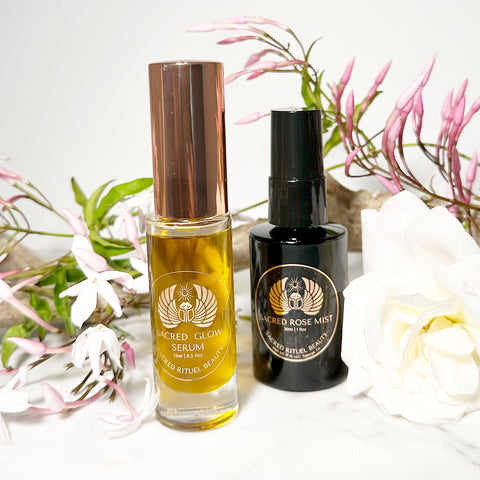
Reading certifications is the first step; living with them is the reward. If you want a simple, certified-clean routine to start with, the Sacred routine set brings together a rose mist, the face oil, and a body oil, all USDA Organic, MADE SAFE, and Leaping Bunny certified, fragrance-free, and cold-pressed from whole-plant botanicals. It is an easy way to see what a fully certified, transparently sourced ritual feels like in practice. For ideas beyond the bottle, our DIY face masks for glowing skin lean on the same whole-plant philosophy, and our look at how jojoba oil works for both oily and dry skin shows why a single well-chosen botanical earns its place in a formula.
Final Thoughts
Skincare certifications have become more than stamps on a box; the right ones are verifiable proof of trust, intention, and care. Choosing genuinely certified skincare is about aligning your daily ritual with your values, and the marks that matter most, Certified Vegan, Leaping Bunny, USDA Organic, and MADE SAFE, each answer a different, concrete question about how a product was made and what it does and does not contain.
As people grow more conscious, the demand for transparency, purity, and safety will only rise. Certifications are not the end of the conversation but the beginning of a more mindful way to care for your skin. Backed by honest sourcing, cold-pressed whole-plant botanicals, and a fragrance-free, MADE SAFE formula, they let you choose products that reflect what you want for your skin and what you stand for. That is the standard Marysia built Sacred Rituel on, and it is the one we invite you to hold every brand to.
Sources:
- Selwyn, A., & Govindaraj, S. (2023). Study of plant-based cosmeceuticals and skin care. South African Journal of Botany, 158, 429–442. https://doi.org/10.1016/j.sajb.2023.05.039
- Dini, I. (2024). "Edible Beauty": The Evolution of Environmentally Friendly Cosmetics and Packaging. Antioxidants, 13(6), 742–742. https://doi.org/10.3390/antiox13060742
- Rodan, K., Fields, K., Majewski, G., & Falla, T. (2016). Skincare Bootcamp: The Evolving Role of Skincare. Plastic and Reconstructive Surgery - Global Open, 4(12), e1152. https://doi.org/10.1097/gox.0000000000001152
Frequently Asked Questions
Are vegan skincare certifications regulated by law?
Mostly no. Most vegan and clean-beauty certifications are issued by independent, third-party organizations rather than government agencies, so each certifying body sets its own criteria and runs its own audits. That is exactly why the specific mark matters: the strongest ones, like Certified Vegan, Leaping Bunny, USDA Organic, and MADE SAFE, are backed by genuine third-party review, while weaker ones are little more than branding. Always look for a named, verifiable certification rather than a vague claim.
Can a product be certified vegan but still include synthetic ingredients?
Yes. A product can be certified vegan and still contain lab-made or synthetic ingredients, because the vegan mark only verifies that nothing is animal-derived. For a genuinely clean formula, look for additional certifications alongside the vegan claim: USDA Organic for how the botanicals are grown, and MADE SAFE, which screens against thousands of known harmful chemicals and bans synthetic fragrance. Sacred Serum carries USDA Organic, MADE SAFE, and Leaping Bunny certification and is cold-pressed from whole-plant botanicals.
Why do some brands skip certifications even if they are vegan?
Some smaller or artisan brands skip formal certification because the application and audit process is costly and time-consuming. That does not automatically mean their products are not vegan, but it does make their claims harder to verify independently. Certifications exist to create consistency and trust in an otherwise unregulated market, which is why a brand that has earned them, and explains what they mean, gives you more to stand on than one asking you to take its word.
Are vegan skincare certifications the same globally?
No. Standards vary by country and by certifying body, so what qualifies as vegan in one place may not meet the requirements in another. For consistency, look for internationally recognized marks like Leaping Bunny and Certified Vegan, and pair them with sourcing and safety certifications such as USDA Organic and MADE SAFE so you are verifying both ethics and what is actually in the formula.
Do vegan skincare products guarantee allergy-free or sensitive skin-safe formulas?
Not on their own. A vegan product can still contain natural allergens or potent botanicals that some sensitive skin reacts to. This is one reason MADE SAFE certification is so valuable: by banning synthetic fragrance, a leading trigger for irritation, it removes one of the most common culprits. Even so, it is always good practice to patch test a new oil on your inner arm for 24 hours before applying it more widely, especially if your skin is sensitive.
Are vegan body oils different from regular body oils?
Yes. A vegan body oil excludes animal-derived fats like lanolin or emu oil and relies entirely on plant oils, which are often richer in the antioxidants and essential fatty acids that nourish skin. The bigger difference, though, is in how it is made: a cold-pressed, whole-plant oil from a USDA Organic, MADE SAFE line preserves the delicate nutrients that heat and solvents destroy, so you are getting living plant nourishment rather than a depleted oil. The same whole-plant philosophy guides our face oil, Sacred Serum.
Radiance Is Personal. Let’s Reveal Yours...
All Day Glow Essentials