All About Adaptogens: Incorporating Balance And Wellness Into Your Lifestyle
Adaptogens are herbs and plants that help the body adapt to stress and return to balance, a category herbalists have leaned on for centuries, from ashwagandha and holy basil to ginseng and reishi. Most people meet them as a tea, a tincture, or a spoonful in a smoothie, where they are traditionally used to steady energy and support a calm, resilient feeling. But adaptogenic and botanical herbs belong in skincare too: applied to the skin, whole-plant oils rich in antioxidants and fatty acids help skin look calmer, more resilient, and balanced, the very qualities a stressed-looking complexion is reaching for. That is the tradition every Sacred Rituel formula is built on by folk herbalist Marysia Miernowska, founder of the School of the Sacred Wild, whose Sacred Serum presses fourteen cold-pressed organic botanical oils into a single whole-plant ritual for the face. A quick note of good practice: patch test any new oil on your inner arm first.
Key Takeaways:
- Adaptogens are balancing botanicals: Herbs like ashwagandha, holy basil, ginseng, and reishi are traditionally used to help the body adapt to stress and return to balance, most often taken as teas, tinctures, capsules, or in food.
- Whole-plant botanicals belong in skincare too: Applied topically, antioxidant- and fatty-acid-rich plant oils help skin look calmer, more resilient, and more balanced, and they work with the skin's own lipid barrier rather than sitting on top (Lin et al. 2018).
- The whole plant, cold-pressed, does more: The full phytocomplex outperforms any isolated molecule (Russo 2019), and cold-pressing preserves the delicate antioxidants and fatty acids that nourish the look of skin. That is the herbalist tradition behind every Sacred Rituel formula.
If stress has left you feeling depleted and out of balance, you are not alone, and the plant world has been answering that exact need for a very long time. Adaptogens are some of its most treasured allies. In this guide we will define what adaptogens really are, meet the most beloved ones, look honestly at how they are used, and then turn to where this tradition meets your skin: the antioxidant-rich, whole-plant botanicals that help skin look calm, resilient, and radiant.
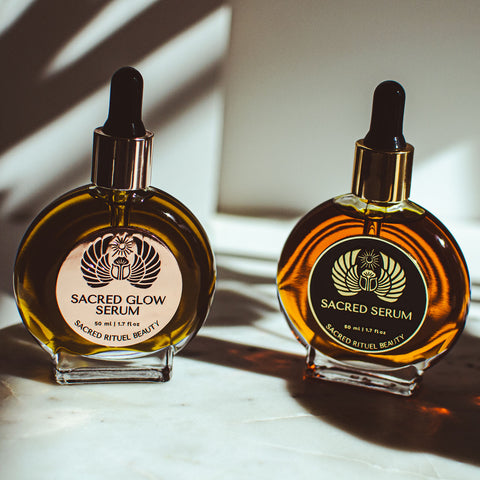
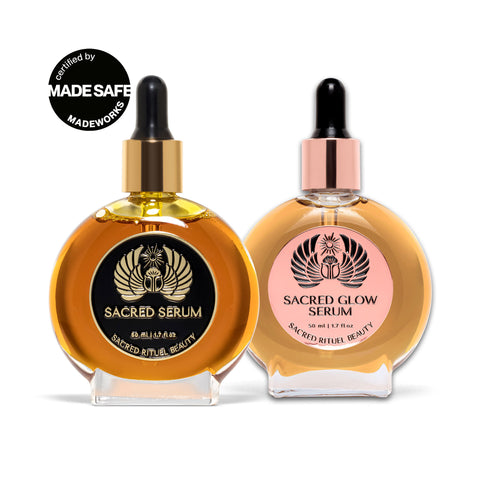
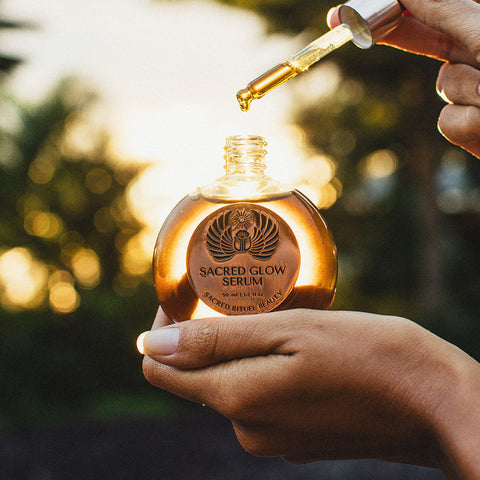
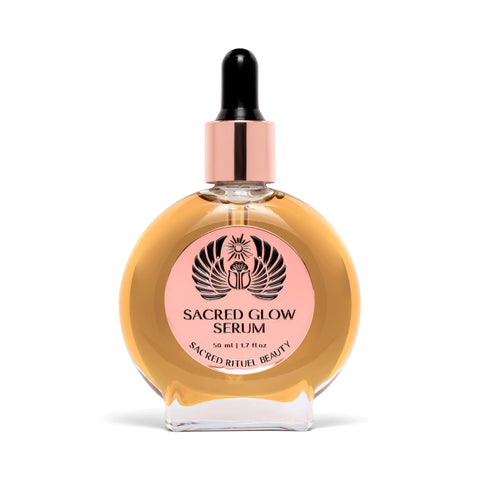
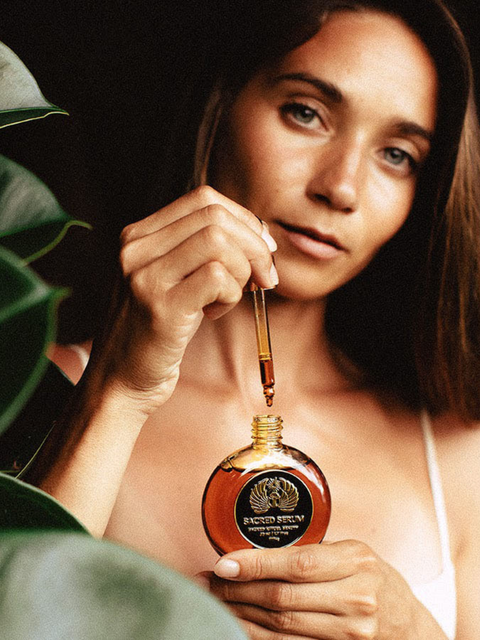
At Sacred Rituel, every product is formulated by folk herbalist Marysia Miernowska, founder of the School of the Sacred Wild, from cold-pressed, whole-plant botanicals chosen for what plants genuinely do. Our hero for the face is Sacred Serum, a whole-plant blend of fourteen cold-pressed organic botanical oils that nourishes the skin and supports its natural resilience.
What Are Adaptogens?
Adaptogens are a class of herbs and plants traditionally used to help the body adapt to stress and find its way back to balance. Rather than pushing the body in one direction, they are valued in herbalism for a steadying, normalizing effect, helping the system meet whatever it is facing. Most are roots, barks, or whole herbs with long histories in Ayurvedic and traditional Chinese practice, and they are usually taken internally as teas, tinctures, capsules, or powders folded into food.
This is centuries-old plant wisdom, and modern research is steadily catching up to what herbalists have long observed about these botanicals and the stress response. As with any potent herb, the quality and source of the plant matter enormously, which is the same principle that guides how we choose every botanical in our formulas.
The Most Beloved Adaptogenic Herbs
Adaptogens are a whole family of herbs, each with its own character and traditional uses. Here are some of the most treasured:
- Ashwagandha: One of the most revered herbs in Ayurveda, ashwagandha root is traditionally used to ease the feeling of stress and support restful sleep and steady energy.
- Holy Basil (Tulsi): A sacred plant in Ayurvedic tradition, tulsi is prized for its calming, centering quality and is often sipped as a daily tea.
- Ginseng: Often called the king of adaptogens, ginseng has been used for centuries to support vitality, energy, and a sense of resilience.
- Rhodiola: A hardy mountain herb traditionally used to support endurance, mental clarity, and resilience to stress.
- Reishi: A mushroom long honored in traditional Chinese practice for its grounding, calming nature and its support for a feeling of overall balance.
- Maca: A root from the Peruvian highlands traditionally used to support stamina and a feeling of vitality.
No single one is the best for everyone. The herb that serves you depends on what your body is asking for, which is exactly why the herbalist tradition treats plants as individuals rather than interchangeable supplements.

How Are Adaptogens Traditionally Used?
Adaptogens are most often taken internally, and there are several lovely ways to weave them into a daily ritual:
Brew A Soothing Herbal Tea
Sipping an adaptogenic tea is one of the gentlest and most grounding ways to begin or end a day. Herbs like holy basil and reishi make a calming, centering brew, and the simple ritual of making tea is itself a moment of pause.
Blend Into Smoothies Or Food
Adaptogenic powders such as maca, ashwagandha, and rhodiola fold easily into a morning smoothie, and culinary herbs like turmeric and tulsi can be cooked into everyday dishes. A little, taken consistently, is the herbalist's way.
Tinctures And Capsules
For a more concentrated, measured dose, tinctures (liquid extracts taken under the tongue) and capsules offer convenience and consistency. As with any herb you take internally, choose reputable, organically grown sources.
A Note On Taking Adaptogens Internally
Internal adaptogens are foods and supplements, not a substitute for medical care. If you are pregnant or breastfeeding, take medication, or have a health condition, talk with a qualified healthcare professional before adding them, and introduce one herb at a time so you can notice how your own body responds.
Adaptogens And Botanicals In Skincare
The same tradition that brings adaptogens to your teacup brings whole-plant botanicals to your skin, and this is where Sacred Rituel lives. Skin under chronic stress, sun, and pollution often starts to look tired, reactive, and less resilient. Applied topically, antioxidant- and fatty-acid-rich plant oils help skin look calmer, more balanced, and more resilient, supporting its own defenses against the environmental stress it faces every day.
This is not a vague promise. Plant oils are documented to support and repair the skin's moisture barrier, and because they share the structure of the skin's own lipids, they are compatible with its natural lipid matrix and absorb to condition the deeper layers of the outer skin rather than coating the surface (Lin et al. 2018). A resilient barrier is a calmer, more comfortable-looking complexion, which is precisely the quality a stressed-looking skin is reaching for.
The antioxidants carried in cold-pressed botanicals, the polyphenols, tocopherols, and carotenoids, help defend the look of skin against the free radicals generated by sun and pollution, the same environmental stress that ages the appearance of skin. Choosing clean, organic, whole-plant skincare means those delicate constituents reach your skin intact rather than degraded. For more on which ingredients to keep out of a clean routine, see our guide to ingredients to avoid in skincare.
The Botanical Heroes In Sacred Serum
Our Sacred Serum is a whole-plant phytocomplex of fourteen cold-pressed organic botanical oils, each chosen for what it brings to the look and feel of the skin. A few of the heroes:
- Jojoba Oil: Its wax esters closely mirror the skin's own sebum, so it absorbs beautifully and helps balance the look of skin without a greasy residue. It is so versatile that some call it a skincare adaptogen in its own right, as our deep dive into how jojoba suits both oily and dry skin explores.
- Rosehip Oil: A natural source of vitamin C and carotenoids, rosehip is beloved for supporting the look of firmer, smoother, more even-toned skin, and it is clinically shown to improve the look of redness and discoloration.
- Sea Buckthorn: Rich in carotenoids and fatty acids, sea buckthorn is a deeply nourishing antioxidant botanical that supports a radiant, resilient-looking complexion.
- Frankincense: A resin honored for centuries, frankincense is a treasured botanical for the look of mature, settled, balanced skin.
The real power is not any single oil but the synergy of the whole plant blend. Herbalists have always understood that the full plant working together does more than any isolated part, and modern science describes the same thing as the entourage effect, where the complete phytocomplex outperforms any one molecule on its own (Russo 2019). Cold-pressing matters just as much: extracting oil without heat preserves the delicate antioxidants and fatty acids that nourish the look of skin and that heat or solvents would destroy. That is why every Sacred Rituel oil is cold-pressed and whole-plant, the herbalist's way translated into a bottle.
How To Choose Adaptogenic And Botanical Skincare
Whether you are choosing herbs for your teacup or oils for your skin, the same principles apply. Here is what to look for in a whole-plant skincare ritual:
Whole-Plant, Not Isolated
Look for formulas built from whole-plant botanicals rather than a single synthesized molecule. The full phytocomplex carries the plant's antioxidants, fatty acids, and aromatic constituents in the natural balance the plant created.
Cold-Pressed And Organic
Cold-pressing preserves the delicate actives that heat destroys, and certified organic botanicals reach your skin free of synthetic pesticide residues. Both are signs the plant lipids meeting your skin are clean and potent.
Free Of Synthetic Fragrance And Fillers
A clean, whole-plant oil should be fragrance-free, with any aroma coming from the botanicals themselves rather than added synthetic fragrance, which is a common trigger for reactive skin. Fewer, better ingredients is a philosophy worth seeking out, as our roundup of the best minimalist skincare brands explores.
Patch Test A New Oil
Whenever you add a new oil, it is good practice to patch test first. Apply a small amount of Sacred Serum to your inner arm and leave it for 24 hours. If your skin stays comfortable, you are good to use it on your face.
Building A Whole-Plant Ritual
Bringing this tradition into your day is simple, and ritual is part of the medicine. Cleanse, then while your skin is still slightly damp, press a few drops of a whole-plant facial oil into your face and neck, taking a slow breath of the botanicals as you go. If you want the whole ritual together, the Sacred routine set pairs Sacred Serum with a rose mist and our body oil so face and body are cared for as one. For an occasional deeper treat, a botanical face mask layers in more plant nourishment, as our guide to DIY face masks for glowing skin shows. Many in our community tell us a daily anointing becomes a grounding moment of self-care as much as a skincare step, and that their skin looks calmer and more radiant for it.
Final Thoughts On Adaptogens
Adaptogens are a gift of the plant world: herbs that help the body meet stress and find balance, treasured across centuries of herbalist tradition. Taken as teas, tinctures, or food, they are a beautiful way to support a calm, resilient feeling from the inside. And the same wisdom reaches your skin through whole-plant botanicals, the antioxidant- and fatty-acid-rich oils that help skin look calmer, more resilient, and radiant from the outside.
That is the tradition behind every Sacred Rituel formula, crafted by folk herbalist Marysia Miernowska from cold-pressed, whole-plant botanicals. If you want to bring this plant wisdom to your skin, a daily anointing with a whole-plant facial oil like Sacred Serum is one of the simplest, most grounding rituals you can keep.
Sources:
- Singh, N., Bhalla, M., de Jager, P., & Gilca, M. (2011). An overview on ashwagandha: A rasayana (rejuvenator) of ayurveda. African Journal of Traditional, Complementary, and Alternative Medicines: AJTCAM. https://www.ncbi.nlm.nih.gov/pmc/articles/PMC3252722/
- Wee, J. J., Park, K. M., & Chung, A.-S. (2011). Biological activities of ginseng and its application to human health. Herbal Medicine: Biomolecular and Clinical Aspects. https://www.ncbi.nlm.nih.gov/books/NBK92776/
- Gonzales, G. F. (2012). Ethnobiology and ethnopharmacology of Lepidium meyenii (Maca), a plant from the Peruvian highlands. Evidence-Based Complementary and Alternative Medicine: eCAM. https://www.ncbi.nlm.nih.gov/pmc/articles/PMC3184420/
- Russo, E. B. (2019). The case for the entourage effect and conventional breeding of clinical cannabis: No “strain,” no gain. Frontiers in Plant Science, 9, 1969. https://doi.org/10.3389/fpls.2018.01969
- Lin, T.-K., Zhong, L., & Santiago, J. (2018). Anti-Inflammatory and Skin Barrier Repair Effects of Topical Application of Some Plant Oils. International Journal of Molecular Sciences, 19(1), 70. https://doi.org/10.3390/ijms19010070
Frequently Asked Questions
Are adaptogens safe for long-term use?
Adaptogens are generally considered safe for ongoing use when taken as foods and supplements at sensible amounts from reputable, organically grown sources. They are best introduced one at a time so you can notice how your own body responds. If you are pregnant or breastfeeding, take medication, or have a health condition, talk with a qualified healthcare professional before making them a long-term habit.
Can I combine different adaptogens?
Yes. Many adaptogens are traditionally blended, and herbalists have long combined them so the plants work in synergy. A gentle approach is to start with one herb, get to know how it feels, and then add another. The same whole-plant principle guides our skincare, where many botanicals are combined into a single blend so they work together rather than in isolation.
How long does it take for adaptogens to show results?
It varies by person and by herb. With internal adaptogens, some people notice subtle changes within a few days, while others take several weeks of consistent use. The herbalist tradition values patience and consistency over a quick spike. With whole-plant skincare, the same is true: skin often looks calmer and more hydrated quickly, while the look of resilience builds with a daily ritual over time.
Can I take adaptogens with medication?
If you take any medication, talk with your healthcare provider before adding internal adaptogens, since herbs can interact with prescriptions. This is the one place to be cautious rather than experimental. Topical whole-plant skincare like a botanical facial oil is a different matter, as it is applied to the skin rather than taken internally, though a patch test is always good practice.
Are adaptogens addictive?
No. Adaptogens are not addictive. They are whole herbs traditionally used to help the body find its own balance rather than to create dependence. As with any supplement, follow sensible amounts and choose quality, organically grown sources.
What is the king of adaptogens?
Ginseng, especially Panax ginseng, is often called the king of adaptogens for its long history and its reputation for supporting vitality and resilience. That said, every adaptogen has its own gifts, and the best herb for you is the one that meets what your body is asking for, which is very much the herbalist way of seeing plants as individuals.
Are adaptogens good for your skin?
Whole-plant botanicals, including many adaptogenic and antioxidant-rich herbs, are wonderful for the look and feel of skin when applied topically in a well-made oil. Antioxidant- and fatty-acid-rich plant oils help skin look calmer, more balanced, and more resilient, and they support and repair the skin's moisture barrier rather than sitting on the surface (Lin et al. 2018). Our Sacred Serum brings fourteen cold-pressed organic botanical oils into one whole-plant blend for exactly this.
Who should avoid adaptogens?
People who are pregnant or breastfeeding, anyone taking medication, and anyone with a health condition should speak with a qualified healthcare professional before taking internal adaptogens, as some herbs can interact with medications or conditions. Children should only take them under professional guidance. When in doubt, the safest path is to ask a clinician first. For skincare, a patch test of any new oil on the inner arm is the simple, sensible precaution.
Radiance Is Personal. Let’s Reveal Yours...

All Day Glow Essentials