Best Vegan Skincare Brands for Cleaning Glowing Skin
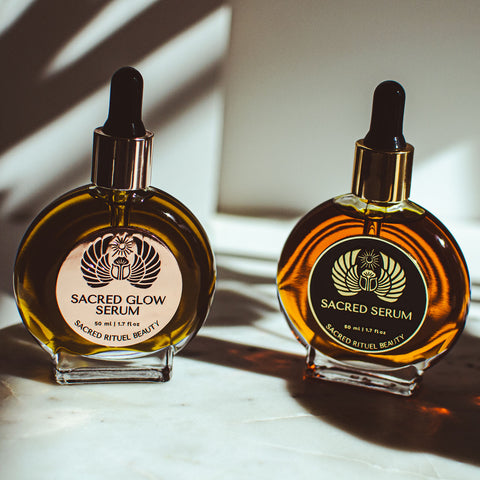
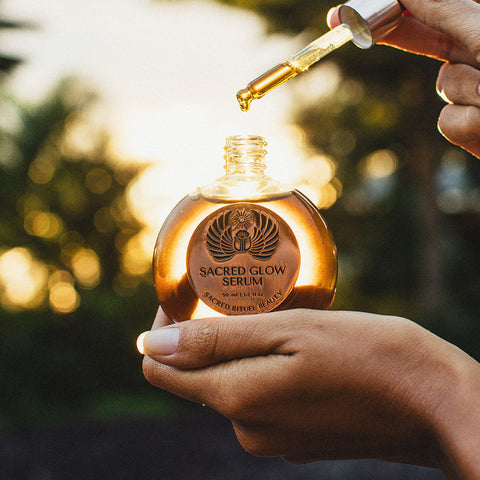
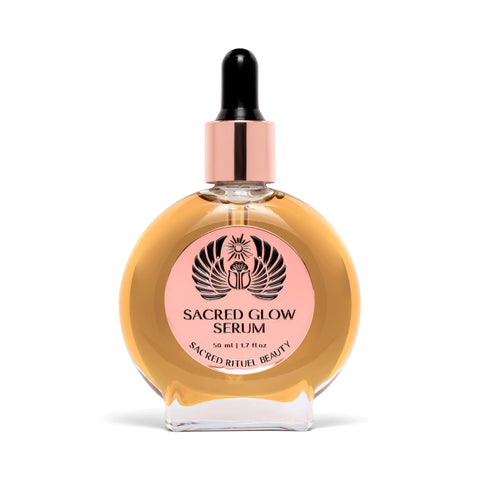
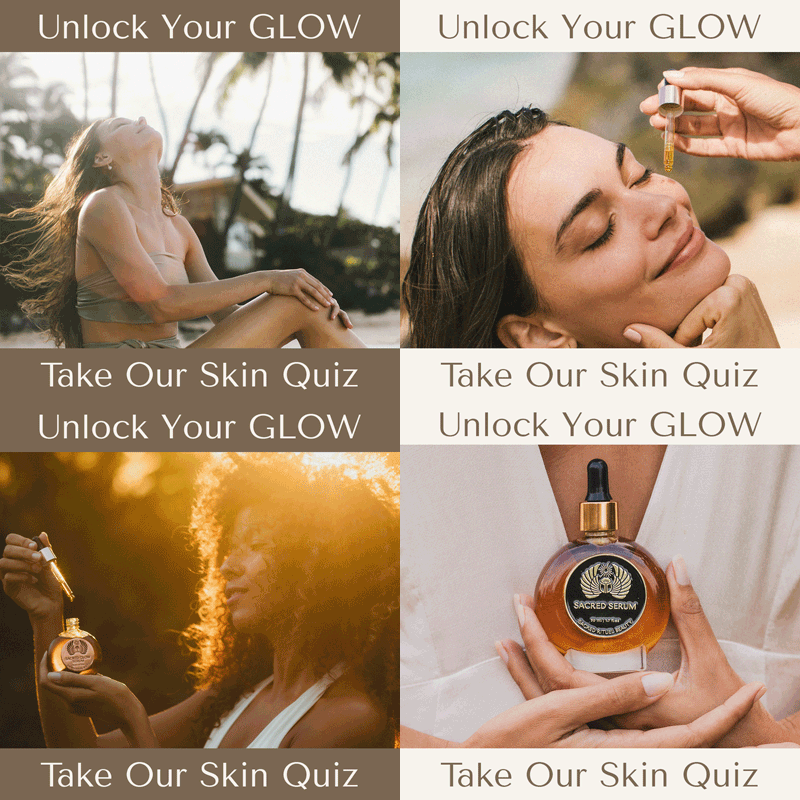
The best vegan skincare brands share three things you can actually verify: ingredients that are entirely plant-based with no animal-derived inputs, a clear cruelty-free testing policy, and the kind of transparency that lets you read every ingredient and know what it does. You do not have to choose between your ethics and real results. At Sacred Rituel, every formula is built by folk herbalist Marysia Miernowska, founder of the School of the Sacred Wild, from cold-pressed, organic, whole-plant botanicals chosen for what plants genuinely do for skin. Our face hero is Sacred Serum, a whole-plant facial oil of fourteen cold-pressed botanical oils, and many in our community describe the same thing after switching to it: a calm, lit-from-within glow. In this guide we will define what makes a vegan brand meaningful, how to verify the claims, and how to build a simple routine that works.
Key Takeaways:
- Values and results are not a trade-off: The best vegan skincare brands pair compassionate, plant-based, cruelty-free standards with formulas that visibly perform. Whole-plant botanicals deliver fatty acids and antioxidants the skin recognizes.
- Keep it simple: A toner, serum, and oil trio from a thoughtful natural vegan brand covers daily hydration, comfort, and glow. Fewer, better products are easier to stay consistent with.
- Verify what matters: Read the full INCI list, confirm the cruelty-free testing policy across suppliers and global markets, and start with travel sizes before you commit.
Looking for vegan skincare brands that honor your standards and actually deliver for your skin? The good news, and the conviction behind this whole guide, is that you do not have to settle. Whole-plant botanical formulations work, and they work without a single animal-derived ingredient. At Sacred Rituel we formulate with organic botanicals, cold-pressed oils, and hydrosols, in short, readable blends, so your ritual feels good and does good.
Below we will clarify what truly sets the best vegan skincare brands apart, how to verify the claims so you are not taken in by marketing language, and how to build a simple routine that works. We will also share practical guidance for sensitive skin and answers to the questions we hear most, so you can shop with confidence.
Are vegan skincare brands better for sensitive skin?
They often are, especially when the formula is short, plant-based, and fragrance-free. Vegan means no animal-derived ingredients, no beeswax, lanolin, collagen, or carmine, and a focus on plant-powered botanicals that nourish the skin barrier instead. Cruelty-free is a separate promise about animal testing at every stage of development. When a brand stands firmly for both, you get formulas that respect your skin and your values at once.
Short, readable ingredient lists are a hallmark of a thoughtful vegan brand, and they matter for sensitive skin specifically: fewer ingredients means fewer chances for irritation. Whole-plant oils and hydrosols carry antioxidants and essential fatty acids in lightweight textures that layer easily and keep a routine calm. Plant oils are documented to support and repair the skin's moisture barrier and are compatible with the skin's own lipid matrix, so they sink in to condition rather than sit on top (Lin et al. 2018). Jojoba is a favorite for sensitive and reactive skin because its wax esters closely resemble the skin's own sebum, which is part of why so many people tolerate it beautifully. You can read more about it in our guide to Jojoba Oil. As always, patch test any new oil on your inner arm first.
This is the experience people describe to us. In our reviews of Sacred Serum, many with reactive, easily-irritated skin tell us how well it agrees with them, one writing that she has "super sensitive skin and rarely can use products" yet "did not have any reaction aside from a positive one," and another simply that her "skin has never been so calm."

How To Evaluate Top Vegan Beauty Brands
Every brand tells a story. Let the ingredients, the testing policy, and the transparency confirm it. The best vegan skincare brands make it effortless to see what is inside, how it is sourced, and how to use it for real results. A little due diligence now saves guesswork later and helps you build a routine that is consistent, ethical, and effective.
Ingredient Integrity And Clarity
Start with the full INCI list rather than the front-of-label language. If you are avoiding animal-derived inputs, look for plant-based alternatives to beeswax, lanolin, collagen, carmine and cochineal, and less obvious derivatives like shellac or tallowates. Minimalist formulas with recognizable botanicals are easier to evaluate, easier to layer, and less likely to irritate, because there are no unnecessary fillers in the way.
There is a deeper reason whole-plant matters, and it is worth saying with conviction. The full phytocomplex of a plant works in synergy, and the entourage of compounds working together does more than any one isolated molecule can (Russo 2019). It is also why how an oil is made matters: cold-pressing extracts the oil without heat or solvents, which preserves the delicate tocopherols, polyphenols, and carotenoids that nourish skin and that heat would destroy. A short list of cold-pressed, whole-plant oils is not a compromise. It is the more potent choice.
If you are fragrance-sensitive, check whether scent comes from essential oils, isolates, hydrosols, or added synthetic fragrance, which is a common irritant worth avoiding, and patch test before committing. Clear usage guidance, such as how many drops and whether to apply to damp skin, AM or PM, is another sign a brand is focused on your results rather than the marketing.
Cruelty-Free Verification
Cruelty-free means no animal testing at any stage, from raw materials to finished formula, and it extends to suppliers and manufacturing partners too. Look for explicit brand statements and clear policies that address global selling practices. If a company distributes in regions that require animal testing, it may not meet a strict cruelty-free definition no matter how plant-based its ingredients are. Some brands publish third-party verifications or supplier standards to extend that accountability across the supply chain, and that transparency is exactly what you want to see.
Sourcing, Packaging, And Freshness
Potent, plant-based formulas are sensitive to light, heat, and air, the very things that degrade the antioxidants you are paying for. Favor packaging that protects delicate botanicals, such as amber or opaque glass and droppers with tight closures, and look for batch codes and a PAO, or Period After Opening, symbol so you can use products within their prime.
Brands that genuinely value freshness often work in small batches or note harvest seasons and press dates for key oils and hydrosols. That context explains why textures and aromas can vary slightly from lot to lot, which is a feature of real botanicals, not a flaw. Clear storage guidance and ship-safe packaging are further signs of a thoughtful, quality-first approach.
Build A Simple Ritual With Vegan Beauty Brands
Keep it minimal and intentional, in the spirit of a true minimalist skincare practice. In the morning, cleanse lightly or simply rinse, mist to add weightless hydration, press in a few drops of facial oil, and finish with a mineral SPF. A whole-plant facial oil like Sacred Serum nourishes and seals the skin beautifully, but it offers no sun protection, so it complements your SPF rather than replacing it.
At night, melt the day's SPF and makeup with a gentle oil cleanse, rehydrate with toner, and seal with your facial oil. If you are new to this, start with travel sizes so you can test texture, feel, and wear over one to two weeks before committing. When you are ready for the full ritual, the Sacred routine set brings the serum, a rose mist, and a body oil together in one place.
Face And Body: One Philosophy
Extend your ritual beyond the face. After bathing, smooth a fast-absorbing vegan body oil into towel-dried skin to lock in hydration and keep limbs soft. A few mindful seconds here turns simple maintenance into a soothing pause, the same whole-plant philosophy applied head to toe.

Vegan Skincare Brands Vs. “Natural” Labels
“Natural” is not a regulated term and can mean very different things from one brand to the next. “Vegan” is more concrete: it speaks to the absence of animal-derived ingredients. The brands worth your trust pair simple, plant-based ingredient lists with clear cruelty-free policies and back the word “natural” with real botanicals you can read on the label.
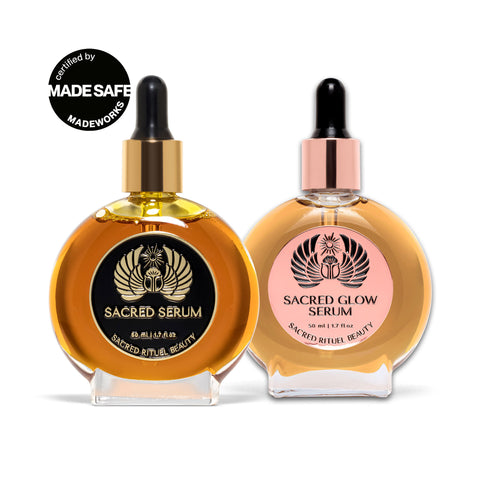
This is also where MADE SAFE certification earns its place. A MADE SAFE seal means a product has been screened against a list of known harmful ingredients, so it is a verifiable signal rather than a marketing adjective. Sacred Rituel is MADE SAFE certified and fragrance-free, which is part of what “clean” should actually mean. When you are evaluating a natural vegan brand, read the ingredient list, check the cruelty-free policy, and look for that kind of third-party accountability. For a closer look at what to steer clear of, see our guide to pore-clogging ingredients to avoid.
Why Sacred Rituel Is One Of The Best Vegan Skincare Brands
Sacred Rituel brings together everything this guide asks of a vegan brand: real ingredient integrity, consistent performance, and compassionate standards. Every product is formulated by folk herbalist Marysia Miernowska, founder of the School of the Sacred Wild, who built each blend from cold-pressed, organic, whole-plant botanicals chosen for what plants observably do for skin. Our formulas are entirely vegan and cruelty-free, MADE SAFE certified, and fragrance-free, and we keep INCI lists short and readable so you always know exactly what you are putting on your skin.
Results matter as much as values, and here the ingredient science is genuinely exciting. Sacred Serum is a whole-plant phytocomplex of fourteen cold-pressed botanical oils. Jojoba, whose wax esters closely resemble the skin's own sebum, helps balance the look of both oily and dry skin. Rosehip, a natural source of vitamin C and carotenoids, is clinically shown to improve the look of redness and discoloration. The full blend works in synergy, the entourage effect that whole-plant herbalism has understood for centuries and that research now describes directly (Russo 2019). Cold-pressing keeps those actives alive all the way to your skin.
This is what our community describes back to us, in their own words and qualitatively. Many tell us about a healthy, lit-from-within glow, one writing that “everyone stops me to say wow you're glowing.” A recurring theme in our reviews is lasting moisture and skin that feels, as more than one person put it, “like silk.” And people with reactive, sensitive skin consistently tell us how calm their skin became. That is the kind of evidence we trust: real outcomes, customer-attributed, from whole-plant oils.
We also believe in fewer, better choices, applied with clear guidance, such as press the oil into damp skin rather than rubbing, and use just a few drops. Protective amber and opaque glass shields the delicate botanicals from light, and we share storage tips so your products perform from first use to last. A streamlined toner, serum, and oil trio covers daily hydration, treatment, and nourishment for most skin, and you can extend the same philosophy to body care for head-to-toe comfort.
What defines a vegan skincare brand?
Not all labels mean the same thing, and careful vetting is how you tell a meaningful vegan brand from a marketing one. “Vegan” speaks to ingredients, the absence of any animal-derived input. “Cruelty-free” speaks to testing. And terms like “natural” or “clean” are not regulated at all. Vetting helps you avoid greenwashing, confirm a company's policies match your ethics, and choose brands that are transparent about sourcing, suppliers, and manufacturing.
Vetting protects your skin and your budget too. Short, readable INCI lists make it easier to spot potential irritants and confirm a formula is focused on performance rather than fillers. Checking packaging, batch codes, and PAO details ensures the botanicals are fresh and potent, so you get the results you paid for and waste less. And global sales policies matter: some markets still require animal testing, which can compromise a brand's cruelty-free status even when its ingredients are fully vegan. Reviewing where and how a brand sells, and how it holds its suppliers accountable, lets you buy with real confidence.
Brand Vetting Checklist (Quick Reference)
- Ingredient Integrity: No beeswax, lanolin, collagen, carmine or cochineal, shellac, or tallowates. Short, readable INCI lists with plant-based alternatives.
- Cruelty-Free Policy: Clear statements covering all stages, from ingredients to finished product, plus supplier compliance, and no sales in markets that require animal testing.
- Transparency And Certification: Sourcing notes, clear usage guidance, and third-party signals like MADE SAFE that verify a brand against known harmful ingredients.
- Packaging And Freshness: Opaque or amber glass, droppers, secure closures, visible batch codes, and PAO, or Period After Opening, symbols.
- Texture And Fit: Lightweight, layerable, whole-plant formulas that sit well under a mineral SPF, with fragrance-free options for sensitive skin.
- Sensitivity Practices: Patch-test guidance, fragrance-free formulas, and advice to introduce one product at a time.
- Value And Longevity: Concentrated whole-plant actives, multi-tasking steps, and refillable or recyclable packaging.

Final Thoughts
The best vegan skincare brands make it genuinely easy to care for your skin and your conscience at once. Choose plant-based formulas you can verify, confirm the cruelty-free policy, look for real signals like MADE SAFE, and keep your steps simple so you can stay consistent. Whole-plant botanicals are not a gentle compromise on results. Cold-pressed, in synergy, and compatible with your skin's own lipids, they are one of the most nourishing choices you can make, and the people in our community will tell you so in their own words. A few well-chosen products and an easy rhythm, morning and night, and your skin shows it. If you want a soft, natural way to deepen the ritual, try our DIY face masks for soft, glowing skin.
Sources:
- Lin, T.-K., Zhong, L., & Santiago, J. (2018). Anti-Inflammatory and Skin Barrier Repair Effects of Topical Application of Some Plant Oils. International Journal of Molecular Sciences, 19(1), 70. https://doi.org/10.3390/ijms19010070
- Russo, E. B. (2019). The Case for the Entourage Effect and Conventional Breeding of Clinical Cannabis: No “Strain,” No Gain. Frontiers in Plant Science, 9, 1969. https://doi.org/10.3389/fpls.2018.01969
- Lin, T.-K., Zhong, L., & Santiago, J. (2018). Anti-Inflammatory and Skin Barrier Repair Effects of Topical Application of Some Plant Oils. International Journal of Molecular Sciences, 19(1), 70. https://doi.org/10.3390/ijms19010070
Keep exploring: how jojoba oil suits both oily and dry skin, the best minimalist skincare brands to try, pore-clogging ingredients to avoid.
Frequently Asked Questions
What defines a vegan skincare brand?
A vegan skincare brand uses no animal-derived ingredients, such as beeswax, lanolin, collagen, or carmine, and builds its formulas from plant-based botanicals like cold-pressed oils and hydrosols instead. Many, including Sacred Rituel, also commit to being cruelty-free, meaning no animal testing at any stage of development. Read beyond the marketing: scan the full INCI list and check the brand's testing policy. Transparent companies make both easy to find.
Are vegan skincare brands better for sensitive skin?
They often are, especially when the formula is short, plant-based, and fragrance-free, since fewer ingredients means fewer chances for irritation. Whole-plant oils like jojoba are well tolerated because their wax esters closely resemble the skin's own sebum, and plant oils are documented to support the skin's moisture barrier (Lin et al. 2018). In our reviews of Sacred Serum, people with reactive skin consistently tell us how calm their skin became. Always patch test and introduce one change at a time.
How do I verify cruelty‑free status?
Cruelty-free means no animal testing on ingredients or finished products at any stage. Look for explicit statements on the brand's site and, when available, third-party verifications or published supplier standards. Be mindful that brands selling in regions that require animal testing may not meet a strict cruelty-free definition, even if their ingredients are vegan. When in doubt, contact customer care and begin with travel sizes while you evaluate.
What ingredients should I avoid if I want to shop vegan?
Skip beeswax, also listed as cera alba, along with lanolin, collagen, and carmine or cochineal, and watch for less obvious derivatives like shellac or tallowates. Choose plant-based alternatives such as candelilla or carnauba waxes, shea butter, and whole-plant oils and hydrosols. Reading the complete ingredient list helps you catch non-vegan inputs that front-of-label headlines miss. If sourcing is unclear, ask the brand before you buy.
Can a brand be vegan but not cruelty‑free?
Yes. “Vegan” refers to ingredient sourcing, while “cruelty-free” refers to testing practices, and a brand can satisfy one without the other. A formula can be fully plant-based yet still be tested on animals, or sold in a market that requires testing. For full alignment with your values, choose brands that are both vegan and cruelty-free and that publish clear policies. Pairing this with concise, transparent ingredient lists makes for confident shopping.
How many products do I actually need?
You can build an effective routine with a simple toner, serum, and oil, plus a mineral SPF in the morning. A whole-plant facial oil like Sacred Serum nourishes and seals, while your SPF handles sun protection, since a facial oil offers none. Keeping steps minimal helps you stay consistent and notice what truly works, and you can add extras gradually as your skin's needs change with the season.
Radiance Is Personal. Let’s Reveal Yours...
All Day Glow Essentials