Natural Skincare Ingredients: Benefits For Healthy Skin
Natural skincare ingredients are plant-derived oils, extracts, and botanicals that nourish skin with the fatty acids, antioxidants, vitamins, and polyphenols it actually recognizes, rather than isolated synthetic molecules. The reason whole-plant ingredients work so well is the entourage effect: the full plant complex, with its many compounds intact, does more for skin than any one isolated fraction (Russo 2019). Plant oils in particular are documented to support and repair the skin's moisture barrier, and because they share the structure of the skin's own lipids, they are compatible with its natural lipid matrix and sink in to nourish rather than sitting on top (Lin et al. 2018). This is the tradition folk herbalist Marysia Miernowska, founder of the School of the Sacred Wild, formulates every Sacred Rituel product from: cold-pressed, whole-plant botanicals chosen for what plants genuinely do for skin. Our face hero, Sacred Serum, is the embodiment of it, and in our reviews people consistently tell us their skin looks radiant and feels deeply nourished. A quick note of good practice: patch test any new oil on your inner arm first.
Key Takeaways:
- Whole-plant ingredients work with your skin: Natural skincare ingredients deliver the fatty acids, antioxidants, vitamins, and polyphenols skin recognizes, and the full plant complex does more than any isolated molecule (Russo 2019).
- Natural can be more bioavailable than synthetic: Vitamin C carried in a whole-food plant matrix with its natural cofactors is more bioavailable to the body than an isolated synthetic form (Carr & Maggini 2017), and cold-pressing keeps these delicate actives alive where heat and solvents would destroy them.
- Look for cold-pressed, certified-organic, fragrance-free botanicals: The best natural skincare lists recognizable plant oils and extracts, is free of synthetic fragrance, and is made by people who tell you exactly what is inside and how it was grown.
What is the secret to truly radiant, healthy-looking skin? With so many products packed with unpronounceable ingredients, it can feel hard to find something that nourishes your skin without compromise. The honest, confident answer is that the plant world has been caring for skin far longer than any lab, and natural skincare ingredients give your skin the nutrients it actually recognizes. This guide explains what those ingredients are, why whole-plant botanicals outperform isolated synthetics, and how to tell genuine quality from greenwashing.
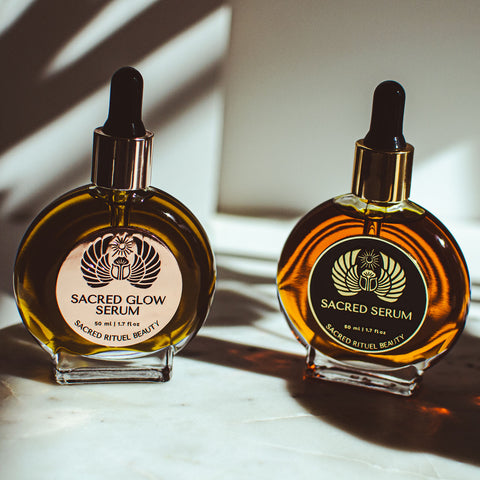
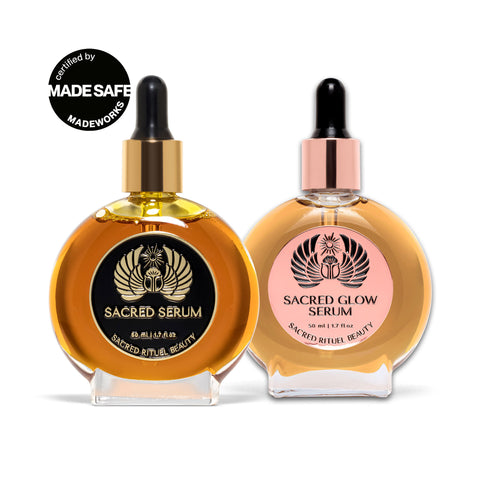
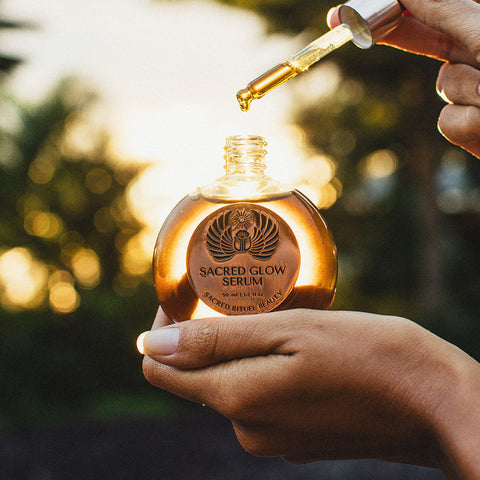
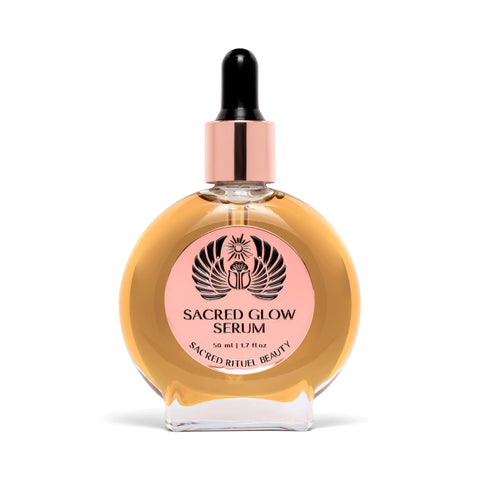
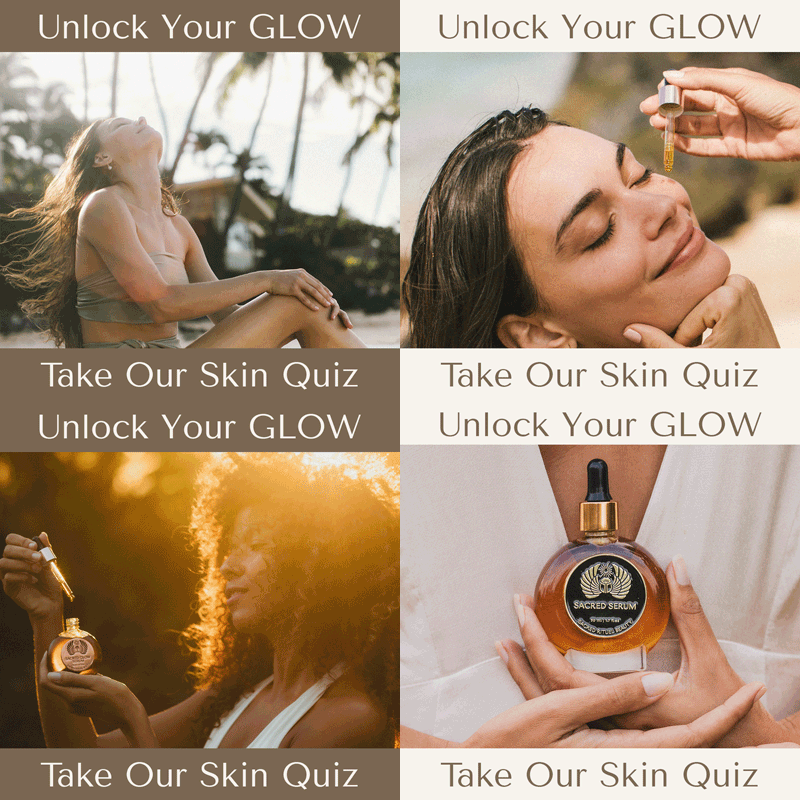
At Sacred Rituel, every product is formulated by folk herbalist Marysia Miernowska, founder of the School of the Sacred Wild, from cold-pressed, whole-plant botanicals chosen for what plants do for skin. Our face hero is Sacred Serum, a cold-pressed phytocomplex of fourteen organic botanical oils, eight herbal infusions, four essential oils, and two specialty extracts, built to nourish the skin's barrier with whole-plant compounds rather than isolated actives.
Why Choose Natural Skincare Over Synthetic Products?
The choice between natural and synthetic skincare comes down to what you are actually feeding your skin and whether your skin recognizes it. Whole-plant botanicals bring a full spectrum of compounds your skin evolved alongside; many synthetic formulas isolate a single molecule and surround it with fillers. Here is why the natural path is the one we stand behind.
The Whole Plant Does More Than The Isolated Molecule
Herbalists have understood for centuries what research now describes as the entourage effect: the many compounds in a whole plant work in concert and do more together than any one of them isolated (Russo 2019). A whole-plant oil carries fatty acids, vitamins, carotenoids, and polyphenols in their natural ratios, so your skin receives the synergy rather than a single fraction. This is the heart of how we formulate, and it is why a cold-pressed phytocomplex like Sacred Serum can support so many skin types at once.
Natural Nutrients Can Be More Bioavailable
Natural is not just a softer version of synthetic. Vitamin C carried in a whole-food plant matrix, complete with the cofactors nature packages alongside it, is more bioavailable to the body than an isolated synthetic form (Carr & Maggini 2017). Natural vitamin E arrives as the full family of tocopherols, where a synthetic version is typically a single form. When your skincare delivers nutrients the way the plant grew them, your skin gets the richer, more complete gift.
Gentle, Barrier-Friendly Formulas
Plant oils are documented to support and repair the skin's moisture barrier, and because they share the structure of the skin's own lipids, they are compatible with its natural lipid matrix and absorb to condition rather than coat (Lin et al. 2018). That barrier-friendly nature is why whole-plant oils tend to be so well tolerated. In our reviews, many people with sensitive, easily reactive skin tell us Sacred Serum is one of the few things their skin stays calm with, one writing that she has "super sensitive skin and rarely can use products" yet "did not have any reaction aside from a positive one."
Transparency And Clean Standards
With genuine natural skincare you know exactly what you are applying. Recognizable plant oils and herbal extracts replace long lists of synthetic chemicals, and the best brands tell you how their botanicals were grown and pressed. Sacred Serum is USDA Organic, MADE SAFE, and Leaping Bunny certified, and it is free of synthetic fragrance, a common irritant we will never add.
Are natural skincare ingredients suitable for all skin types?
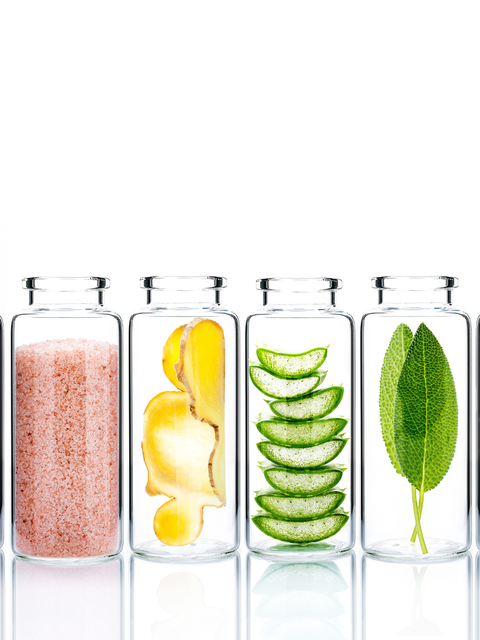
Yes. One of the quiet gifts of whole-plant ingredients is how adaptive they are: because they nourish the skin's barrier with compounds it recognizes, the same botanical oil can serve dry, oily, combination, and sensitive skin. Below are some of the natural ingredients worth knowing, with the ingredient science that earns each its place. Several of these are heroes inside Sacred Serum.
- Jojoba Oil: Jojoba is technically a liquid wax whose esters closely resemble the skin's own sebum, which is why it absorbs cleanly and helps skin feel balanced rather than greasy or tight. It suits nearly every skin type. For a deeper look, see how jojoba oil suits both oily and dry skin.
- Rosehip Oil: A natural source of vitamin C and carotenoids, rosehip seed oil is clinically shown to improve the look of redness and discoloration, which is why it is so loved for supporting a more even, radiant-looking complexion.
- Sea Buckthorn Oil: This vivid orange oil is exceptionally rich in carotenoids, vitamin E, and essential fatty acids, a true antioxidant powerhouse that supports the look of resilient, glowing skin.
- Pomegranate and Amla: Pomegranate seed oil carries punicic acid, a rare omega-5 polyphenol, and amla is one of the richest plant sources of vitamin C. Both bring antioxidant compounds associated with the look of firmer, more resilient skin.
- Chia and Blackberry Seed Oils: Abundant in omega fatty acids and antioxidants, these seed oils help skin hold onto moisture and feel comfortable, supporting the barrier that keeps water from escaping.
- Baobab and Apricot Kernel Oils: Baobab is rich in vitamins A, E, and F and deeply conditioning, while apricot kernel is a light oleic oil that softens and absorbs quickly, lovely for skin that craves softness.
- Rose and Frankincense: Beyond their grounding aroma, these traditional botanicals are prized for soothing the look and feel of stressed skin, a reason herbalists have reached for them for generations.
The real magic is not in any single oil but in the way a whole-plant blend brings many botanicals into synergy. Sacred Serum layers fourteen cold-pressed organic oils, including jojoba, rosehip, sea buckthorn, baobab, pomegranate, and amla, into one phytocomplex, which is why people across very different skin types reach for the same bottle. In our reviews, customers consistently describe a healthy glow, one writing that "everyone stops me to say wow you're glowing," alongside lasting hydration and skin that feels "like silk."

Can natural skincare ingredients cause allergies?
Whole-plant ingredients are generally gentle and well tolerated, but natural does not automatically mean risk-free for every person. Botanical extracts and especially undiluted essential oils can occasionally provoke a reaction in sensitive skin, which is why thoughtful formulation and a simple patch test matter. Here is how to choose genuinely high-quality natural skincare and use it wisely.
Read The Ingredients List, And Favor Cold-Pressed Whole Plants
A trustworthy label lists recognizable plant oils, herbal infusions, and botanical extracts rather than long strings of synthetic chemical names. Look for the words cold-pressed: cold-pressing extracts oil without heat or solvents, which preserves the delicate tocopherols, polyphenols, and carotenoids that nourish skin and that high heat would destroy. That single detail separates a living, nutrient-rich oil from a stripped, refined one.
Look For Trusted Certifications
Certifications such as USDA Organic, MADE SAFE, and Leaping Bunny are an independent stamp that a product meets real standards for clean ingredients, safety, and cruelty-free practice. Certified organic botanicals are grown without synthetic pesticides or fertilizers, so the plant lipids reaching your skin are clean. Sacred Serum carries all three, which takes the guesswork out of the label.
Skip Synthetic Fragrance And Vague Additives
If a label lists "fragrance" or "parfum" with no further detail, it can hide dozens of undisclosed synthetic compounds, and added synthetic fragrance is one of the most common causes of skin irritation. Genuine natural skincare draws its aroma from the plants themselves and is fragrance-free of any synthetic scent. We never add fragrance to a Sacred Rituel formula.
What To Look For, And What To Approach With Care
Much of the synthetic skincare world is built around isolated lab-made actives, synthetic actives, and exfoliating acids like glycolic and salicylic. These are not what we formulate with, and some can be drying or sensitizing, especially when layered. The whole-plant path offers a gentler way to reach similar goals: rosehip and sea buckthorn for the look of even, radiant skin, jojoba for balance, and the full phytocomplex for barrier support. Whichever path you choose, introduce one new product at a time and patch test it on your inner arm for 24 hours first.
Debunking Myths About Natural Skincare
Natural skincare is powerful, but a few persistent myths can cloud the picture. Let us clear them up with conviction and honesty.
Myth: Natural Means Anything Goes
Whole-plant ingredients are gentle, but they are still active. Undiluted essential oils can irritate, and even a beautiful botanical can be wrong for one person's skin. The answer is not to fear natural ingredients but to choose thoughtfully formulated products and to patch test, exactly as you would with anything new.
Myth: Natural Skincare Does Not Really Work
The science says otherwise. Plant oils repair and support the moisture barrier (Lin et al. 2018), rosehip is clinically shown to improve the look of redness and discoloration, and natural vitamin C is more bioavailable than its synthetic isolate (Carr & Maggini 2017). Our community backs this up: people consistently tell us their skin looks calmer, more even, and noticeably more radiant on whole-plant oils alone.
Myth: Results Are Instant
Natural ingredients nourish and support your skin's own rhythms rather than forcing a quick chemical change. Some things, like a softer, more hydrated feel, can be noticeable quickly, while the look of more even tone or softened fine lines builds with consistent use. People often describe Sacred Serum's glow appearing early and deepening over weeks.
Myth: Natural Means Preservative-Free, Or Fragrance From Anywhere
A pure, water-free oil does not need synthetic preservatives because there is no water for bacteria to grow in, which is part of why a well-made botanical oil is so clean. And aroma should come from the plants themselves: a genuine natural formula is free of synthetic fragrance, never relying on a vague "fragrance" listing to carry its scent.

Building A Simple Whole-Plant Routine
You do not need a ten-step shelf to give your skin what it needs. A few well-made natural products, used consistently, do more than a crowded routine of isolated actives. Here is a simple, nourishing rhythm.
Cleanse Gently
Start with a gentle oil cleanser that lifts away makeup and the day without stripping your skin. Gentle oil cleansing respects the skin's microbiome and barrier, where harsh foaming surfactants strip the lipids and microbes that keep skin healthy (Boxberger et al. 2021). Your skin should feel clean and comfortable, never tight.
Mist And Nourish
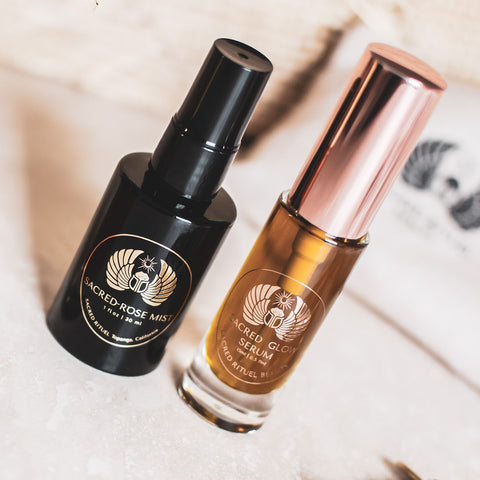
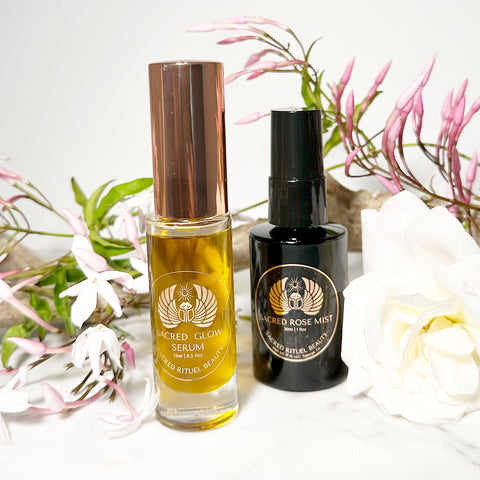
Press a hydrosol mist into damp skin, then massage in a few drops of a whole-plant facial oil while your skin is still dewy. Applied this way, the oil conditions your skin with plant lipids and helps seal in the water on its surface. If you would like your whole ritual together, the Sacred routine set pairs Sacred Serum with a rose mist and our body oil so face and body are cared for in one rhythm.
Keep It Minimal And Consistent
A whole-plant oil is a single nourishing step rather than one more layer to juggle, which is the heart of a minimalist skincare approach. For an occasional treat, a natural face mask is a lovely weekly ritual. And when you are reading labels, our guide to ingredients worth avoiding is a useful companion to this one.
Patch-Testing A New Ingredient
Whenever you add a new oil or botanical to your routine, it is good practice to patch test it first. Apply a small amount to your inner arm and leave it for 24 hours. If your skin stays comfortable, you are good to use it on your face. This simple step is worth the wait, especially for sensitive skin, and it is the surest way to enjoy natural ingredients with confidence.
Final Thoughts
Natural skincare ingredients are not a trend. They are the oldest and most time-tested way to care for skin, and the science has caught up to what herbalists always knew: whole plants, kept intact and cold-pressed, nourish skin with the fatty acids, antioxidants, and vitamins it recognizes, and the full plant complex does more than any isolated molecule. Plant oils support and repair the moisture barrier, natural nutrients can be more bioavailable than synthetic ones, and a gentle, fragrance-free, certified-organic formula is kinder to both your skin and the earth.
This is the tradition behind every Sacred Rituel product, formulated by herbalist Marysia Miernowska from cold-pressed whole-plant botanicals. If you want one place to begin, a few drops of Sacred Serum pressed into clean, damp skin is the whole philosophy in a single step, and our community describes the result simply: radiant, hydrated, glowing.
Sources:
- Ahmed, I. A., Mikail, M. A., Zamakshshari, N., & Abdullah, A.-S. H. (2020). Natural anti-aging skincare: role and potential. Biogerontology, 21(3). https://doi.org/10.1007/s10522-020-09865-z
- Gonçalves, S., & Gaivão, I. (2023). Natural Ingredients in Skincare: A Scoping Review of Efficacy and Benefits. Biomedical and Biopharmaceutical Research, 20(2), 1–18. https://doi.org/10.19277/bbr.20.2.328
- Russo, E. B. (2019). The Case for the Entourage Effect and Conventional Breeding of Clinical Cannabis: No “Strain,” No Gain. Frontiers in Plant Science, 9, 1969. https://doi.org/10.3389/fpls.2018.01969
- Carr, A. C., & Maggini, S. (2017). Vitamin C and Immune Function. Nutrients, 9(11), 1211. https://doi.org/10.3390/nu9111211
- Lin, T.-K., Zhong, L., & Santiago, J. (2018). Anti-Inflammatory and Skin Barrier Repair Effects of Topical Application of Some Plant Oils. International Journal of Molecular Sciences, 19(1), 70. https://doi.org/10.3390/ijms19010070
- Boxberger, M., Cenizo, V., Cassir, N., & La Scola, B. (2021). Challenges in exploring and manipulating the human skin microbiome. Microbiome, 9(1), 125. https://doi.org/10.1186/s40168-021-01062-5
Keep exploring: ingredients to avoid in skincare, how jojoba oil suits oily and dry skin, natural face masks for glowing skin.
Frequently Asked Questions
Are natural skincare ingredients suitable for all skin types?
Yes. Because whole-plant ingredients nourish the skin's barrier with fatty acids and antioxidants it recognizes, the same botanical oil can serve dry, oily, combination, and sensitive skin. Jojoba balances oil, rosehip and sea buckthorn support the look of even, radiant skin, and the full phytocomplex supports the barrier. In our reviews of Sacred Serum, people across very different skin types describe the same healthy glow and lasting hydration. Patch test any new oil on your inner arm first.
Can natural skincare ingredients cause allergies?
Natural ingredients are generally gentle and well tolerated, but natural does not mean risk-free for everyone. Botanical extracts and especially undiluted essential oils can occasionally provoke a reaction in sensitive skin. The way to use them wisely is to choose thoughtfully formulated, fragrance-free products and to patch test on your inner arm for 24 hours before applying anything new to your face. Many people with reactive skin tell us a gentle whole-plant oil is one of the few things their skin stays calm with.
Are natural skincare products vegan?
Not all are. Some natural products include honey, beeswax, or other animal-derived ingredients, so always check the label. Every Sacred Rituel formula is made entirely from cold-pressed plant oils, herbal infusions, and botanical extracts, with no animal-derived ingredients, and we are Leaping Bunny certified cruelty-free.
How long does it take to see results with natural skincare?
It varies by ingredient and by skin. A softer, more hydrated feel can be noticeable quickly, while the look of more even tone or softened fine lines builds with consistent use over weeks. Whole-plant ingredients nourish and support your skin's own rhythms rather than forcing a fast chemical change. People often describe Sacred Serum's glow appearing early and deepening over time.
Can I combine natural and synthetic skincare products?
You can, but introduce one product at a time so you can tell how your skin responds. Some synthetic isolated actives, such as exfoliating acids or synthetic actives, can be drying or sensitizing and may not layer comfortably with everything. If you are simplifying, many people find a whole-plant oil meets several needs at once, reducing the number of products they layer. Patch test anything new first.
Are DIY skincare recipes as effective as store-bought natural products?
DIY recipes can be a lovely ritual for simple things, but they rarely match a thoughtfully formulated product. Misused kitchen ingredients like lemon juice or baking soda can disrupt the skin's pH and cause irritation, and home blends lack the careful sourcing, cold-pressing, and stability of a professional formula. A well-made whole-plant oil delivers cold-pressed, certified-organic botanicals in balanced ratios that are hard to replicate at home.
What is the best natural ingredient for skincare?
There is no single best ingredient, because the real power is in synergy: the whole plant working together does more than any isolated part (Russo 2019). That said, a few earn their reputation. Jojoba closely mimics the skin's own sebum and suits nearly every skin type, rosehip is a natural source of vitamin C and carotenoids clinically shown to improve the look of redness and discoloration, and sea buckthorn is an antioxidant powerhouse. Sacred Serum brings all three into one cold-pressed phytocomplex.
What are the natural ingredients in skincare?
Natural skincare ingredients are plant-derived oils, herbal infusions, and botanical extracts: cold-pressed oils like jojoba, rosehip, sea buckthorn, baobab, pomegranate, and amla, hydrosols and herbal infusions, and antioxidant-rich plant extracts. They deliver fatty acids, vitamins, carotenoids, and polyphenols your skin recognizes. Sacred Serum, for example, is built from fourteen cold-pressed organic botanical oils, eight herbal infusions, four essential oils, and two specialty extracts.
Radiance Is Personal. Let’s Reveal Yours...
All Day Glow Essentials