
Top Organic Skincare Ingredients And How They Transform Your Skin
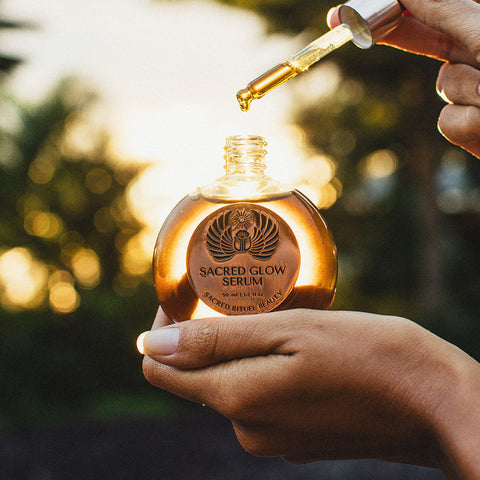
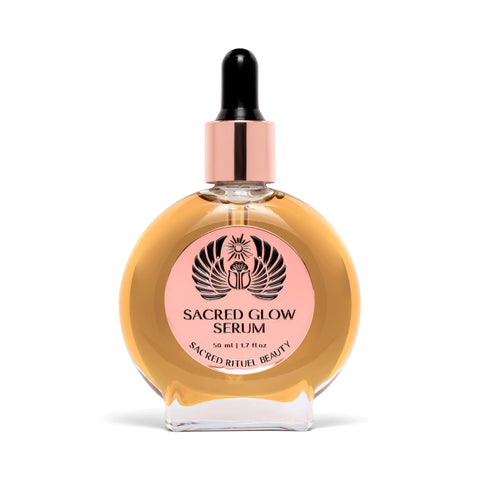
The top organic skincare ingredients are the whole-plant botanicals that work the way your skin already works: cold-pressed oils and extracts like jojoba, rosehip, sea buckthorn, amla, pomegranate, and frankincense, grown without synthetic pesticides and pressed without heat so their actives stay alive. They earn their place because the science is real. Jojoba's wax esters closely mirror the skin's own sebum, plant oils are documented to support and repair the moisture barrier and are compatible with the skin's lipid matrix (Lin et al. 2018), and rosehip is clinically shown to improve the look of redness and discoloration. This is the tradition Sacred Serum is built on: 14 cold-pressed organic botanical oils, formulated by folk herbalist Marysia Miernowska, founder of the School of the Sacred Wild. A quick note of good practice: patch test any new oil on your inner arm first.
Key Takeaways:
- Organic ingredients work with your skin's own biology: Botanicals like jojoba and rosehip are compatible with the skin's lipid matrix, and plant oils are documented to support and repair the moisture barrier, so they nourish rather than irritate (Lin et al. 2018).
- Whole-plant, cold-pressed botanicals are antioxidant-rich: Cold-pressing preserves the delicate tocopherols, polyphenols, and carotenoids that heat and solvents destroy, and the full plant complex does more than any isolated molecule could.
- Fewer, better ingredients outperform crowded routines: A simple ritual built on a high-quality whole-plant facial oil can do more than a multi-step routine packed with synthetic fillers.
Glowing, healthy-looking skin does not come from piling on layers. It comes from choosing ingredients that work in harmony with your skin, the same way a nourishing diet works with your body. That is the heart of organic skincare built on purity, sustainability, and whole-plant nourishment.
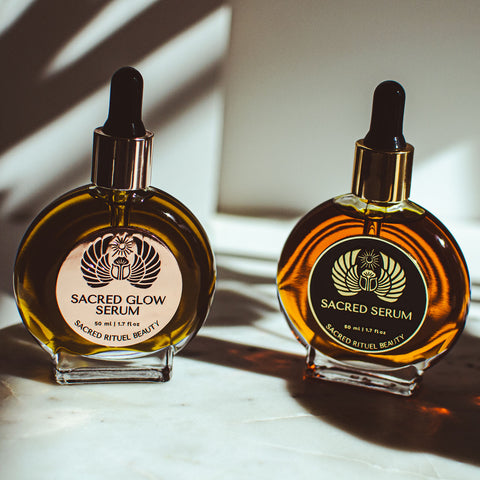
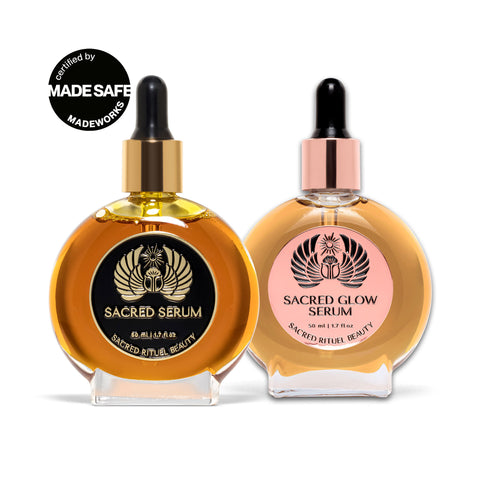
At Sacred Rituel, every formula is handcrafted by folk herbalist Marysia Miernowska, founder of the School of the Sacred Wild, from top organic skincare ingredients sourced from regenerative farms and chosen for what plants actually do for skin. Marysia formulates every product in the line, and that herbalist lineage, centuries of plant-medicine observation now matched by a fast-growing body of research, is why we speak about these botanicals with conviction. Our facial hero, Sacred Serum, brings 14 of them together in a single cold-pressed phytocomplex.
In this guide we will walk through the organic ingredients we believe every skincare lover should know, the science behind why they work, and how they come together to support the look of calm, hydrated, radiant skin.
Why Choose Organic Skincare?
If you read ingredient labels before you buy, you are on exactly the right track. Choosing organic skincare means giving your skin the same care you would want from a fresh, organic meal: nutrient-rich, clean, and free from unnecessary additives.
Conventional beauty products often lean on synthetic preservatives, artificial fragrances, and harsh refining processes. Organic skincare uses plant-based ingredients grown without synthetic pesticides or fertilizers, and the best of them are cold-pressed and minimally processed so they keep their full potency. That potency is not a marketing word: cold-pressing preserves the tocopherols, polyphenols, and carotenoids that heat-based and solvent extraction strip away, which is why a cold-pressed oil reaches your skin carrying far more of what makes it worth using.
The payoff is what you gain. Whole-plant botanicals feed skin the fatty acids, antioxidants, and plant lipids it thrives on, supporting hydration, balance, and a visibly healthier-looking glow. If you want to go deeper on what to keep out of your routine, our guide to pore-clogging ingredients to avoid is a good companion read.

What Makes An Ingredient Truly Organic?
Not all skincare ingredients are equal, and with organic the standards genuinely matter. True organic ingredients carry the full power of the plant, untouched by synthetic processing. Here is what sets them apart.
Grown Without Synthetic Chemicals
Truly organic botanicals are cultivated without synthetic pesticides, herbicides, or GMOs. That protects your skin, and it protects the soil, water, and pollinators that keep the land healthy. Choosing organic is choosing clean beauty that starts at the source.
Processed Without Synthetic Additives
Once harvested, organic ingredients are handled with care: no harsh solvents, no synthetic preservatives, no aggressive refining. That is what lets each oil and extract keep its nourishing constituents intact, so the bottle delivers something genuinely beneficial to your skin rather than a stripped-down fraction of the plant.
Cold-Pressed For Maximum Potency
Cold-pressing extracts oil without heat, preserving the delicate antioxidants, essential fatty acids, and vitamins that heat would destroy. This is why cold-pressed botanicals are so much more effective than refined ones, and it is non-negotiable for a whole-plant facial oil where nutrient density is everything.
Natural Whole-Food Form, Not Synthetic Isolate
There is a real difference between a nutrient in its whole-plant form and a synthetic copy. Vitamin C delivered in a whole-food botanical matrix arrives with the cofactors that help the body use it, and is more bioavailable than the isolated synthetic form (Carr and Vissers 2013). Natural vitamin E is the full family of tocopherols working together, where the synthetic version is a single form. The whole plant, in other words, is doing more than any one extracted molecule can.
Are organic skincare ingredients better for long-term use?
The most effective organic skincare does more than moisturize. It soothes the look of redness, supports the moisture barrier, and helps skin look balanced and resilient. Here are the top organic skincare ingredients we reach for, and the science behind why they belong in your routine.
Jojoba Oil
Jojoba is one of the most compatible botanicals for nearly every skin type because its wax esters closely mimic the skin's own sebum. That kinship is why it absorbs cleanly, helps skin feel balanced rather than greasy or tight, and suits oily and sensitive skin alike. It is a cornerstone of whole-plant skincare, and you can read more in our deep dive on Jojoba Oil and on how jojoba oil supports both oily and dry skin.
Rosehip Seed Oil
Rosehip is a natural source of vitamin C, carotenoids, and essential fatty acids, and it is clinically shown to improve the look of redness and discoloration. That combination is why it is so prized for supporting the look of firmer, smoother, more even-toned skin and the appearance of softened scars and fine lines. Our glossary entry on Rosehip Oil goes further into its constituents.
Sea Buckthorn Fruit Oil
Sea buckthorn is a rare oil carrying all four omega fatty acids along with a vivid concentration of carotenoids, the antioxidants that give it its deep orange color. It is one of the most nourishing botanicals for supporting suppleness and a radiant-looking complexion, especially for skin that reads as dry or environmentally stressed. See more in our note on Sea Buckthorn Oil.
Amla (Indian Gooseberry)
Amla is one of the richest botanical sources of vitamin C and polyphenols, antioxidants that help defend skin against the everyday environmental stressors associated with the look of premature aging. In the herbalist tradition it is a revered rejuvenating botanical, and the science behind its polyphenol content is part of why it supports a firmer, more luminous-looking complexion.
Pomegranate Seed Oil
Pomegranate seed oil is abundant in punicic acid and antioxidant polyphenols that help protect skin against free-radical stress. It is deeply conditioning yet lightweight, which makes it a beautiful choice for mature or sun-exposed skin that wants nourishment without heaviness, and it supports the look of firmer, more supple skin over time.
Frankincense
Frankincense has been treasured for thousands of years in plant-medicine traditions, and the reverence is earned. Its aromatic constituents are deeply calming for the senses, and on skin it is loved for supporting a smooth, toned, resilient-looking complexion. It is the kind of botanical that reminds you skincare can be a ritual as much as a routine.
This is the family of botanicals at the heart of Sacred Serum, where 14 cold-pressed organic oils are brought into a single whole-plant phytocomplex. People in our community consistently tell us the look of their skin calms and brightens with daily use, one writing that her skin had "never looked more balanced." For more on building a pared-back routine around ingredients like these, our roundup of the best minimalist skincare brands is worth a look.

How These Ingredients Transform Your Skin
Choosing clean botanicals is only half the story. What matters is how they meet your skin, and whole-plant ingredients do something a synthetic isolate cannot: they work in concert. Here is how that transformation happens.
Deep Hydration That Lasts
Cold-pressed botanical oils like jojoba and chia share the structure of the skin's own lipids, so they are compatible with its lipid matrix and absorb to condition the deeper layers of the outer skin rather than sitting on top (Lin et al. 2018). As they sink in, they reinforce the barrier that keeps moisture from escaping, which is why skin looks plump and feels soft and hydrated for hours rather than tight again within the hour.
Soothing The Look Of Redness And Irritation
Botanicals like rosehip, sea buckthorn, and frankincense are rich in the antioxidant and soothing constituents that help calm the look of reactive, stressed skin. Rosehip in particular is clinically shown to improve the look of redness and discoloration, which is why so many people reach for whole-plant oils when their skin looks irritated or uneven.
The Look Of Firmer, More Even-Toned Skin
Antioxidant-rich botanicals like rosehip, amla, and pomegranate are full of the vitamin C, polyphenols, and carotenoids associated with the look of firmer, smoother, more even skin. Used consistently, they support a complexion that looks more resilient and luminous, helping soften the appearance of fine lines and uneven tone over time.
Balancing The Look Of Oily Skin Naturally
Rather than stripping your skin, organic oils like jojoba work with it. Because jojoba's wax esters mimic sebum, skin reads the signal and feels less driven to overproduce, so congested-looking, oily skin can look clearer and more balanced. Over-cleansing with harsh products tends to do the opposite, which is why a gentle, whole-plant approach so often wins.
Can organic skincare products expire faster than synthetic ones?
So many products claim to be clean or natural that the words have lost meaning. What matters is what is inside the bottle. Here is how to choose products built on top organic skincare ingredients you can trust.
- Read the full ingredient list: Look past the front label. Scan for recognizable plant names like jojoba, rosehip, and sea buckthorn near the top of the list, where the highest concentrations sit, and be wary of synthetic fillers further down.
- Look for transparent sourcing: The brands worth your trust tell you where and how their botanicals are grown. Regenerative or certified-organic farming is a strong signal of integrity, and transparency usually tracks with quality.
- Choose cold-pressed, not refined oils: Cold-pressed oils keep the vitamins, antioxidants, and fatty acids that make them effective. Refined oils can look identical while having lost most of their potency, so this single choice matters enormously.
- Choose fragrance-free formulas: Synthetic fragrance is one of the most common irritants in skincare and is best avoided. Look for products that are fragrance-free or carry only the natural aroma of their botanicals, with nothing synthetic added.
- Consider packaging and freshness: Delicate plant oils are sensitive to light, so the best are bottled in light-shielding glass and made in small batches. Air-tight packaging and recent production keep the antioxidants potent from the first use to the last.

Building A Whole-Plant Ritual
The deepest results come not from any single ingredient but from the synergy of many botanicals working together, the principle herbalists have understood for centuries and that research now describes as the way the full plant complex outperforms isolated molecules (Russo 2019). A daily ritual lets that synergy do its work.
For your face, press a few drops of a whole-plant facial oil like Sacred Serum into clean, slightly damp skin morning and night, so its 14 cold-pressed oils can absorb and condition. If you want the full ritual, the Sacred routine set pairs the serum with a rose mist and a body oil so face and body are cared for together. And if you love the idea of feeding your skin botanicals at home too, our guide to DIY face masks for glowing skin is a lovely place to start.
Patch-Testing A New Oil
Whenever you add a new oil to your routine, patch test it first. Apply a small amount of a whole-plant facial oil like Sacred Serum to your inner arm and leave it for 24 hours. If your skin stays comfortable, you are good to use it on your face. It is a simple step that is always worth the wait, especially for sensitive skin.
Final Thoughts
Choosing skincare is not about chasing trends. It is about honoring your skin with ingredients that genuinely nourish it. The top organic skincare ingredients, jojoba, rosehip, sea buckthorn, amla, pomegranate, and frankincense, earn their place because the herbalist tradition and the science agree: whole-plant, cold-pressed botanicals work with your skin's own biology, and the full plant complex does more than any isolated molecule can.
That is the conviction Sacred Serum is built on, and it is what people in our community describe in their own words: skin that looks calmer, more balanced, and more radiant. Feed your skin the way you would feed your body, with whole, living plants, and it will show.
Sources:
- Gupta, S. (2010). Chamomile: A herbal medicine of the past with a bright future. Molecular Medicine Reports, 3(6). https://doi.org/10.3892/mmr.2010.377
- Sah, A., Naseef, P. P., Kuruniyan, M. S., Jain, G. K., Zakir, F., & Aggarwal, G. (2022). A Comprehensive Study of Therapeutic Applications of Chamomile. Pharmaceuticals, 15(10), 1284. https://doi.org/10.3390/ph15101284
- Gad, H. A., Roberts, A., Hamzi, S. H., Gad, H. A., Touiss, I., Altyar, A. E., Kensara, O. A., & Ashour, M. L. (2021). Jojoba Oil: An Updated Comprehensive Review on Chemistry, Pharmaceutical Uses, and Toxicity. Polymers, 13(11), 1711. https://doi.org/10.3390/polym13111711
- Patricia, D., Mihaiela Cornea-Cipcigan, & Mirela Irina Cordea. (2024). Unveiling the mechanisms for the development of rosehip-based dermatological products: an updated review. Frontiers in Pharmacology, 15. https://doi.org/10.3389/fphar.2024.1390419
- Lin, T.-K., Zhong, L., & Santiago, J. (2018). Anti-Inflammatory and Skin Barrier Repair Effects of Topical Application of Some Plant Oils. International Journal of Molecular Sciences, 19(1), 70. https://doi.org/10.3390/ijms19010070
- Carr, A. C., & Vissers, M. C. M. (2013). Synthetic or Food-Derived Vitamin C: Are They Equally Bioavailable? Nutrients, 5(11), 4284-4304. https://doi.org/10.3390/nu5114284
- Russo, E. B. (2019). The Case for the Entourage Effect and Conventional Breeding of Clinical Cannabis: No "Strain," No Gain. Frontiers in Plant Science, 9, 1969. https://doi.org/10.3389/fpls.2018.01969
Frequently Asked Questions
Are organic skincare ingredients better for long-term use?
Yes. Organic, whole-plant ingredients are well suited to long-term use because they work with your skin's own biology rather than against it. Plant oils are documented to support and repair the moisture barrier and are compatible with the skin's lipid matrix (Lin et al. 2018), and because they are free of synthetic preservatives and harsh additives, they are gentler over time. Cold-pressed botanicals like those in Sacred Serum keep their antioxidants intact, so daily use keeps nourishing your skin season after season.
Can organic skincare products expire faster than synthetic ones?
Often, yes, and that is a sign of quality, not a flaw. Because organic products use fewer synthetic preservatives and are made in small batches, they can have a shorter shelf life than heavily preserved conventional ones. Store them away from heat and light, in their light-shielding glass, and use them within the recommended window. The trade-off is real freshness: a cold-pressed, whole-plant oil reaching your skin at full potency is worth far more than one engineered to sit on a shelf for years.
Is there a difference between “natural” and “organic” skincare ingredients?
Yes. “Natural” is a loosely regulated term that any brand can use, while “organic” refers to how an ingredient is grown and processed and is held to stricter standards: no synthetic pesticides, no GMOs, and no harsh solvents. An ingredient can be technically natural and still be heavily refined. When you choose certified organic, whole-plant botanicals, you know the plant lipids and antioxidants reaching your skin are clean and intact.
Can people with oily skin use organic oils in skincare?
Absolutely, and oily skin often benefits most. Jojoba's wax esters closely mimic the skin's own sebum, so it helps oily, congested-looking skin feel balanced rather than stripped, and skin that is not over-cleansed tends to overproduce less oil. A lightweight, cold-pressed, whole-plant facial oil like Sacred Serum absorbs cleanly and supports the look of clearer, more balanced skin. If congestion is a concern, our guide to pore-clogging ingredients to avoid is a helpful read.
Do organic skincare ingredients help with signs of aging?
Many of them support the look of healthy, youthful skin. Antioxidant-rich botanicals like rosehip, amla, and pomegranate are full of vitamin C, polyphenols, and carotenoids associated with the look of firmer, smoother, more even-toned skin, and rosehip is clinically shown to improve the look of redness and discoloration. Used consistently in a whole-plant oil, they help soften the appearance of fine lines and uneven tone and support a more radiant-looking complexion over time.
Why are some organic skincare ingredients more expensive?
Quality costs more to grow and to make. Organic botanicals require more care, labor, and sustainable farming, and cold-pressing in small batches yields less oil than high-heat or solvent extraction but preserves far more of the delicate actives. When you pay more for a cold-pressed, certified-organic, whole-plant oil, you are paying for purity, potency, and ethical sourcing, and for an ingredient that reaches your skin carrying everything the plant intended.
Radiance Is Personal. Let’s Reveal Yours...
All Day Glow Essentials