Cold-Pressed Oils: Exploring Organic And Clean Skincare Products
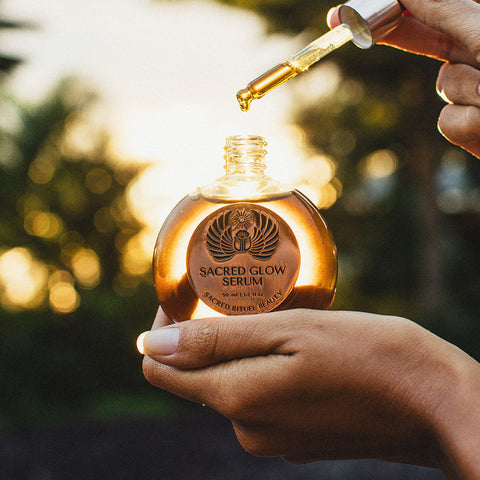
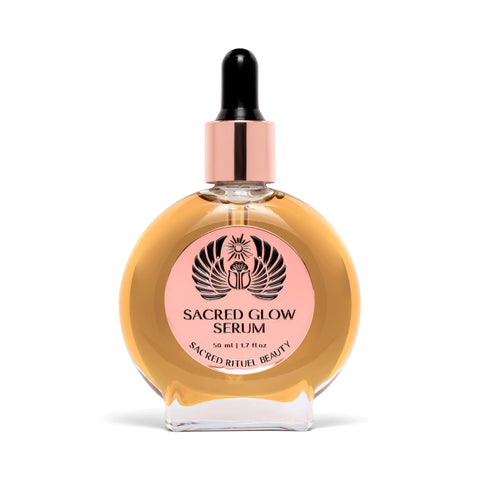
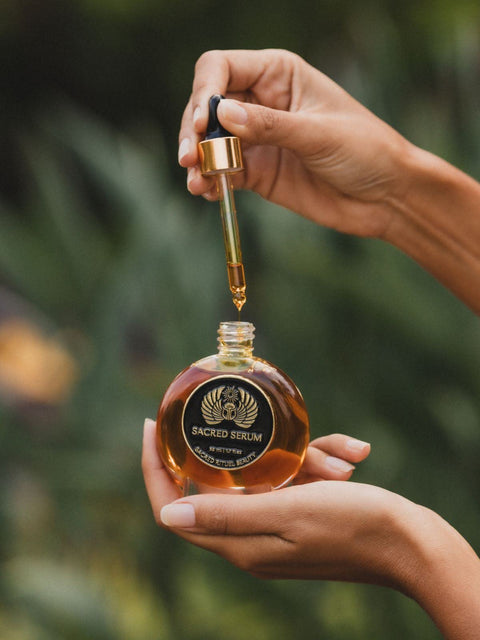
Cold-pressed oils are plant oils squeezed from seeds, nuts, and fruits by mechanical pressure alone, with no heat and no chemical solvents, and that gentle method is exactly why they are so good for skin. Heat and solvents strip away the most delicate parts of a plant oil; cold-pressing leaves them intact, which is why cold-pressed oils hold on to far more of their tocopherols (vitamin E), polyphenols, carotenoids, and essential fatty acids than refined oils do (Szydlowska-Czerniak & Trokowski 2020; Prescha et al. 2014). Those are precisely the compounds skin thrives on. This is the principle folk herbalist Marysia Miernowska built every Sacred Rituel formula on, and it is why our hero face oil, Sacred Serum, is a blend of fourteen cold-pressed organic botanical oils rather than a refined or synthetic base. One quick note of good practice: patch test any new oil on your inner arm first.
Key Takeaways:
- Cold-pressing preserves what makes a plant oil potent: Pressing seeds and fruits without heat or solvents keeps the delicate tocopherols, polyphenols, carotenoids, and fatty acids intact, which refining and high heat destroy (Szydlowska-Czerniak & Trokowski 2020).
- Cold-pressed oils work with your skin, not on top of it: Plant oils are compatible with the skin's own lipid matrix, so they sink in to condition the skin and reinforce the moisture barrier rather than sitting on the surface (Lin et al. 2018).
- Whole-plant beats isolated: The full phytocomplex of a cold-pressed oil does more than any single extracted molecule, which is why Sacred Serum is built from fourteen cold-pressed organic oils, not one (Russo 2019).
Clean skincare has rediscovered something herbalists never forgot: the way a plant oil is made matters as much as the plant it comes from. Cold-pressed oils have become a favorite of anyone who reads ingredient labels, and the reason is simple. The cold-pressing method protects the very compounds that feed and nourish skin. The honest, confident answer to "are they worth it" is yes, and the science of how oils are pressed explains why.
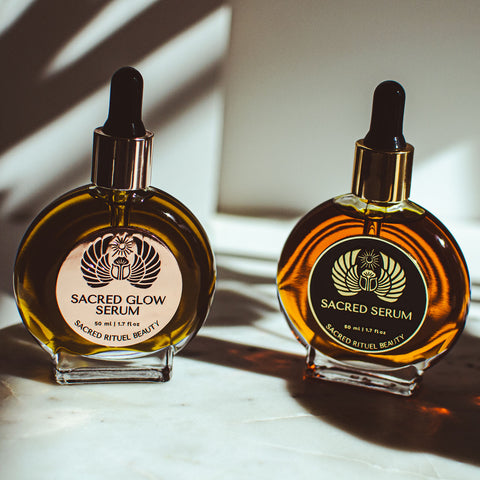
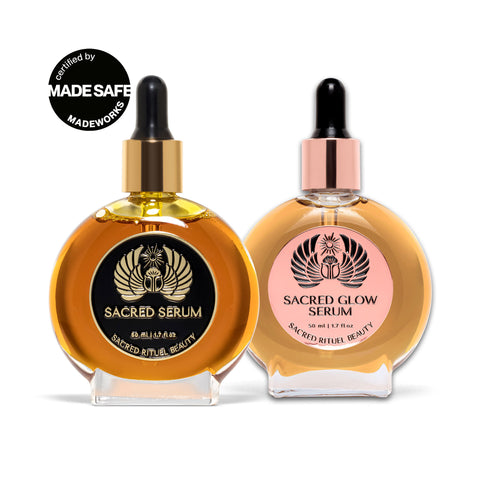
At Sacred Rituel, every product is formulated by folk herbalist Marysia Miernowska, founder of the School of the Sacred Wild, from cold-pressed, certified-organic botanicals chosen for what plants actually do for skin. Cold-pressed oils are the heart of our formulations, and our hero face oil, Sacred Serum, captures fourteen of them in a single whole-plant blend for a soft, radiant, healthy-looking complexion.
In this guide we will explain what cold-pressed oils are and how to recognize them, why the cold method preserves so much more than refining does, how these oils actually work with your skin, the standout botanicals to look for, and how to fold them into your daily ritual.
What Are Cold-Pressed Oils?
Cold-pressed oils are natural oils extracted from seeds, nuts, or fruits using mechanical pressure alone. No heat and no harsh chemical solvents are used in the process. That gentle method is the whole point: it keeps the oil's delicate nutrients, its essential fatty acids, antioxidants, vitamins, and aromatic plant compounds, intact and alive, all of which are deeply beneficial for skin.
Refined oils, by contrast, are usually extracted with high heat or chemical solvents and then bleached and deodorized. That processing strips out the fragile, skin-loving compounds and leaves a flat, neutral oil behind. Cold-pressing keeps the plant whole, which is why a cold-pressed oil is richer, more aromatic, and more nourishing than its refined counterpart.
This is the principle Sacred Serum is built on. Rather than a single refined oil, it is a cold-pressed phytocomplex of fourteen organic botanical oils, including Jojoba Oil, Rosehip Oil, and Sea Buckthorn Oil, designed to deeply nourish skin and leave it looking radiant. People in our community describe the result plainly: many tell us their skin glows, one writing that "everyone stops me to say wow you're glowing."
How do you identify cold pressed oils?
You can recognize a true cold-pressed oil by its label and its character. On the label, look for the words "cold-pressed," "expeller-pressed," or "virgin," and steer clear of anything that mentions refining, bleaching, or deodorizing. In the bottle, cold-pressed oils tend to carry a richer aroma, a more vibrant natural color, and a fuller body, all signs that the plant's character survived the pressing.
Cold-pressed oils are not a modern invention. They are a return to how oils were always made. Ancient civilizations relied on these oils for their beautifying gifts: Egyptians used pressed olive and castor oils to keep skin soft and supple in a harsh desert climate, and Cleopatra is said to have woven them into her beauty rituals. In Ayurveda, the traditional Indian system of medicine, pressed oils like sesame were used in therapeutic massage and daily skincare to nourish and balance the skin. Across the Mediterranean, olive oil was prized for keeping skin soft long before lotions and serums existed. This is the lineage Marysia draws on, an herbalist tradition with centuries of observation behind it.
Can we boil cold pressed oil?
It is best not to. Boiling or high heat undoes the very thing that makes a cold-pressed oil worth choosing. The delicate antioxidants, vitamins, and fatty acids that survive cold-pressing are heat-sensitive, and high temperatures degrade them. For skin, this is exactly why the cold method matters so much, and it is worth understanding what those preserved compounds do once they reach your skin.
Deeply Hydrating Without A Greasy Feel
Many cold-pressed oils, jojoba chief among them, are remarkably close in structure to the skin's own sebum. Because plant oils are compatible with the skin's natural lipid matrix, they sink in to condition the skin rather than sitting on the surface, delivering moisture without a heavy, greasy residue (Lin et al. 2018). This is one of the things people notice first about Sacred Serum: many tell us it "absorbs right away and doesn't leave me greasy," and that it leaves skin feeling soft and balanced rather than slick.

Rich In Antioxidants
Cold-pressed oils are abundant in antioxidants, especially the full natural family of vitamin E. This is a real advantage of plant-sourced over synthetic: natural vitamin E is a complete family of tocopherols and tocotrienols, while synthetic versions are usually a single form, and the full family offers broader antioxidant protection for skin (Thiele & Ekanayake-Mudiyanselage 2007). These antioxidants help defend skin against the everyday environmental stressors that leave it looking dull and tired, which is part of why people describe their skin looking visibly more radiant and alive with regular use.
Soothing To The Look And Feel Of Skin
Cold-pressed oils like rosehip carry naturally soothing plant constituents that comfort the look and feel of sensitive, easily irritated skin. Rosehip in particular is a natural source of vitamin C and carotenoids, and a clinical study of pure rosehip seed oil found it visibly improved the appearance of redness and discoloration over twelve weeks (Valeron-Almazan et al. 2015). This is borne out in our community, where people with reactive skin tell us things like "my skin has never been so calm" after switching to whole-plant oils.
Supporting A Firmer, Smoother Look
The essential fatty acids in cold-pressed oils help keep skin supple and conditioned, supporting the look of firmer, smoother skin over time. Rosehip and pomegranate are especially loved for this, and people in our community describe the look of fine lines softening with consistent use, one writing that "my fine lines are even fading." Replenishing the lipids skin runs short on is what gives that supple, plumped appearance.
What happens when you heat cold pressed oil?
When you heat a cold-pressed oil past its smoke point, it degrades. The fragile antioxidants and fatty acids break down, the aroma and color change, and the oil loses much of what made it valuable. This is precisely why cold-pressing exists in the first place, and it is the clearest way to understand why cold-pressed oils outperform refined ones for skin.
Nutrient Retention
Because cold-pressing avoids high temperatures, it preserves the delicate compounds in the seed or fruit. Cold-pressed oils have been shown to retain significantly higher levels of tocopherols (vitamin E), carotenoids, and phenolic antioxidants than their refined counterparts, which lose most of these during heat and solvent processing (Prescha et al. 2014; Szydlowska-Czerniak & Trokowski 2020). For skin, those preserved compounds are the whole reward.
The Whole Plant, Working Together
Cold-pressing also keeps the full spectrum of the plant intact rather than isolating a single fraction. This matters more than it might seem. The therapeutic gifts of a plant come from the synergy of all its compounds working together, the phytocomplex, not from any one molecule in isolation (Russo 2019). It is the same reason natural vitamin C, delivered in its whole-food matrix alongside its natural cofactors, is more bioavailable than an isolated synthetic version (Carr & Vissers 2013). A cold-pressed whole-plant oil hands skin the entire orchestra, not a single note.
No Harmful Additives
Cold-pressed oils are about as pure as skincare gets: no bleaching, no deodorizing, and no synthetic additives. That makes them a clean, gentle choice, especially if you are working to keep needless chemicals and synthetic fragrance out of your routine. Sacred Rituel is fragrance-free by design, so the aroma you breathe in is the plants themselves, nothing synthetic added.
Gentler On Skin
Because cold-pressed oils stay minimally processed and keep their natural balance, they tend to be far gentler and less likely to irritate than heavily refined oils. They work in harmony with your skin's own chemistry, which is why so many people with sensitive or reactive skin find whole-plant oils suit them when little else does. For more on which ingredients to keep out of your routine, see what to avoid in skincare.
Best Cold-Pressed Oils For Skin Care
Cold-pressed oils each bring their own gifts depending on the plant. Here are some of the standout botanicals and why they earn a place in your skincare ritual. The deeper magic, as any herbalist will tell you, is not in any single oil but in the way a thoughtfully composed blend brings many of them into synergy.
Jojoba Oil
Jojoba is technically a liquid wax, and its structure is famously close to the skin's own sebum, which is why it suits nearly every skin type. It absorbs cleanly without a greasy residue and is prized for its balancing, conditioning nature. If you want to go deeper, our guide to jojoba oil for skin explores why it is such a friend to both oily and dry skin.
Rosehip Seed Oil
Often called rosehip's natural vitamin A for its naturally occurring vitamin A, rosehip is a natural source of vitamin C and carotenoids that support the look of brighter, more even-toned skin. It is rich and nourishing yet lightweight and quick to absorb, making it a favorite even for skin that leans oily or sensitive.
Sea Buckthorn Fruit Oil
A vivid orange oil pressed from the berries of the sea buckthorn plant, this one is loaded with carotenoids, tocopherols (vitamin E), and a rare profile of fatty acids including omega-7 (Zielinska & Nowak 2017). Its naturally soothing, antioxidant-rich character makes it a beautiful choice for comforting the look of irritated, stressed skin.
Pomegranate Seed Oil
Pomegranate seed oil is rich in punicic acid, a rare antioxidant fatty acid, and in compounds that help comfort the look of skin and support its conditioned, resilient appearance. Its antioxidant profile makes it a lovely ally for dry or mature-looking skin facing everyday environmental stress.
Chia Seed Oil
Chia seed oil holds one of the highest known concentrations of omega-3 fatty acids, which help skin hold onto moisture and feel comfortable. It is a quiet powerhouse for supporting the skin's moisture barrier and easing the look and feel of dry, tight skin.
Camellia Seed Oil
Pressed from the tea plant, camellia oil sinks in deeply without a greasy residue. Rich in oleic acid and antioxidants, it nourishes and softens, leaving skin feeling smooth and weightless. It is a beautiful example of how a single cold-pressed oil can feel luxurious on its own.
How To Use Cold-Pressed Oils In Your Skincare Routine
Folding cold-pressed oils into your ritual is simple and rewarding. Here are the most effective ways to make the most of these nutrient-rich oils.
- As a facial oil: The simplest, most rewarding ritual. After cleansing and misting, press a few drops of a cold-pressed facial oil like Sacred Serum into slightly damp skin, using gentle upward strokes. It absorbs to condition the skin and lock in moisture, leaving a soft, radiant finish.
- For your whole ritual: If you want your full routine to live together, the Sacred routine set pairs the face oil with a rose mist and a body oil, so cleansing, toning, and nourishing flow as one daily practice.
- For targeted care: Use a richer cold-pressed oil on drier areas or rough patches, massaging it in to soften and condition the look of the skin over time.
- As an overnight treatment: Apply a generous few drops before bed and let the oil work while you sleep, when skin is most receptive to nourishment. You will wake to softer, more comfortable-feeling skin.
- In a nourishing mask: A few drops of a cold-pressed oil can be folded into a homemade mask. For ideas, see our DIY face masks for glowing skin.

Patch-Testing A New Oil
Whenever you add a new oil to your routine, it is good practice to patch test it first. Apply a small amount to your inner arm and leave it for 24 hours. If your skin stays comfortable, you are good to use it more widely. A simple step, and worth the wait, especially for sensitive skin.
Final Thoughts
Cold-pressed oils are not a passing trend. They are a return to simple, effective, whole-plant skincare that herbalists have trusted for centuries, now backed by modern science. The cold method preserves the tocopherols, polyphenols, carotenoids, and fatty acids that skin thrives on, the oils are compatible with your skin's own lipids, and the whole plant working together does more than any isolated molecule could. This is the conviction behind every Sacred Rituel formula.
If you want to feel the difference for yourself, our hero face oil, Sacred Serum, brings fourteen cold-pressed organic botanicals into a single blend. People in our community describe glowing, soft, supple skin and a complexion that simply looks more alive. That is what nature's purest ingredients, pressed gently and kept whole, can do. If you love the simplicity of this approach, you may also enjoy our look at the best minimalist skincare brands.
Sources:
- Szydlowska-Czerniak, A., & Trokowski, K. (2020). The Composition and Antioxidant/Antiradical Activity of Cold-Pressed and Hot-Pressed Rapeseed Oils: A Review. Molecules, 25(22), 5275. https://doi.org/10.3390/molecules25225275
- Prescha, A., Grajzer, M., Dedyk, M., & Grajeta, H. (2014). The antioxidant activity and oxidative stability of cold-pressed oils. Journal of the American Oil Chemists' Society, 91(8), 1291-1301. https://doi.org/10.1007/s11746-014-2479-1
- Lin, T.-K., Zhong, L., & Santiago, J. (2018). Anti-Inflammatory and Skin Barrier Repair Effects of Topical Application of Some Plant Oils. International Journal of Molecular Sciences, 19(1), 70. https://doi.org/10.3390/ijms19010070
- Russo, E. B. (2019). The Case for the Entourage Effect and Conventional Breeding of Clinical Cannabis. Frontiers in Plant Science, 9, 1969. https://doi.org/10.3389/fpls.2018.01969
- Carr, A. C., & Vissers, M. C. (2013). Synthetic or food-derived vitamin C: are they equally bioavailable? Nutrients, 5(11), 4284-4304. https://doi.org/10.3390/nu5114284
- Thiele, J. J., & Ekanayake-Mudiyanselage, S. (2007). Vitamin E in human skin: organ-specific physiology and considerations for its use in dermatology. Molecular Aspects of Medicine, 28(5-6), 646-667. https://doi.org/10.1016/j.mam.2007.06.001
- Valeron-Almazan, P., Gomez-Duaso, A. J., Oliva-Perez, N., Vilar-Gonzalez, M., & Zouboulis, C. C. (2015). Evolution of Post-Surgical Scars Treated with Pure Rosehip Seed Oil. Journal of Cosmetics, Dermatological Sciences and Applications, 5(2), 161-167. https://doi.org/10.4236/jcdsa.2015.52019
- Zielinska, A., & Nowak, I. (2017). Abundance of active ingredients in sea-buckthorn oil. Lipids in Health and Disease, 16(1), 95. https://doi.org/10.1186/s12944-017-0469-7
Frequently Asked Questions
How do you identify cold pressed oils?
Look at the label and the oil itself. On the label, look for the words "cold-pressed," "expeller-pressed," or "virgin," and avoid anything that mentions refining, bleaching, or deodorizing. In the bottle, a true cold-pressed oil tends to have a richer aroma, a more vibrant natural color, and a fuller body, all signs that the plant's delicate compounds survived the pressing. Cold-pressed oils retain far more of their natural tocopherols, carotenoids, and fatty acids than refined oils do.
Can we boil cold pressed oil?
It is best not to. Boiling and high heat undo the very thing that makes a cold-pressed oil valuable. The delicate antioxidants, vitamins, and fatty acids preserved by cold-pressing are heat-sensitive, and high temperatures break them down. For skincare, this is exactly the point: the oil keeps its skin-nourishing compounds because it was never heated in the first place. Use cold-pressed oils as they are, applied to the skin, never cooked.
What happens when you heat cold pressed oil?
Heating a cold-pressed oil past its smoke point degrades it. The fragile antioxidants and fatty acids break down, the natural color and aroma change, and the oil loses much of what made it beneficial. This is exactly why cold-pressing exists: by avoiding heat, the method preserves the tocopherols, carotenoids, and phenolic antioxidants that refining and high heat destroy. Keep cold-pressed oils away from heat to keep them potent.
Is Virgin oil cold-pressed?
Usually, yes. Virgin oils, such as extra virgin olive oil, are typically pressed without heat or solvents, which is what cold-pressing means. That said, not every virgin oil is strictly cold-pressed, so it is worth checking the label for the words "cold-pressed" or "first cold-pressed" to be sure. Both terms point to a gentle, minimally processed oil that keeps more of its natural nutrients.
Are cold-pressed oils good for skin?
Yes, cold-pressed oils are excellent for skin. Because they are pressed without heat or solvents, they retain their natural vitamins, antioxidants, and essential fatty acids, the compounds skin thrives on. Plant oils are compatible with the skin's own lipid matrix, so they sink in to condition the skin and reinforce the moisture barrier rather than sitting on the surface. They suit most skin types and leave skin looking soft, supple, and radiant. People in our community consistently describe glowing, soft, comfortable skin with whole-plant cold-pressed oils like Sacred Serum.
What is cold-pressed oil good for?
Cold-pressed oils are wonderfully versatile in skincare. People use them as a daily facial oil on damp skin, as targeted care for dry or rough areas, as an overnight nourishing treatment, and folded into homemade masks. A whole-plant cold-pressed oil conditions the skin, supports the moisture barrier, and leaves skin looking soft, smooth, and radiant. Many in our community reach for Sacred Serum, a blend of fourteen cold-pressed organic botanicals, for exactly this.
Radiance Is Personal. Let’s Reveal Yours...


All Day Glow Essentials